Walk into almost any toy shop or scroll almost any toy listing and you will find the word "Montessori" stuck onto things that have nothing to do with Maria Montessori's actual ideas. It has become a marketing label as much as a description, which leaves a genuine question unanswered: what actually makes a toy Montessori?
What actually makes a toy Montessori?
A toy is genuinely Montessori-aligned when it meets five concrete criteria, not when it is wooden or beige or photographed on linen. The criteria are: it gives self-correcting feedback, it isolates one skill at a time, it is made from real, proportional materials, it is sized and weighted for a child to use without help, and it needs no adult narration, batteries or screen to work. Miss most of these and the "Montessori" label is decoration, not substance.
The shelf test: five criteria, what to look for, what to avoid
| Criterion | What to look for | What to avoid |
|---|---|---|
| Self-correcting feedback | The toy itself shows the child whether they got it right (a piece that only fits one way) | A toy that only "works" when an adult confirms the answer |
| One skill at a time | A single, clear challenge (matching, sorting, pouring) | A toy that tries to teach five skills at once and does none of them well |
| Real, proportional materials | Materials that behave like the real thing (real weight, real texture) | Plastic pretending to be something it isn't, purely for looks |
| Child-sized and independent-use | Sized, weighted and simple enough for a child to start and finish alone | Fiddly clasps, awkward proportions or steps that need an adult's hands |
| No adult narration or screen required | A toy that works in silence, at the child's own pace | Lights, sounds or a screen directing what happens next |
Self-correcting feedback: the object permanence box test
The clearest example of this criterion in action is the drop-and-retrieve toy: a ball fits the hole or it doesn't, and the child sees the result immediately. The Toddlers Object Permanence Box is a straightforward pass on this criterion: there is nothing to get "wrong" that isn't obvious to the child themselves the moment it happens.

One skill at a time: the wooden bear puzzle test
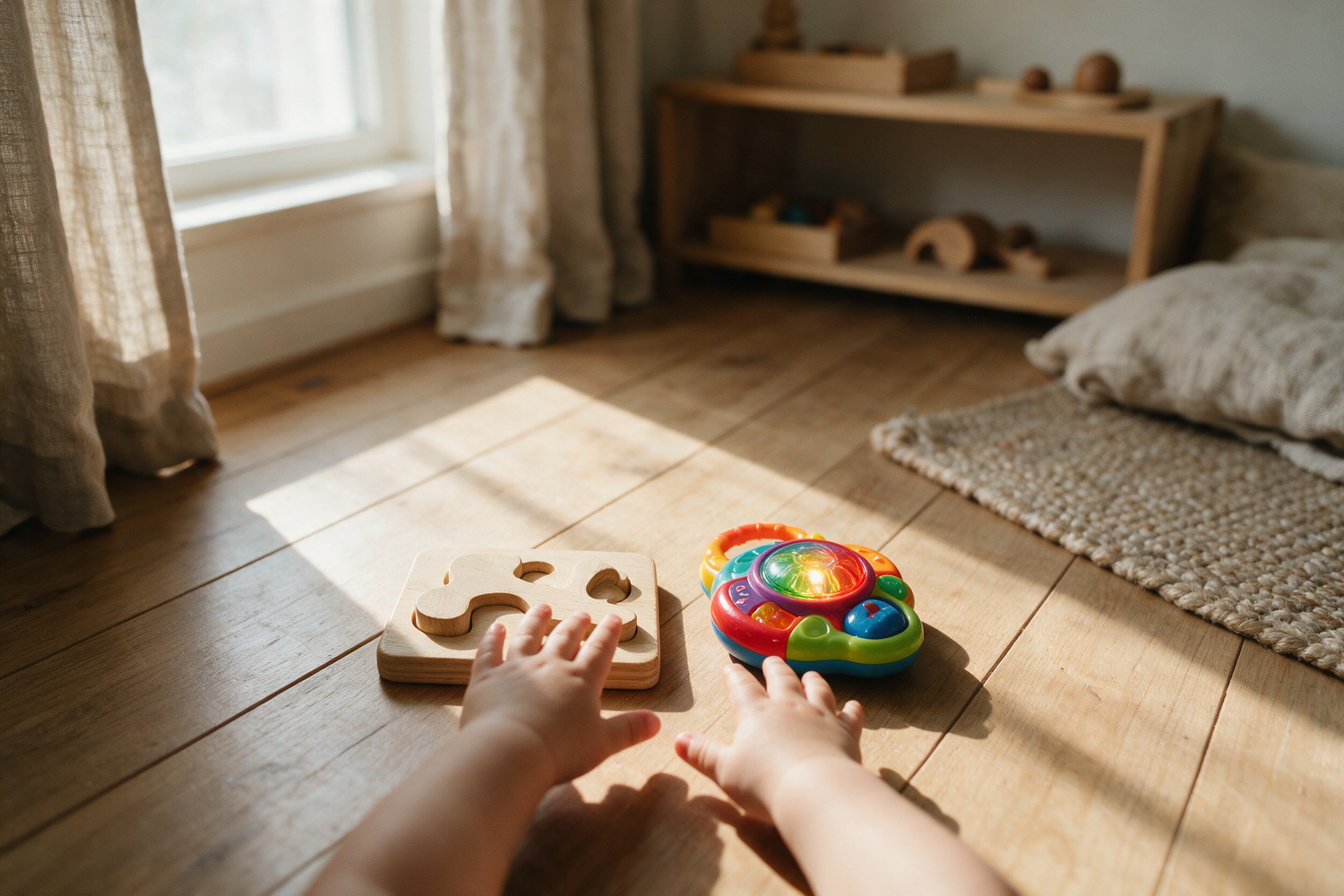
A good single-skill toy resists the temptation to bolt on extra features. The Toddlers Wooden Bear Puzzle asks a child to do one thing, match shape to outline, rather than diluting that task with lights, sounds or bonus activities that pull attention away from it.

Why "wooden" isn't the test
Wood is the most common material in genuinely Montessori-aligned toys, but it is not the criterion itself, it is usually just a side effect of the other five. A wooden toy can still fail every criterion above: a wooden puzzle with only one "correct" way to hold it and a built-in buzzer for a wrong answer is wooden and still not Montessori in spirit. Our own look at whether wooden toys are really better than plastic goes further into this, but the short version is: the material is a clue, not the answer.
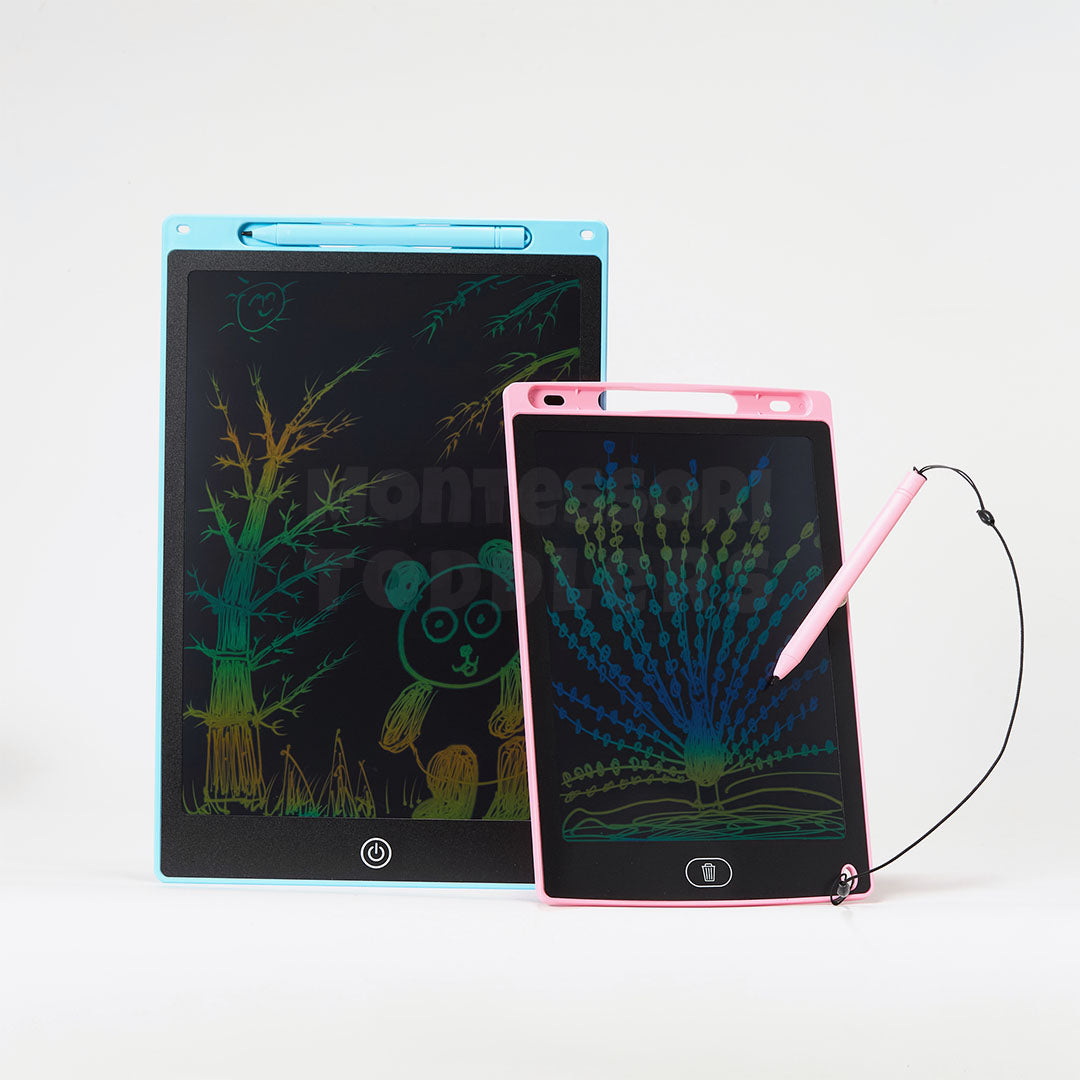
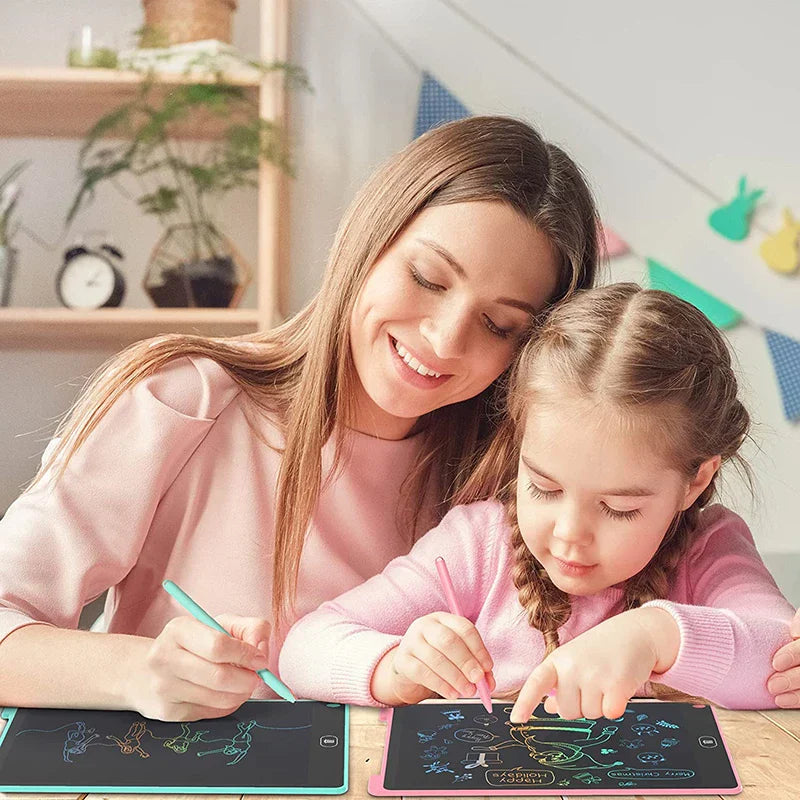
The reverse is also true. A small number of non-wooden products can pass the spirit of these criteria even though they would never be called "classically Montessori." Our honest review of the Toddlers Tablet is upfront about this: it is not a Montessori toy in the strict sense, but it solves a real problem (screen-free drawing) without breaking the "no adult narration or screen required" spirit of independent, self-paced play.
A 60-second checklist before you buy anything labelled "Montessori"
- Can my child tell, on their own, whether they got it right? If the answer needs an adult, it fails criterion one.
- Is there one clear task, or five things bolted together? More features is usually a worse sign, not a better one.
- Does it need a battery to do anything interesting? If the interesting part is the light or sound, it isn't the toy doing the teaching.
- Could my child start and finish this without my hands? Fiddly clasps and awkward sizing quietly break independence.
- Would this still be interesting in total silence? If not, a screen or speaker is doing the work the toy should be doing.
If a toy passes four or five of these, the "Montessori" label is earned. If it passes one or two, the label is doing more work than the toy is. For a deeper look at the philosophy behind all of this, see our honest guide to what Montessori actually is, and once you know the criteria, our age-by-age guide to choosing Montessori toys is the natural next step.
Frequently asked questions
Is the word "Montessori" regulated or trademarked?
No. "Montessori" is not a trademark and any manufacturer can put it on a product, which is exactly why it is worth knowing the underlying criteria rather than trusting the label alone.
Does a toy have to be wooden to be Montessori?
No. Wood is common in Montessori-aligned toys because it tends to be simple, real and durable, but the material itself is not the test. A wooden toy can fail the criteria and a non-wooden toy can honour the spirit of them.
Can a toy be Montessori and still be fun?
Yes, and it should be. Self-correcting, single-skill toys are often more satisfying to a toddler precisely because they can finish the task and feel the "I did it" moment themselves, without waiting for anyone else's reaction.
What is the single biggest giveaway that a "Montessori" toy isn't really Montessori-aligned?
Lights, sounds or a screen that direct what happens next. If the toy needs to entertain the child rather than let the child work something out, it is missing the core idea regardless of what the packaging says.
Are expensive "Montessori" toys automatically better than cheaper ones?
No. Price has no relationship to whether a toy meets the five criteria. Some inexpensive toys pass every one; some expensive ones pass none.
With love from the Montessori Toddlers team 💛