The short version: A Montessori toy is simple, made from natural materials, teaches one thing at a time, and lets the child lead. Below is a practical breakdown of what to look for at every age from birth to five — no jargon, no fluff, just what actually works.
First, forget everything you think you know about Montessori toys
There is a strange thing happening online. Search for "Montessori toys" and you will find rainbow stackers, busy boards, and wooden everything — all labelled Montessori. Most of it is not. It is just wooden.
Montessori is not a brand. It is not a material. It is not an aesthetic. It is a way of thinking about how children learn, developed by Maria Montessori over a hundred years ago and still used in thousands of schools worldwide. A toy can be made of plastic and be perfectly Montessori. A toy can be made of the most beautiful walnut and be completely useless from a developmental standpoint.
So before we get into age-by-age recommendations, here is what actually makes a toy Montessori-aligned — and what does not.
What makes a toy Montessori (and what does not)
| Montessori-aligned | Not Montessori (even if it says so on the box) |
|---|---|
| Teaches one skill at a time | Does five things at once and does none well |
| Child controls the action | Press a button and watch it go |
| Self-correcting — the child can see if they got it right | Needs an adult to say "good job" or "try again" |
| Based in reality (real animals, real tools, real foods) | Fantasy characters and talking objects |
| Simple enough to focus on | Lights, sounds, music all firing at once |
| Invites repetition | Interesting for five minutes, then forgotten |
The battery test is a good shortcut: if it needs batteries, it is probably not Montessori. The child should be the one doing the work, not the toy.
Birth to 12 months: less than you think
Babies do not need much. Seriously. The instinct to fill a nursery with toys is strong, but a newborn's world is small and sensory, and too much choice overwhelms rather than helps.
What actually matters in the first year:
- High-contrast cards or mobiles (0–3 months) — newborns see in high contrast. Black and white patterns are not boring to them; they are fascinating.
- A single wooden rattle or grasping toy (3–6 months) — something light enough to hold and interesting enough to mouth. One at a time.
- An object permanence box (8–12 months) — a box with a hole on top and a ball. Drop the ball in, it disappears, it rolls out the side. This is peak entertainment for an eight-month-old, and it teaches one of the most important cognitive concepts of the first year: things still exist when you cannot see them.
- Stacking rings or nesting cups (9–12 months) — not because they will stack them properly (they will not), but because they will pick them up, mouth them, bang them together, and eventually start figuring out the order. That process is the point.
That is it. Four types of toy for an entire year. I know it does not feel like enough. It is.
12 to 24 months: the hands want to work
This is when things get interesting. Around the first birthday, something shifts. Your child stops being content to just look at and mouth things. They want to do things. Put things in other things. Take them out again. Carry them across the room. Stack them and knock them down.
Montessori calls this the sensitive period for movement and order. In practice, it means your toddler is obsessed with repetition (doing the same thing forty times is not a bug, it is a feature) and with understanding how the physical world works.
Good choices for this age:
- Shape sorters — but simple ones. Three shapes, not twelve. The child should be able to succeed with effort, not give up in frustration.
-
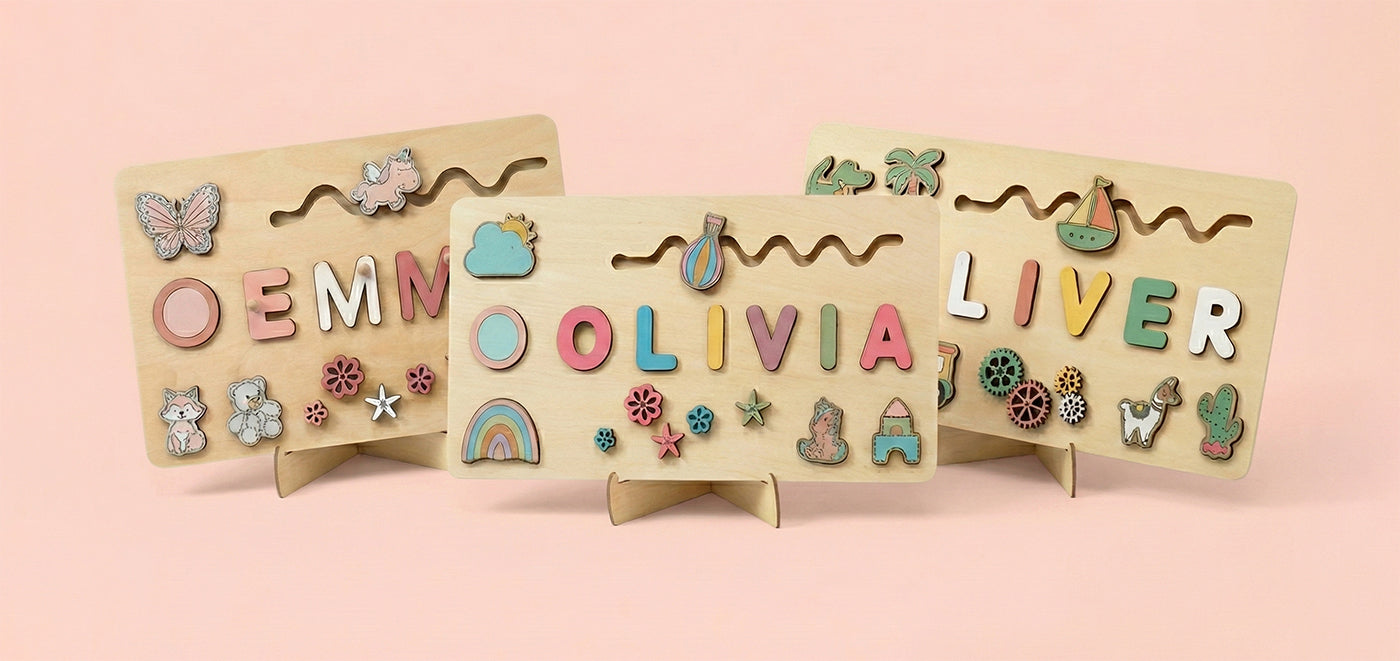
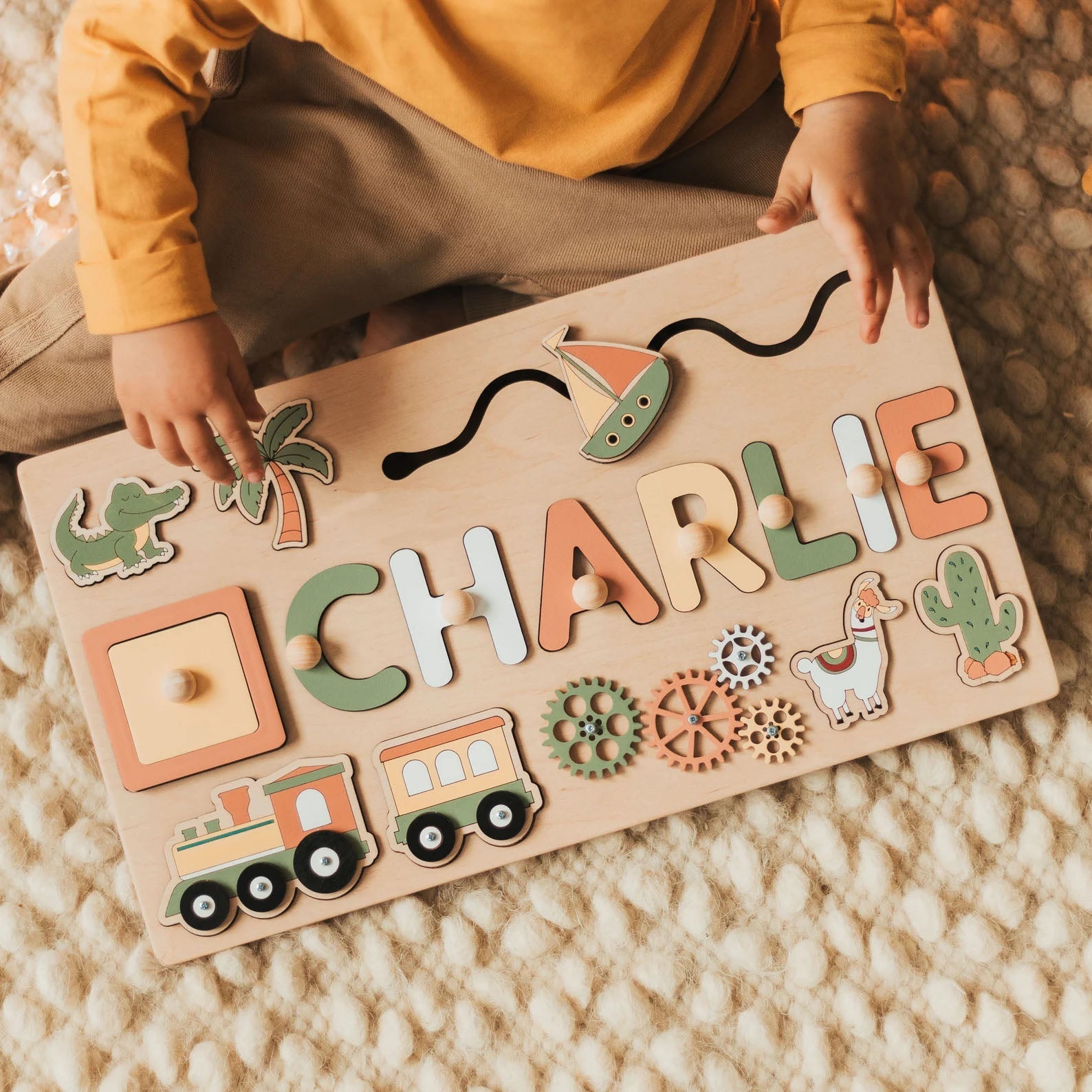
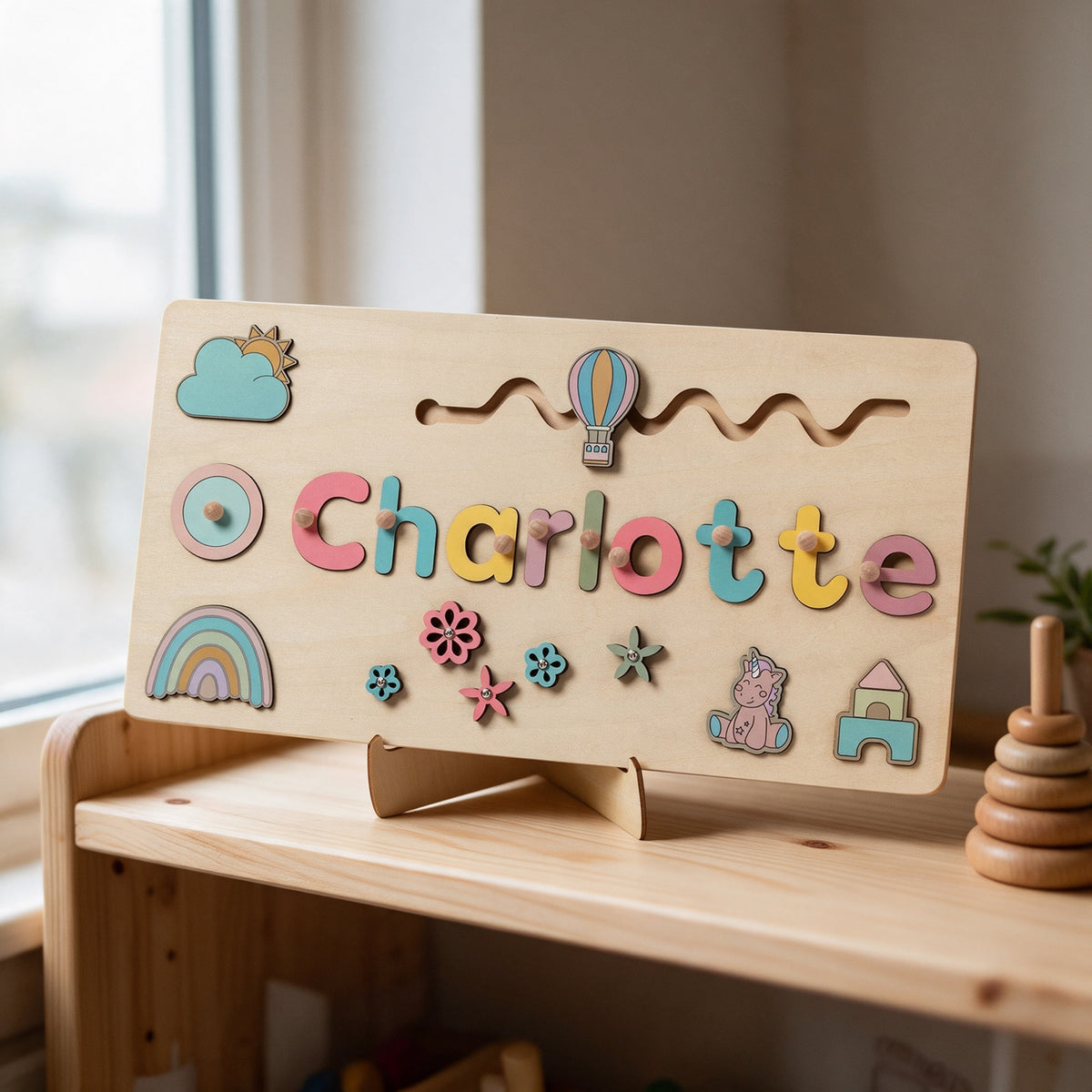
Peg puzzles — chunky knobs, clear shapes, satisfying fit. A personalised name puzzle works brilliantly here because the letters are meaningful to them.

- Posting boxes and coin drops — anything where an object goes into a slot. The hand-eye coordination required is significant at this age.
- Stacking and nesting toys — they are ready to actually stack now, not just knock over. Size sequencing is early maths.
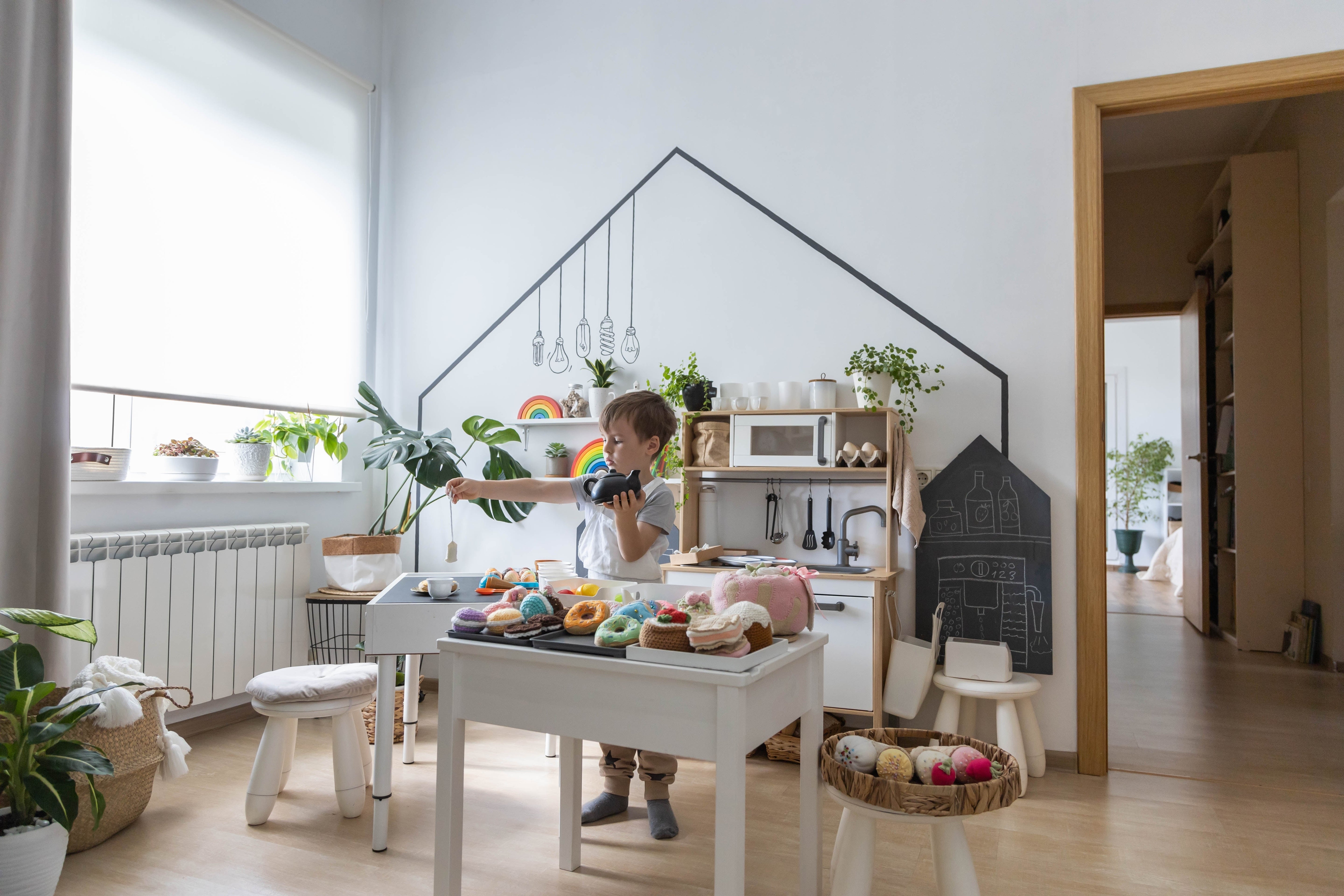
- Practical life tools — a small broom, a watering can, a cloth for wiping. These are not toys in the traditional sense, but they are the most Montessori thing in your house.
2 to 3 years: language explodes, so should the toys
Between two and three, most children go from two-word sentences to full conversations. Their vocabulary can quadruple in a single year. This is the sensitive period for language, and the toys that support it are the ones that give children something to talk about, sort, name, and categorise.
It is also when imaginative play starts to emerge — not the fantasy kind (that comes later), but the imitation kind. They want to do what you do. Cook what you cook. Clean what you clean.
- Realistic animal or vehicle figurines — for naming, sorting, matching, and storytelling. Look for ones that actually look like the animal, not cartoon versions.
-
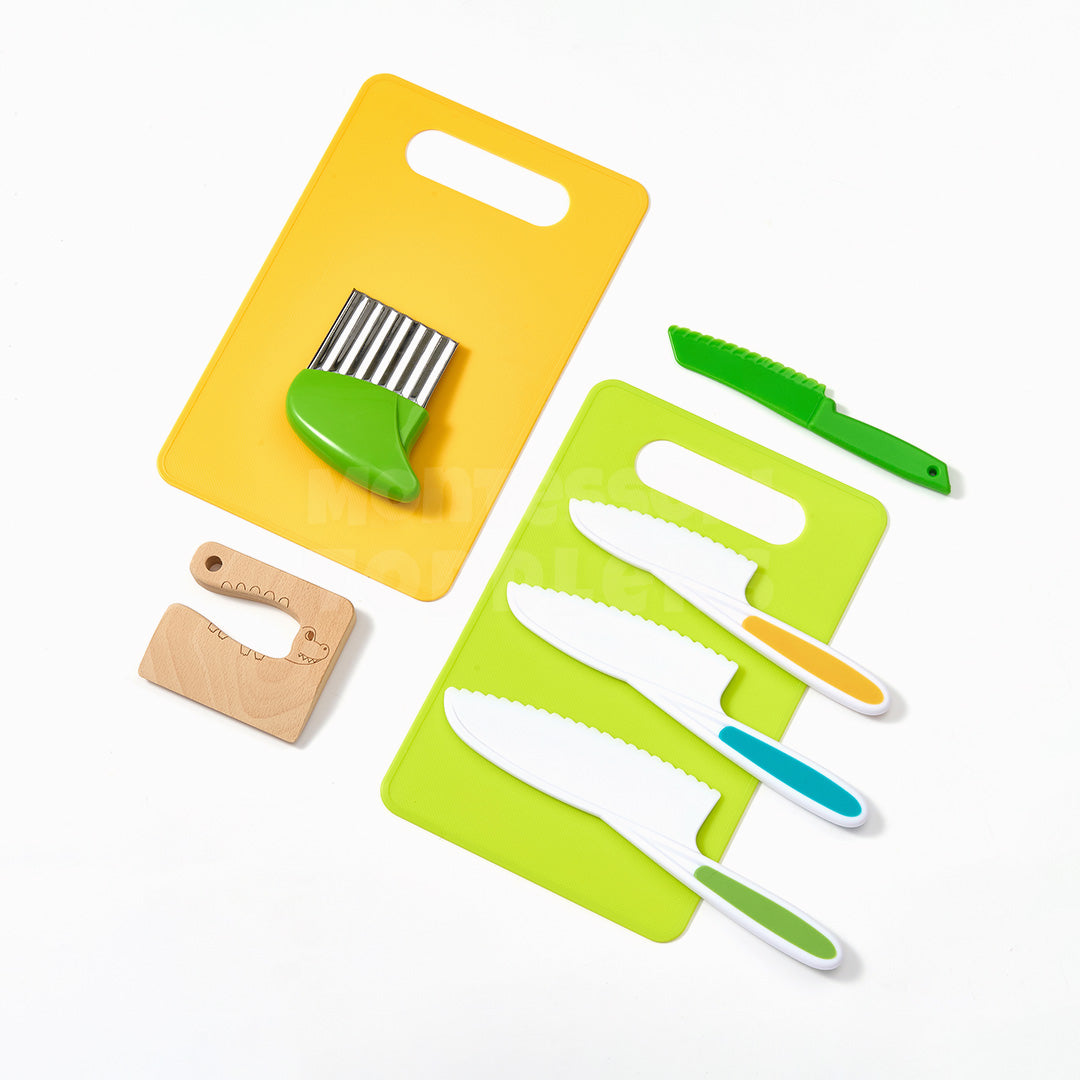
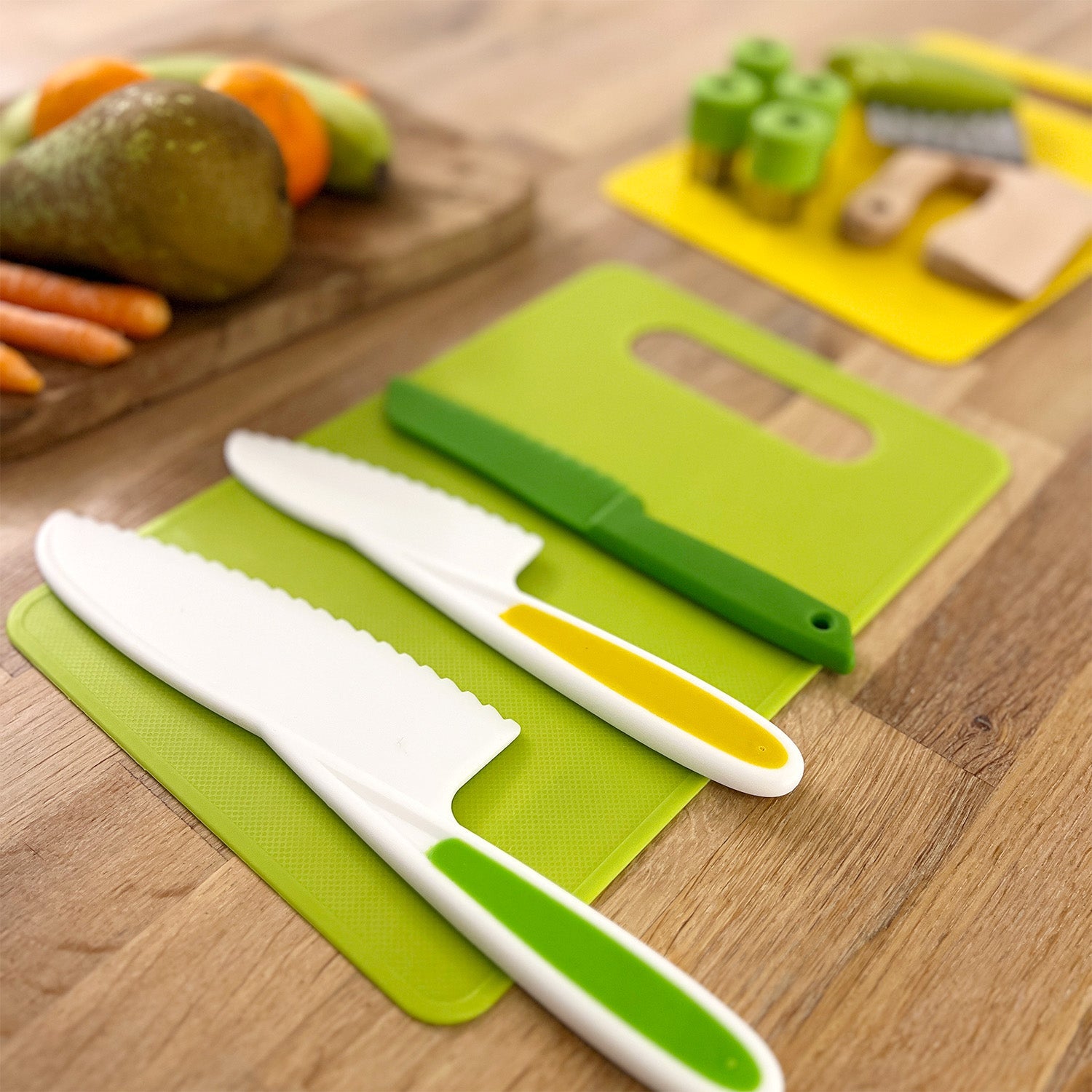
Play kitchen tools — not a plastic toy kitchen, but real child-sized tools they can use in your actual kitchen. A toddler chef set that actually cuts a banana is worth more than a play kitchen that makes microwave sounds.

- Art supplies — chunky crayons, finger paints, play dough. Open-ended creativity, no colouring books (those teach children to stay inside lines someone else drew).
- Simple puzzles with more pieces — they are ready to move beyond peg puzzles to jigsaws with 4–12 pieces.
- Threading and lacing toys — a wooden needle and large beads or lacing cards. Serious fine motor work that directly prepares the hand for writing.
3 to 4 years: the age of "why?"
Three-year-olds ask questions. A lot of questions. They are starting to think abstractly, to wonder about cause and effect, to experiment. They also have the fine motor control and focus to handle more complex activities.
- Construction sets — wooden blocks, magnetic tiles, or simple building systems. Open-ended building teaches spatial reasoning, physics, and planning.
- Counting and sorting materials — anything that lets them group by colour, size, shape, or number. This is pre-maths, and children this age find it genuinely satisfying.
-
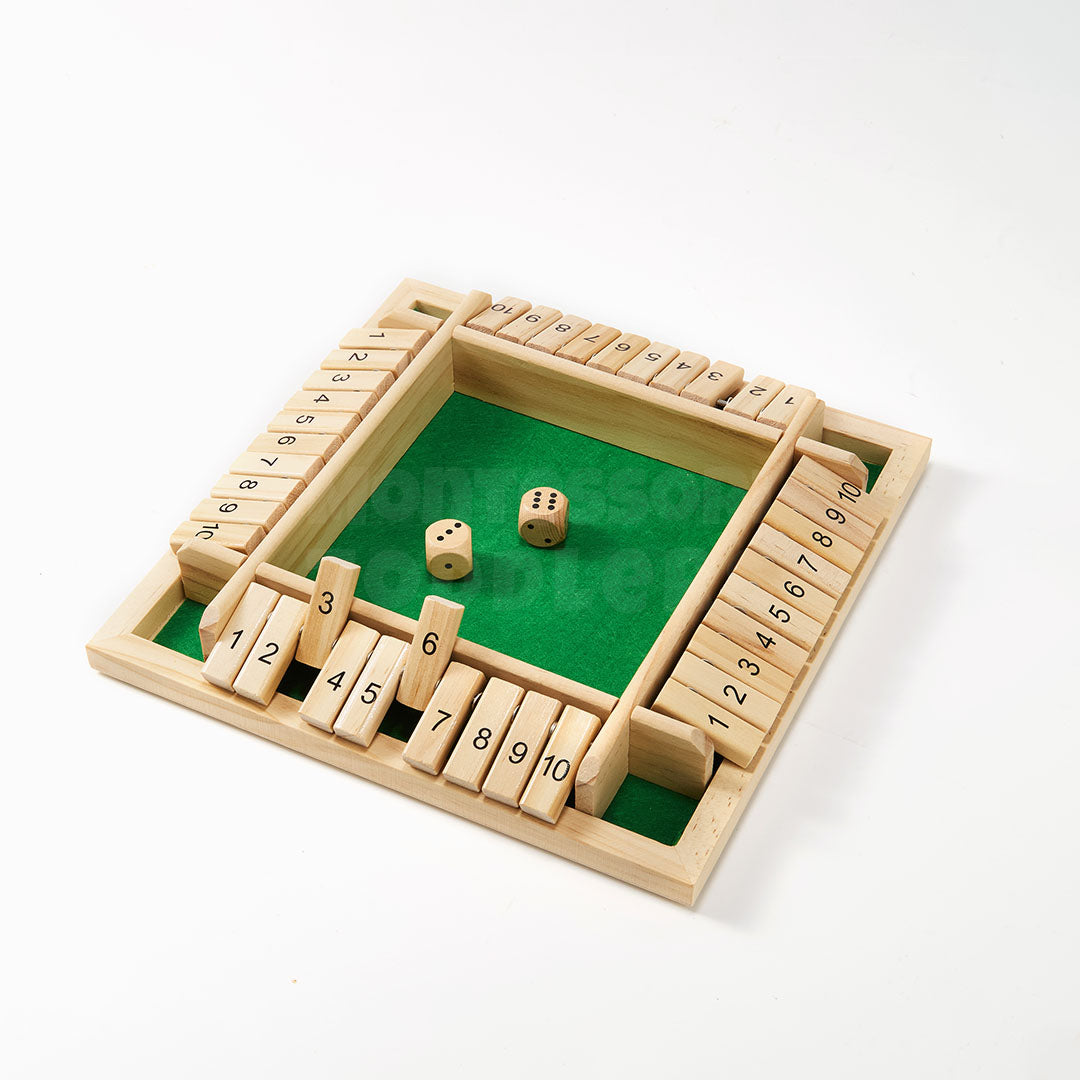
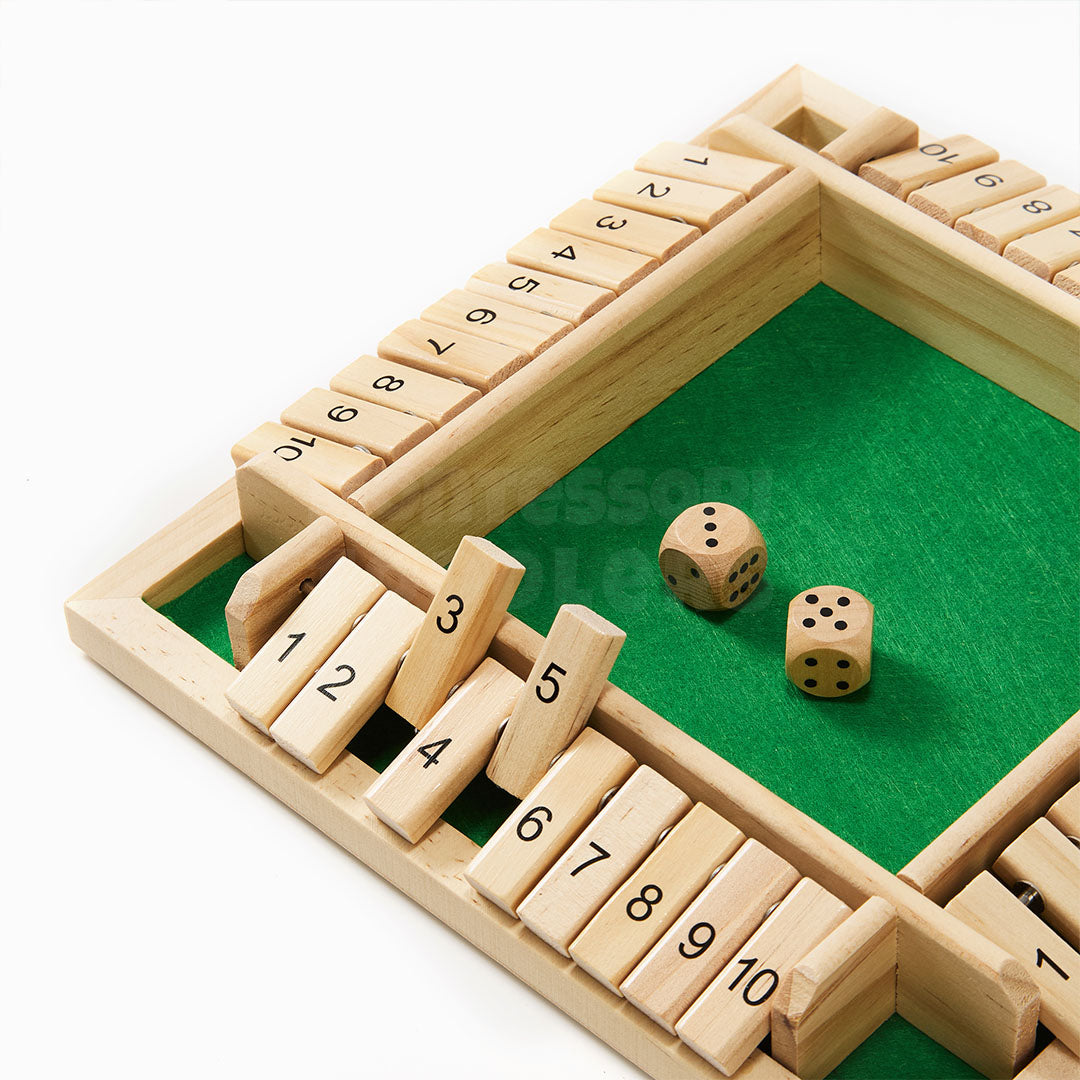
Board games with simple rules — Shut the Box is a good example. Dice, numbers, a clear goal, and genuine maths practice disguised as a game.

- Gardening tools — a small trowel, a pot, some seeds. Growing something from a seed is one of the most powerful cause-and-effect lessons a child can experience.
-
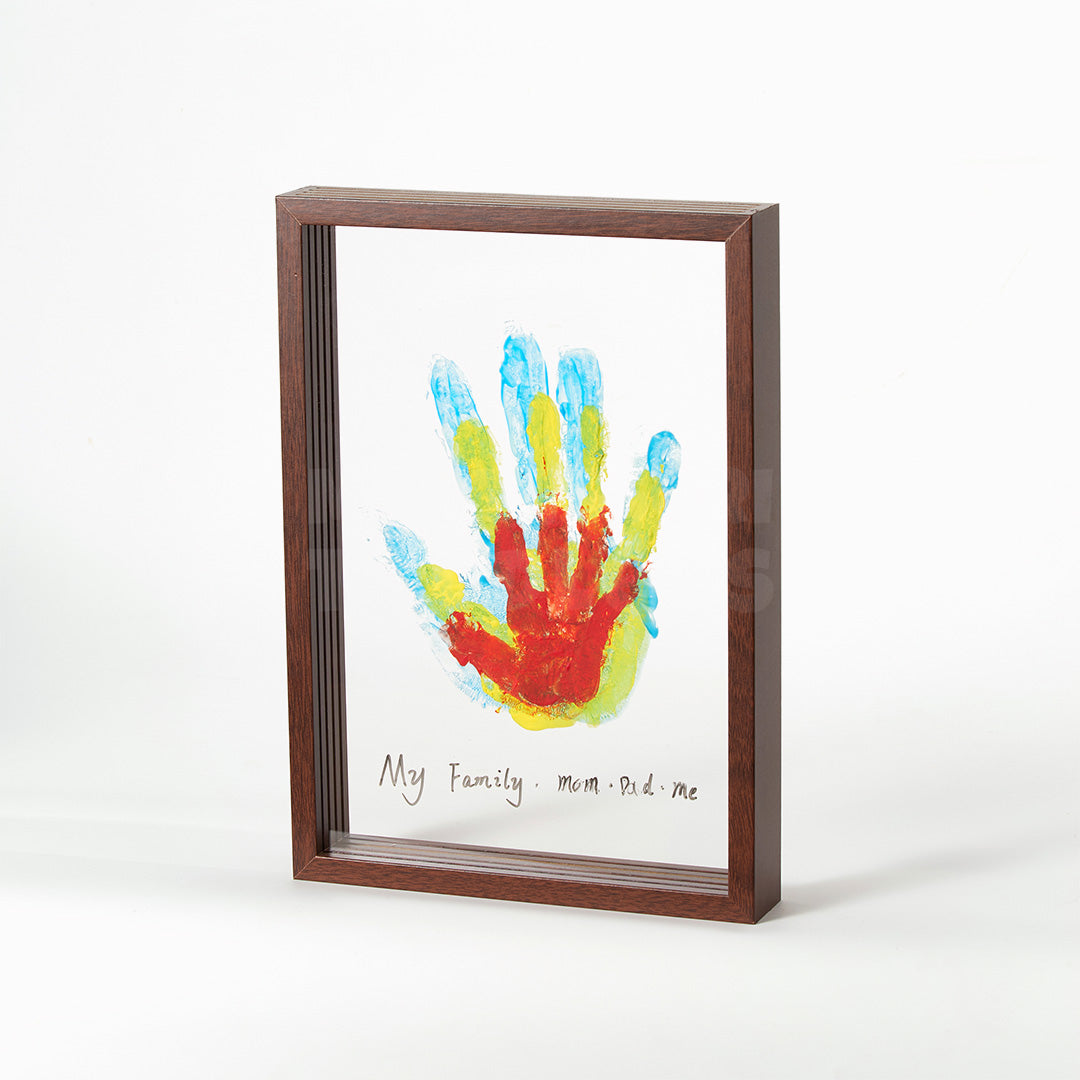
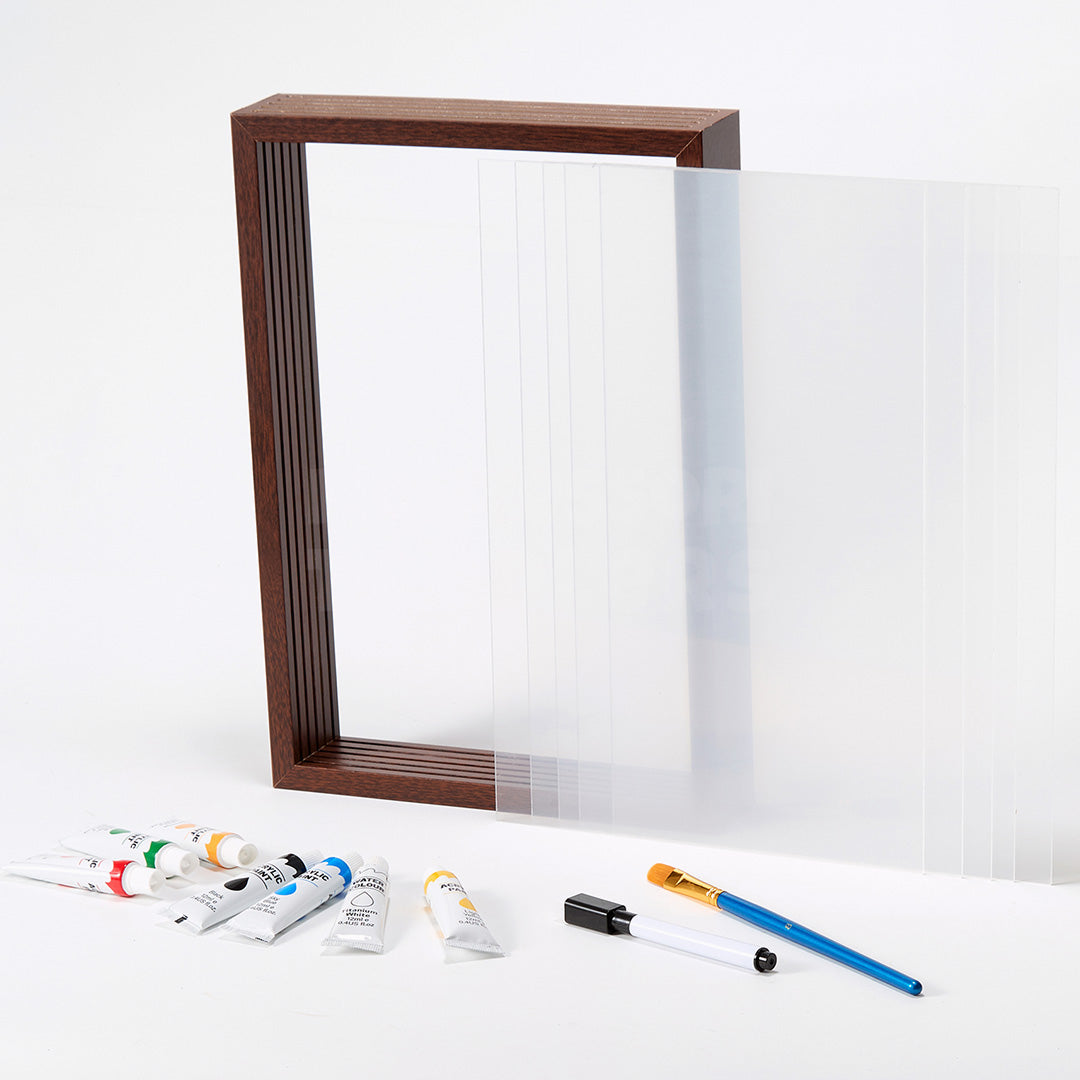
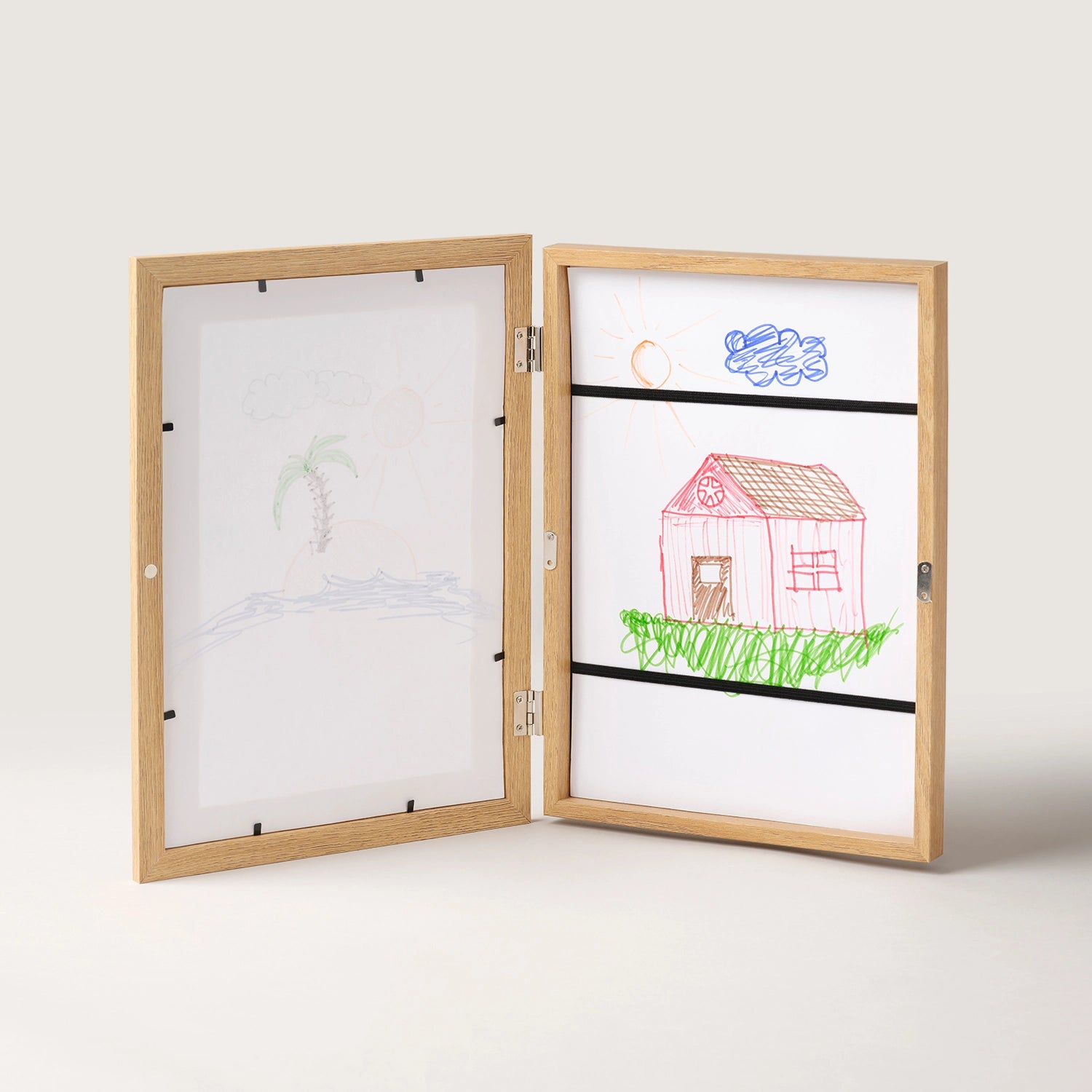
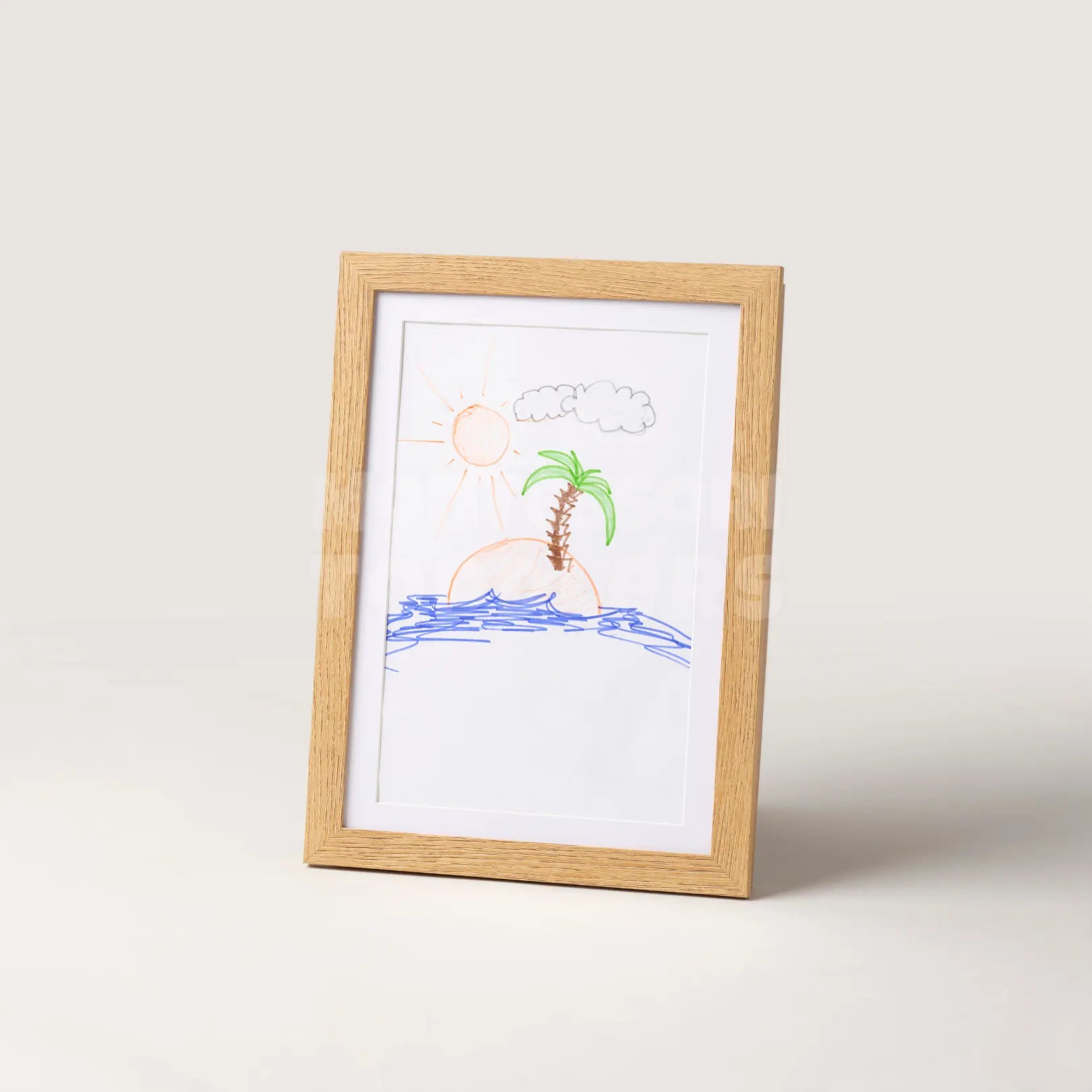
Craft kits with a purpose — a handprint frame they create themselves is more meaningful than a generic craft box because the result is personal and permanent.

4 to 5 years: getting ready for school (without knowing it)
At four and five, children are refining everything they have been building for years. Their hands are more precise. Their attention spans are longer. They can follow multi-step instructions and work on projects over multiple days.
The toys that matter now are the ones that bridge play and the academic skills they will need in school — but through hands-on experience, not worksheets.
For a ready-made shortlist at this age, see our full 4-year-old gift guide.
And if you are shopping for a five year old specifically, see our dedicated 5-year-old gift guide.
- Letter and number materials — sandpaper letters, moveable alphabets, number rods. The Montessori approach teaches writing before reading (the hand learns before the eye), so anything that lets children trace, build, and form letters physically is valuable.
- Science exploration kits — magnifying glasses, magnets, simple experiments. Feed the "why?" with real investigation, not just answers.
- Strategy games — memory games, pattern matching, and games that require planning ahead.
-
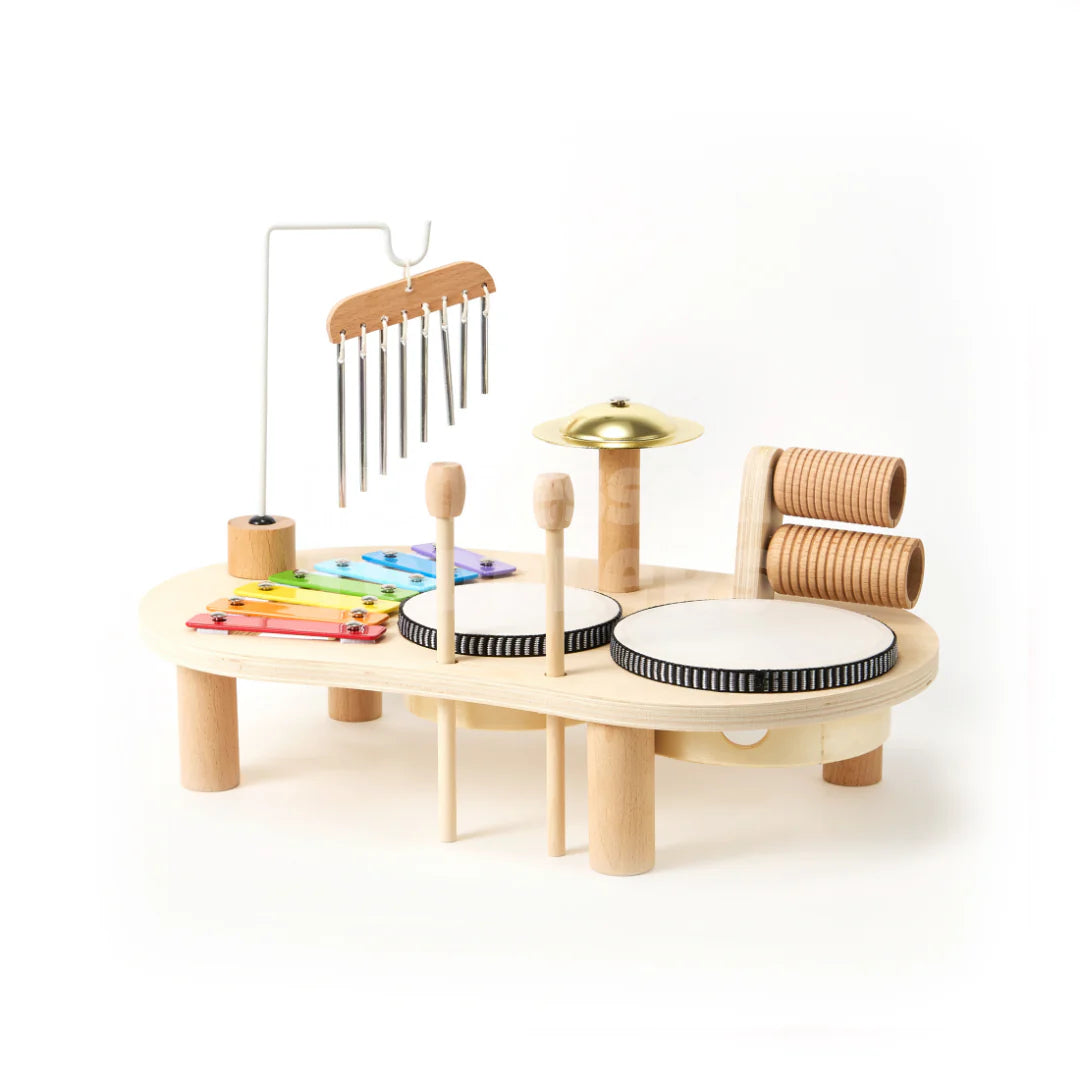
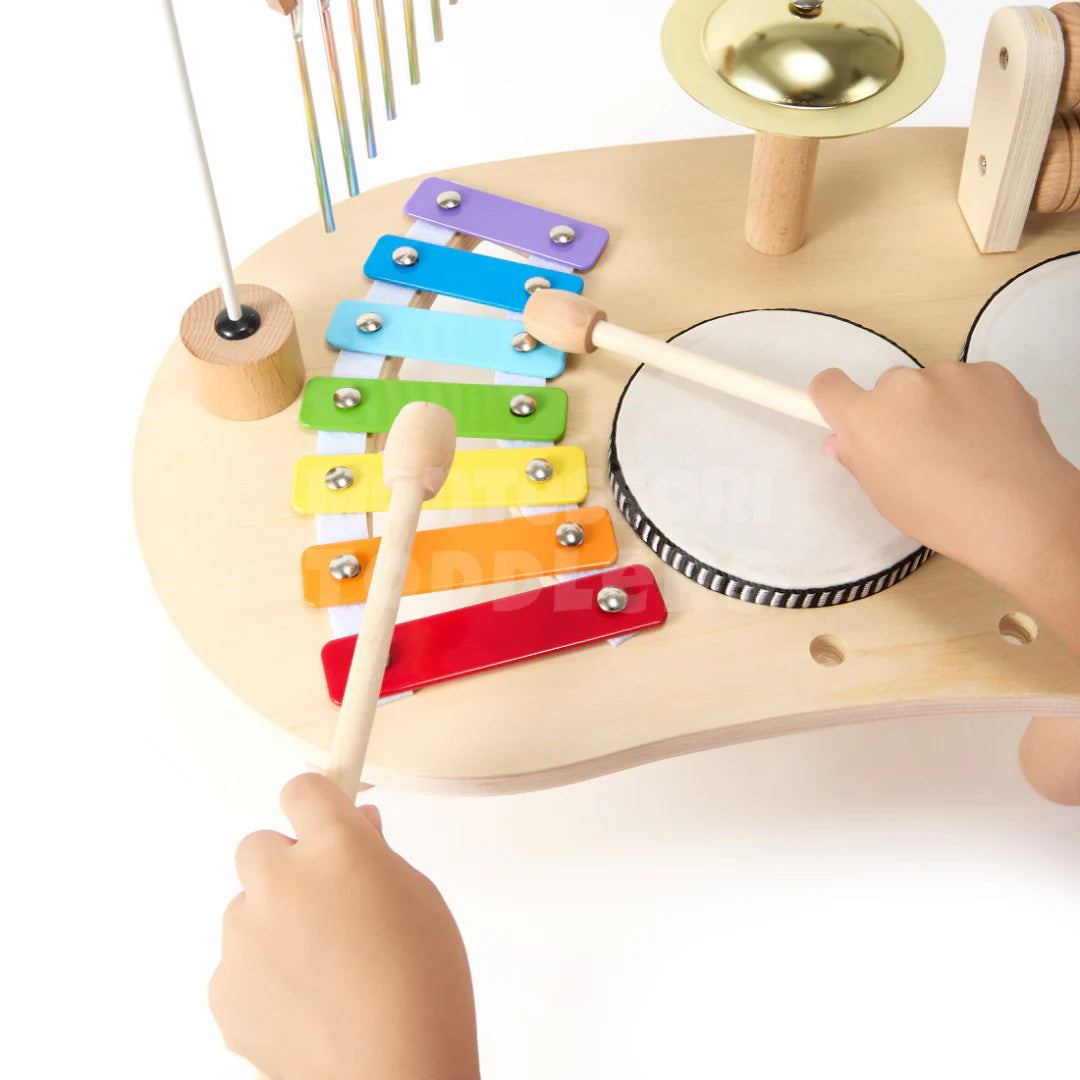
Musical instruments — real ones, not plastic imitations. A wooden music set with actual percussion instruments teaches rhythm, coordination, and listening.

- Books, books, books — not a toy, but the single most important thing in any Montessori home. Read together every day. It is not negotiable.
The toy rotation trick
Here is something most toy guides will not tell you: the number of toys matters as much as the type.
A 2017 study from the University of Toledo found that toddlers played more creatively and for longer periods when they had access to four toys compared to sixteen. Fewer toys meant deeper play. This matches what Montessori classrooms have known for a century — a prepared environment is a curated one.
The practical solution is toy rotation. Keep 4–6 toys accessible on a low shelf. Store the rest in a cupboard. Every week or two, swap some out. The "new" toys feel fresh again, and your child engages with each one more deeply because they are not overwhelmed by choice. For a full step-by-step system, see our dedicated toy rotation guide.
How to spot a bad "Montessori" toy
A few red flags to watch for when shopping:
- It does the work for the child. If the toy lights up, plays music, or moves on its own, the child is watching, not learning.
- It claims to teach everything at once. A toy that "teaches letters, numbers, shapes, colours, and music!" teaches none of them well.
- It is labelled "Montessori" but is really just wooden. Wood is nice. Wood is not enough. A wooden toy with flashing LED lights is not Montessori.
- It has no clear purpose. If you cannot describe in one sentence what skill it develops, skip it.
- It cannot be used in more than one way. The best Montessori materials grow with the child — used simply at first, then in more complex ways later.
Frequently asked questions
Are Montessori toys only made of wood?
No. Wood is common because it is durable, has a natural feel, and provides sensory feedback (weight, temperature, texture). But Montessori is about the design principles — one skill at a time, child-led, self-correcting — not the material. Metal, fabric, silicone, and even some plastics can be Montessori-aligned if the toy follows these principles.
Do Montessori toys actually help with development?
Yes, and the evidence is strong. A 2017 study in the journal Infant Behavior and Development found that fewer, simpler toys led to longer and more creative play sessions. Montessori-style education has been linked to stronger academic outcomes, better social skills, and greater executive function in multiple longitudinal studies, including a 2006 study published in Science by Angeline Lillard.
What age should I start with Montessori toys?
From birth. Even newborns benefit from high-contrast visuals and simple grasping objects. The key is matching the toy to the developmental stage — not buying ahead, and not sticking with toys they have outgrown.
How many toys should a toddler have out at once?
Research suggests 4–6 is optimal. Use toy rotation to keep things fresh without cluttering the play space. A low, open shelf where the child can see and choose independently works better than a toy box where everything is piled together.
Is it too late to start Montessori at age 3 or 4?
Not at all. While early exposure is ideal, children of any age benefit from simplified toy selections, hands-on learning materials, and the independence that Montessori encourages. Start where your child is, not where a chart says they should be.
What is the difference between Montessori toys and regular educational toys?
Most educational toys try to teach through entertainment — sounds, lights, screens, rewards. Montessori toys teach through the child's own hands and concentration. The child does the work, discovers the pattern, and corrects their own mistakes. There is no "well done!" button. The satisfaction comes from the activity itself.
Read more from our blog
- Why a personalised name puzzle is one of the best first toys you can give
- Cooking with toddlers: the best Montessori classroom at home
- Handprint frames: capturing tiny hands and how to get the perfect print
- Packing for a trip? See our screen-free travel toys guide
Browse our full collection by age →
With love from the Montessori Toddlers team 💛