Their name, their first word
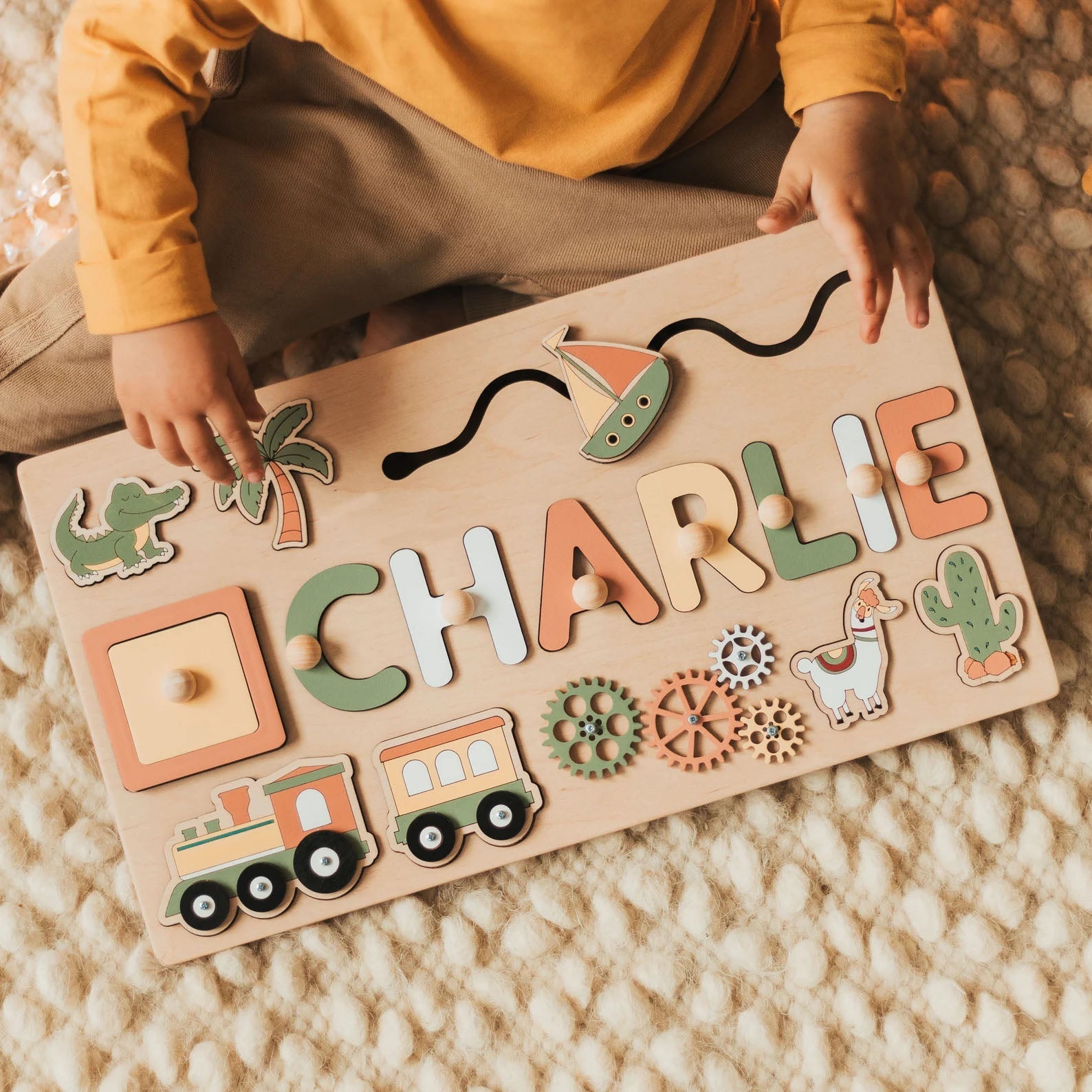
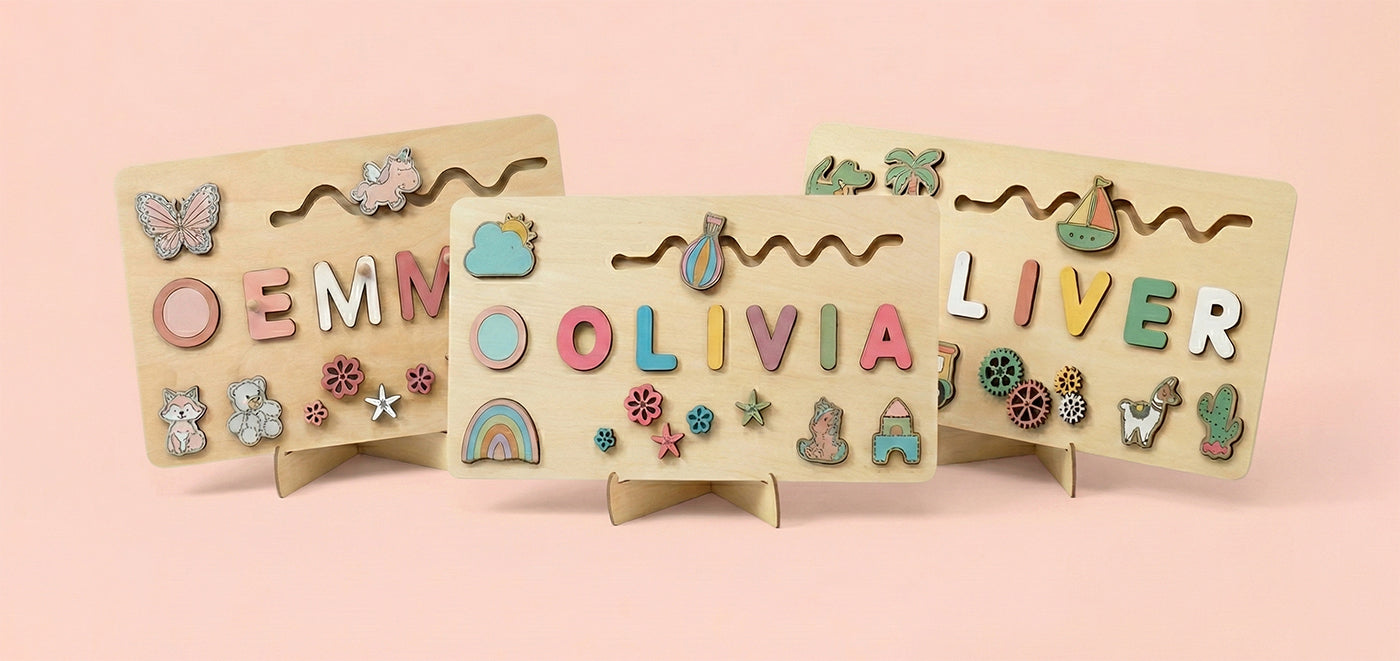
For most children, their own name is the first word they truly recognise. Long before they can read a book or write a sentence, they spot those familiar letters on a lunchbox, a drawing, a bedroom door. A personalised name puzzle, a custom wooden puzzle made with your child's own name, takes that recognition and turns it into something they can hold, lift, and piece together with their hands.
It sounds simple, and it is. That's what makes it work so well.

What happens when a child plays with a name puzzle
Each time your toddler picks up a letter, they're doing more than just playing. They're practising the pincer grip — that thumb-and-finger movement that's essential for holding a pencil later on. They're learning to match shapes to spaces, building spatial awareness. And they're beginning to connect the shape of a letter with the sound it makes, especially when you say the letters together as they play.
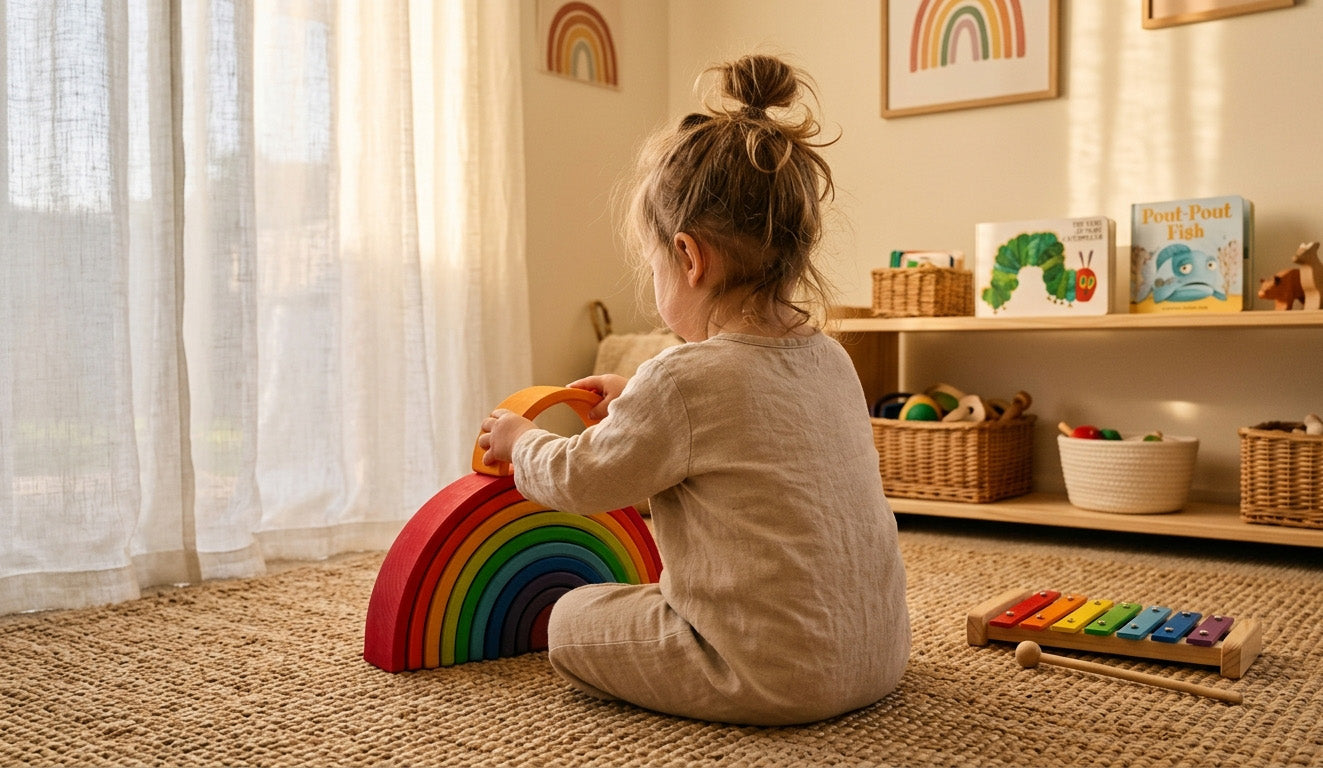
This is Montessori learning at its most natural: no screens, no instructions, just a child following their curiosity with a beautifully made object.
Fine motor skills
The simple act of lifting a letter piece out of its slot and fitting it back in requires coordination and control. For a one or two-year-old, this is genuinely challenging work — and the kind of repetition they'll happily do dozens of times, because it's their name and it feels like their puzzle.
Letter recognition
Children who regularly play with letter-based toys tend to recognise their alphabet earlier. But a name puzzle has an advantage over a standard ABC set: it's personal. A child called Olivia isn't learning seven random letters — she's learning her letters, in her order. That emotional connection makes the learning stick.
Focus and independence
Watch a toddler with a name puzzle and you'll notice something lovely. They get quiet. They concentrate. They work through the letters one by one, and when the last piece clicks into place, you can see the satisfaction on their face. This kind of independent, self-directed play is exactly what Montessori education encourages.
New: lowercase letters, because you asked
We've had the same request from parents again and again: can you do lowercase?
The reason makes sense. In many phonics programmes — particularly across the UK, Australia, and Europe — children learn to recognise lowercase letters first, since that's what fills the pages of their books. Other schools start with uppercase or teach both side by side. Every setting is different, and that's exactly why we wanted to give you the choice.
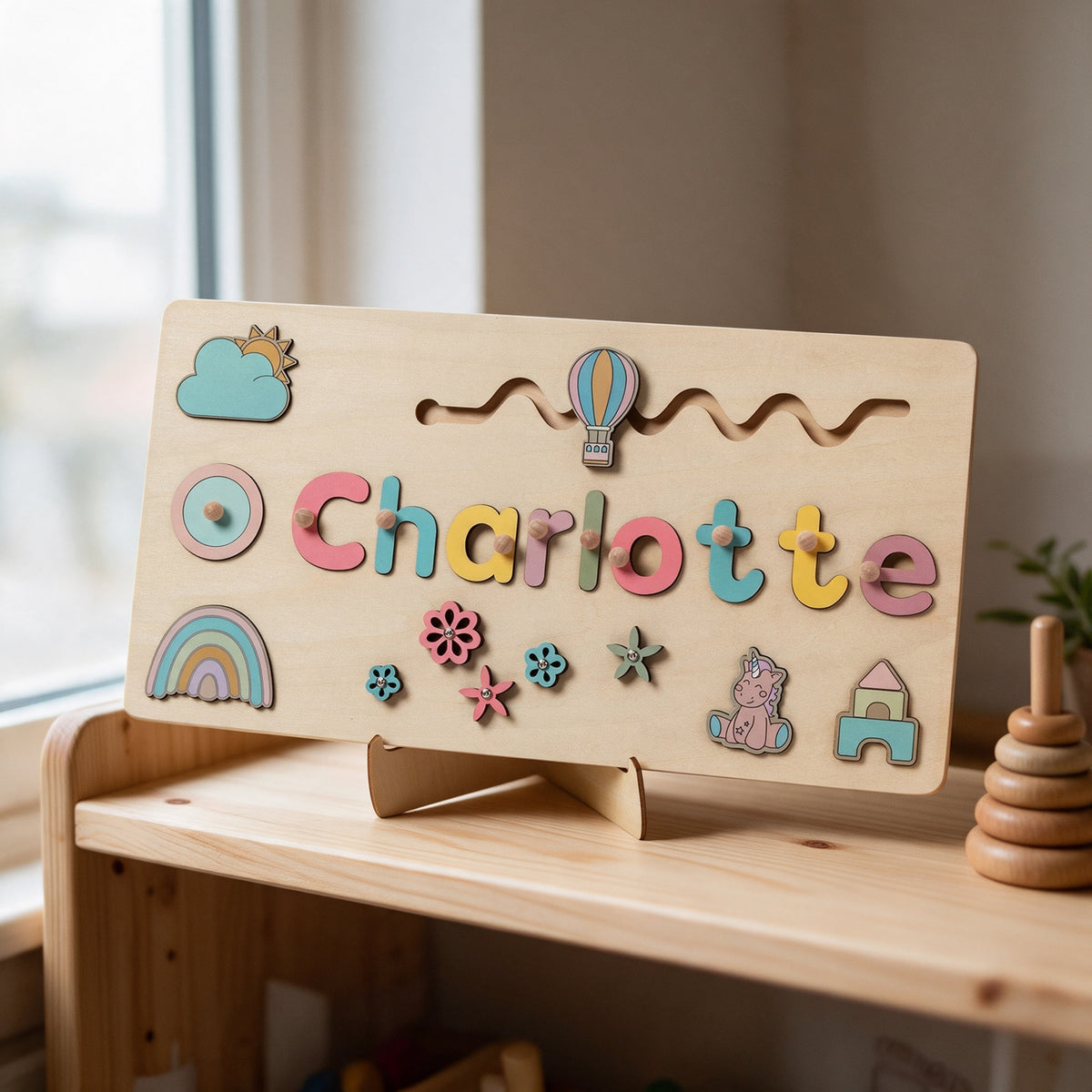
Our Toddlers Personalised Wooden Puzzle now prints exactly what you type. Type "olivia" and you'll get lowercase. Type "Olivia" and the O will be uppercase with the rest in lowercase. Type "OLIVIA" and you'll get all capitals. You know your child's classroom best — now the puzzle can match it.
Six themes to choose from
Every puzzle is made from natural wood and comes in one of six illustrated themes: Adventure, Blossoms, Pink Blossom, Ocean, Explorer, and Dreamer. The letters sit in precision-cut slots against a colourful background — something nice enough to display on a shelf when it's not being played with.
We make them in two sizes: a standard size for names with 1–5 letters, and a larger version for names with 6–9 letters. Both are designed for small hands, with letter pieces that are chunky enough for toddlers to grip comfortably.
A gift that means something
There's a reason personalised name puzzles are one of our bestsellers. They're the kind of gift that makes a parent smile — thoughtful, useful, and beautiful. Whether it's for a birthday, a christening, or just a Tuesday, it's a toy that children come back to again and again.
And because every one is made to order, no two are quite the same. That feels right for something with your child's name on it.
Frequently asked questions
What age is a name puzzle best for?
Most children enjoy one from around 18 months, when they start to grip and place pieces, right through the early school years as they begin to recognise letters and sounds.
Are name puzzles good for toddlers?
Yes. A wooden name puzzle builds the pincer grip, letter recognition and focus, all while a child plays with the most familiar word of all, their own name.
What is the difference between a custom, personalized, and personalised name puzzle?
They are all the same thing, whether you spell it “personalized” or “personalised”. Each is made to order with your child's name, crafted in solid wood with the letters you choose, up to nine of them.
How many letters can a name puzzle have?
Ours holds any name up to nine letters, in uppercase, lowercase or a classic mix, so it suits short and long names alike.
Why choose a wooden name puzzle over plastic?
Wood feels warmer in little hands, lasts for years, and ages into a keepsake that is often kept long after it is outgrown.
Related reading
Not sure which toys are right for your child's age? Our complete guide to choosing Montessori toys by age covers everything from birth to five.