In short: Cooking with your toddler builds fine motor skills, early maths, language, and independence — all at once. A child-sized chef set makes it safe and practical to involve them from age two. Here is why it works and how to get started.
The kitchen is a Montessori classroom
Maria Montessori called them "practical life activities" — the everyday tasks that children watch adults do and desperately want to try themselves. Pouring water, stirring batter, tearing lettuce. To a grown-up, it is just making dinner. To a toddler, it is the most interesting thing happening in the house.
The kitchen is where most of these activities naturally live. And research backs this up: children who help with cooking from an early age show stronger fine motor control, richer vocabulary, and better early maths skills than those who do not. They are practising measuring, counting, sequencing, and following instructions — without realising they are learning at all.
What cooking actually teaches a toddler
Fine motor skills and coordination
Scooping flour, cracking eggs, spreading butter, stirring a pot. Each of these actions requires a different grip and level of control. For a two or three-year-old, these are complex physical challenges — the kind that build the hand strength and dexterity needed for writing later on.
Maths and measurement
"We need two eggs." "Pour it up to this line." "Can you count three tomatoes?" Cooking is full of natural maths moments. Children learn about quantities, volume, and one-to-one counting in a context that makes immediate sense — because there is a cake at the end of it.
Language and vocabulary
The kitchen introduces words that do not come up in picture books: simmer, grate, fold, dice, knead. When you cook together and name what you are doing, your child absorbs specific vocabulary through context — exactly how Montessori language development is meant to work.
Independence and confidence
There is a visible shift when a child realises they have made something the family is actually eating. They contributed. They helped. This sense of being a capable, useful person — not just someone who gets things done for them — is central to Montessori philosophy, and the kitchen is one of the easiest places to foster it.
How to start: keep it simple
You do not need to hand a two-year-old a sharp knife. Start with tasks matched to their age and ability:
- 18 months–2 years: tearing herbs, stirring cold ingredients, placing toppings, washing vegetables
- 2–3 years: spreading with a butter knife, scooping, pouring measured ingredients, rolling dough
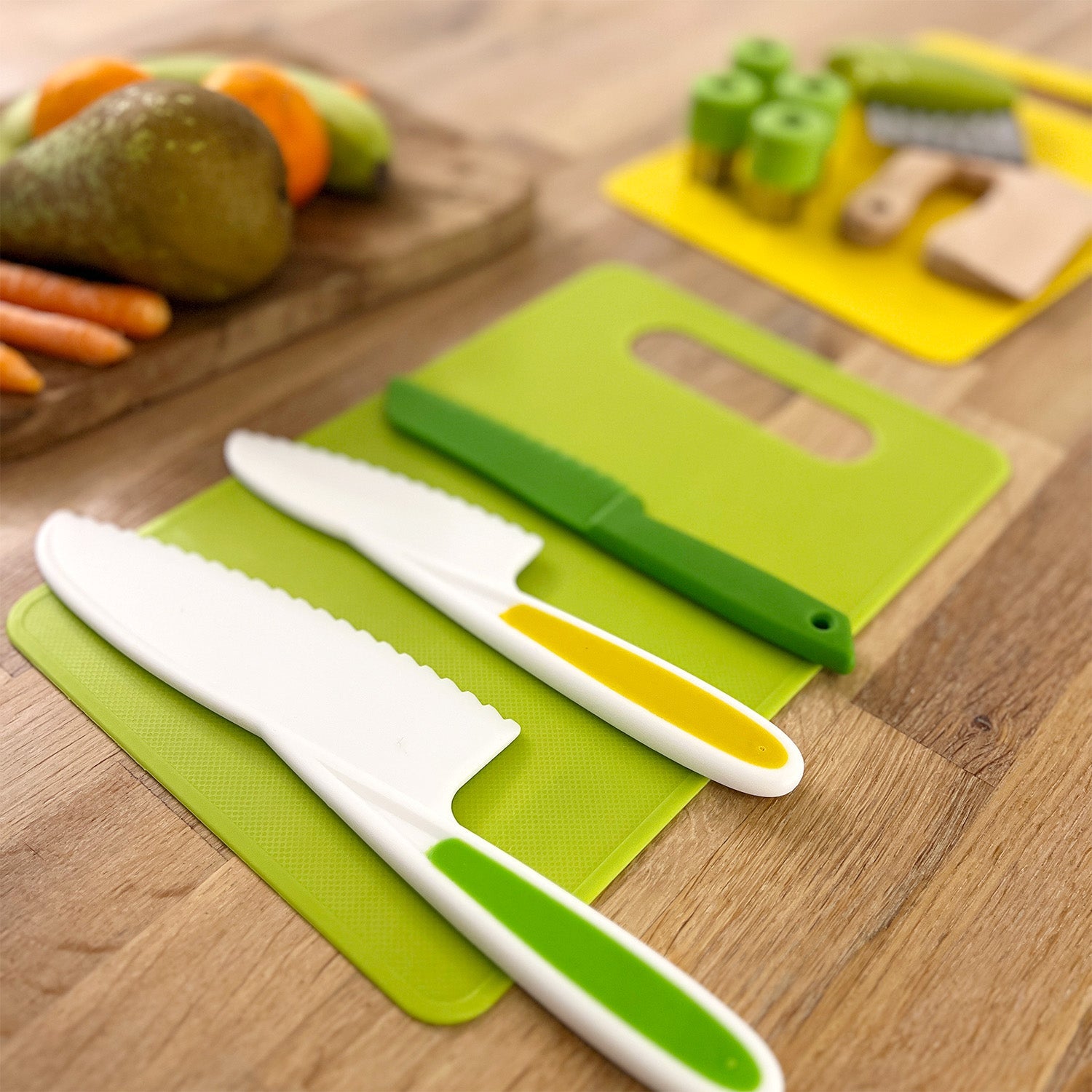
- 3–4 years: cutting soft foods with a child-safe knife, cracking eggs, using a peeler with supervision
- 4–5 years: following simple recipes, measuring independently, setting the table
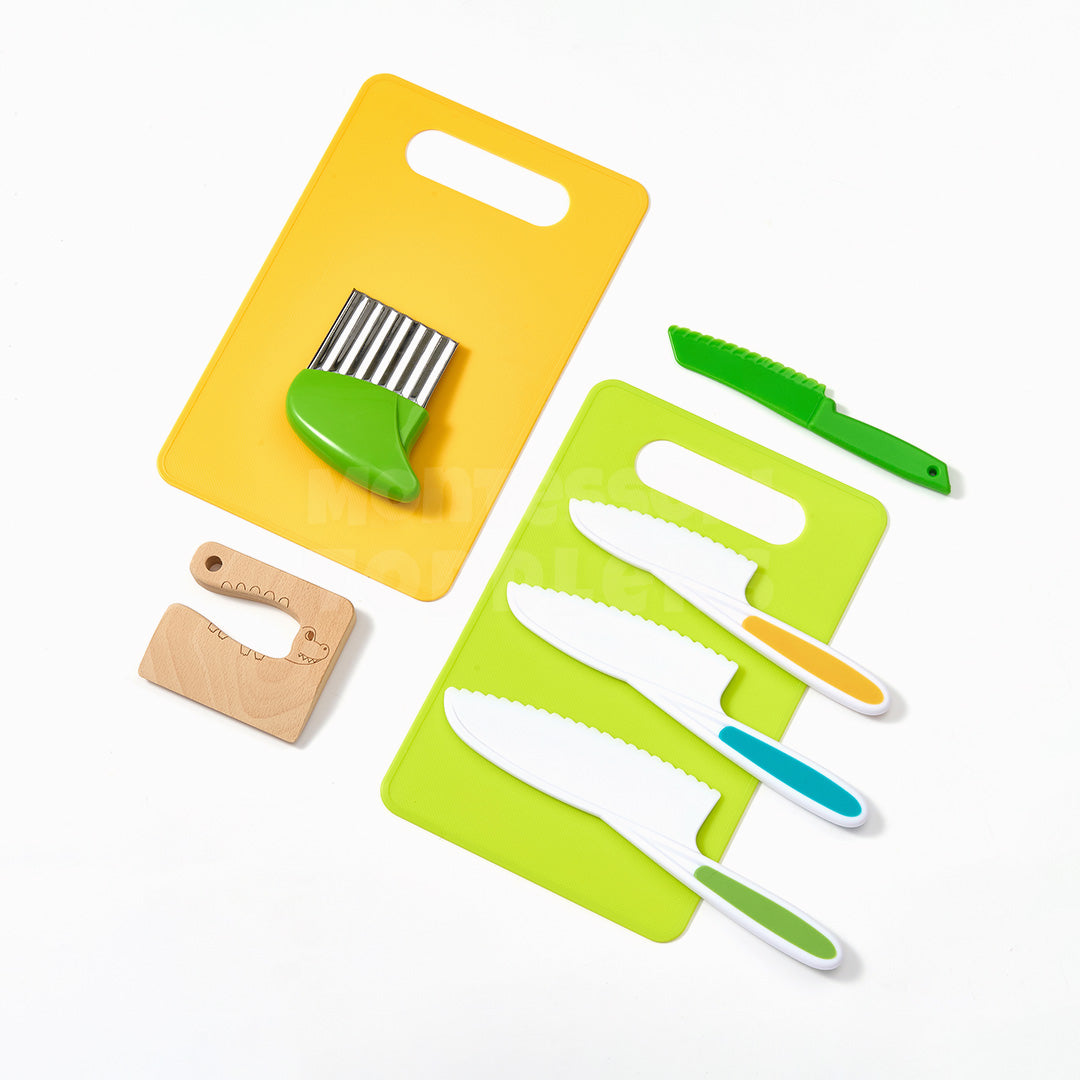
The key is having tools that fit their hands. Adult utensils are too heavy, too sharp, or too large for a toddler to use safely. Child-sized tools — an apron that actually fits, a knife designed for small hands, a whisk they can grip — turn "helping in the kitchen" from a stressful idea into something that genuinely works.
What is in a good toddler chef set
Not all kids' kitchen sets are created equal. Many are toys pretending to be tools — plastic, flimsy, and frustrating to use. A proper chef set should be functional: real enough to actually cut a banana, whisk an egg, or roll out dough.
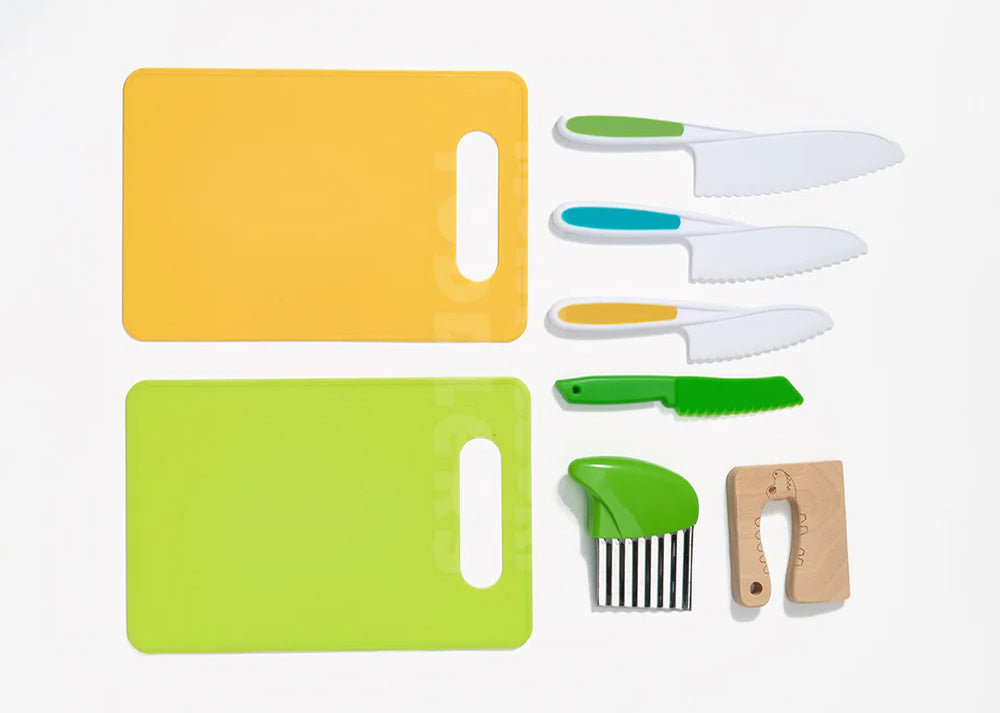
Our Toddlers Chef Set is designed exactly for this. It includes child-safe tools that are sized for small hands but genuinely work in the kitchen. No plastic pretend-play — real cooking, real food, real skills. The set comes with everything a child needs to be a proper kitchen helper, from apron to utensils.

It is one of our bestsellers, and the feedback we hear most from parents is the same thing: "I was not expecting them to actually use it this much."
Making it a routine, not an event
The Montessori approach is not about a special "cooking with kids" afternoon once a month. It is about including your child in the everyday — even when it is just Tuesday evening pasta. The more ordinary you make it, the more your child sees cooking as a normal part of life rather than a novelty.
A few practical tips:
- Set up a low station or use a learning tower so they can reach the counter
- Give them one specific job ("you are in charge of stirring") rather than hovering over everything
- Accept the mess. It is part of the process. They will get neater with practice
- Keep their tools in a drawer they can reach, so they can set up independently
It will be slower. It will be messier. And it will be one of the things they remember most.
More to explore
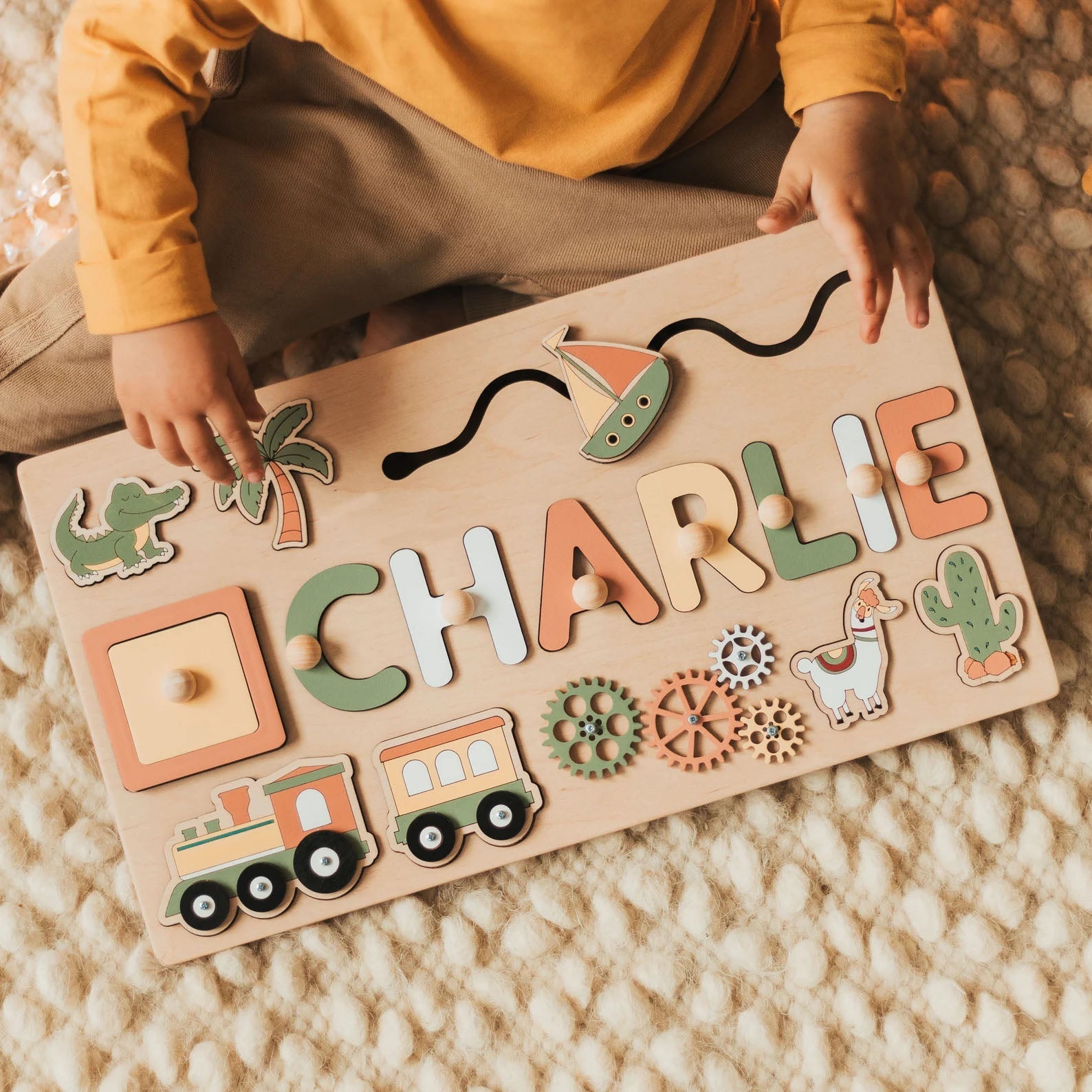
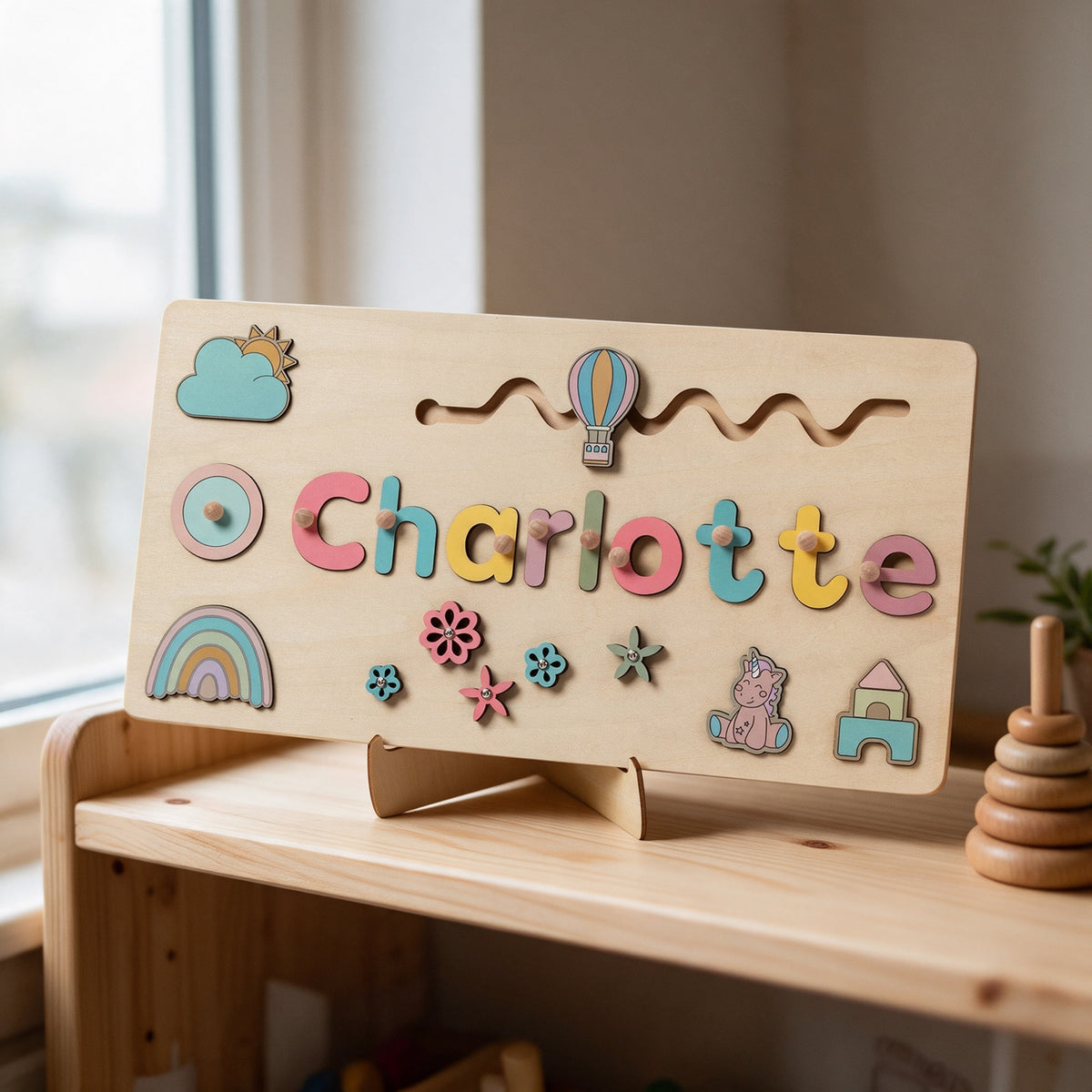
Looking for more ways to support your child's development through play? Read our age-by-age guide to choosing Montessori toys, or see how a personalised name puzzle builds letter recognition and fine motor skills.
Frequently asked questions
What age can a toddler start helping in the kitchen?
From around 18 months, children can help with simple tasks like tearing herbs, stirring cold ingredients, and washing vegetables. By two to three years old, they can handle spreading, scooping, and pouring with child-sized tools.
Are child-safe knives actually safe?
Yes — child-safe knives are designed to cut soft foods like bananas, cooked vegetables, and cheese, but will not cut skin. They give children the experience of real cutting without the risk of a sharp blade. Always supervise, but the tools themselves are built with toddler safety in mind.
Does cooking really help with child development?
Multiple studies confirm it. Cooking builds fine motor skills (gripping, pouring, stirring), early maths (counting, measuring), language (new vocabulary in context), and social-emotional development (confidence, independence, contributing to the family). It is one of the most developmentally rich activities you can do at home.
What should I cook with a toddler?
Start with recipes that have visible, hands-on steps: fruit salad (tearing, scooping), pizza (spreading sauce, placing toppings), smoothies (adding ingredients, pressing the button), or simple baking (measuring, stirring, pouring). The goal is participation, not perfection.
How do I deal with the mess?
An apron helps, a mat under the work area catches spills, and involving your child in the cleanup is part of the Montessori approach. The mess reduces naturally as their motor skills improve — usually within a few weeks of regular practice.
With love from the Montessori Toddlers team 💛