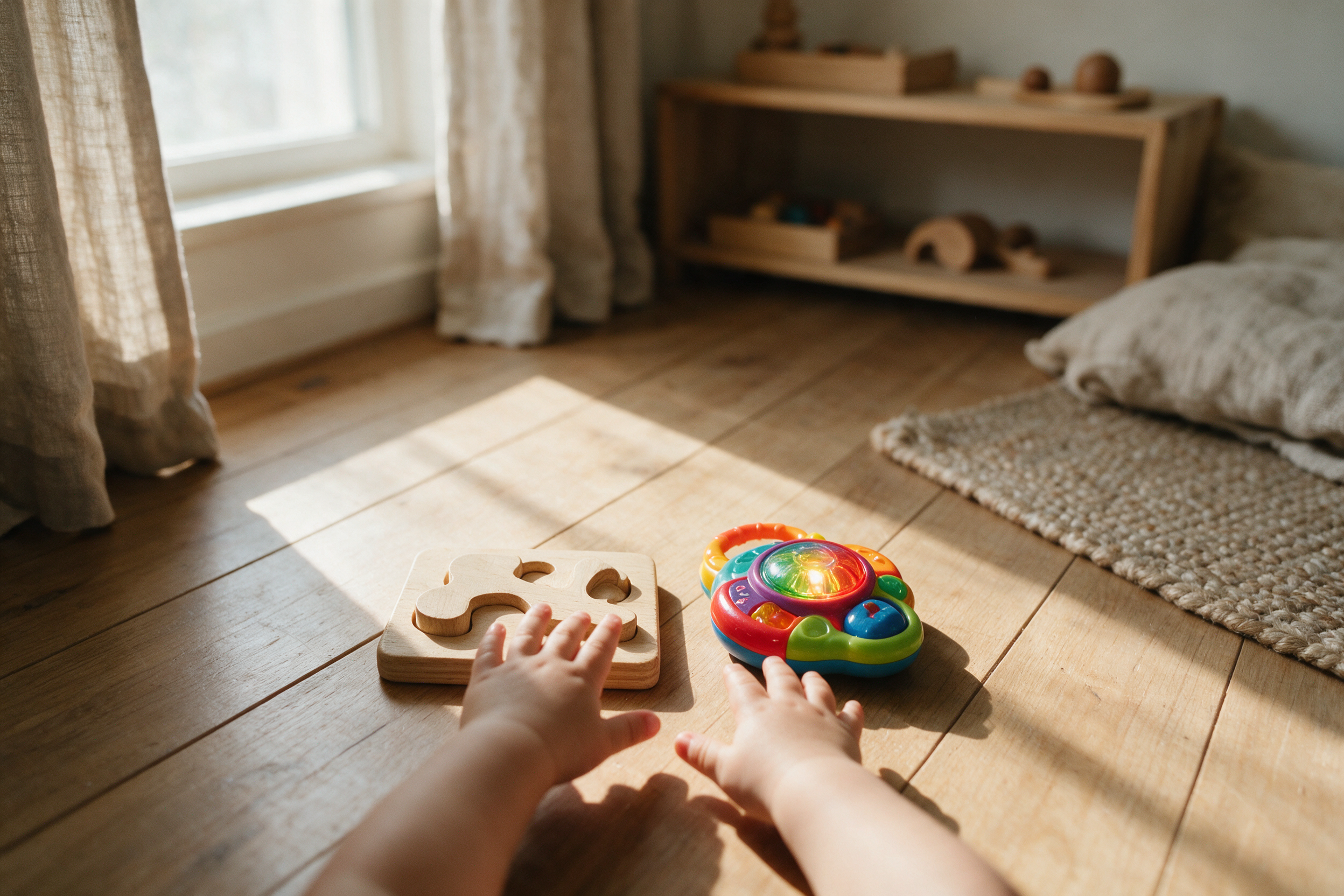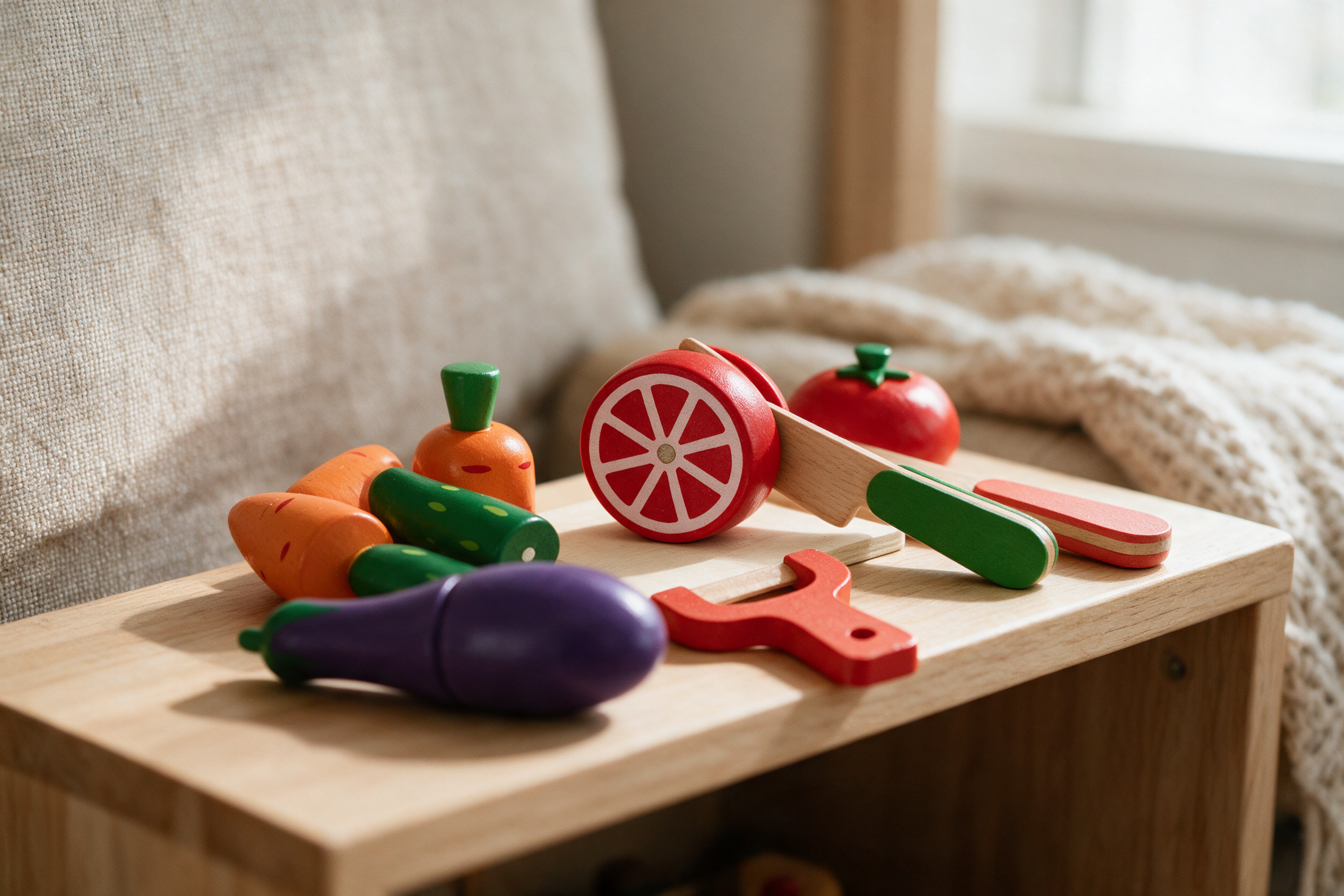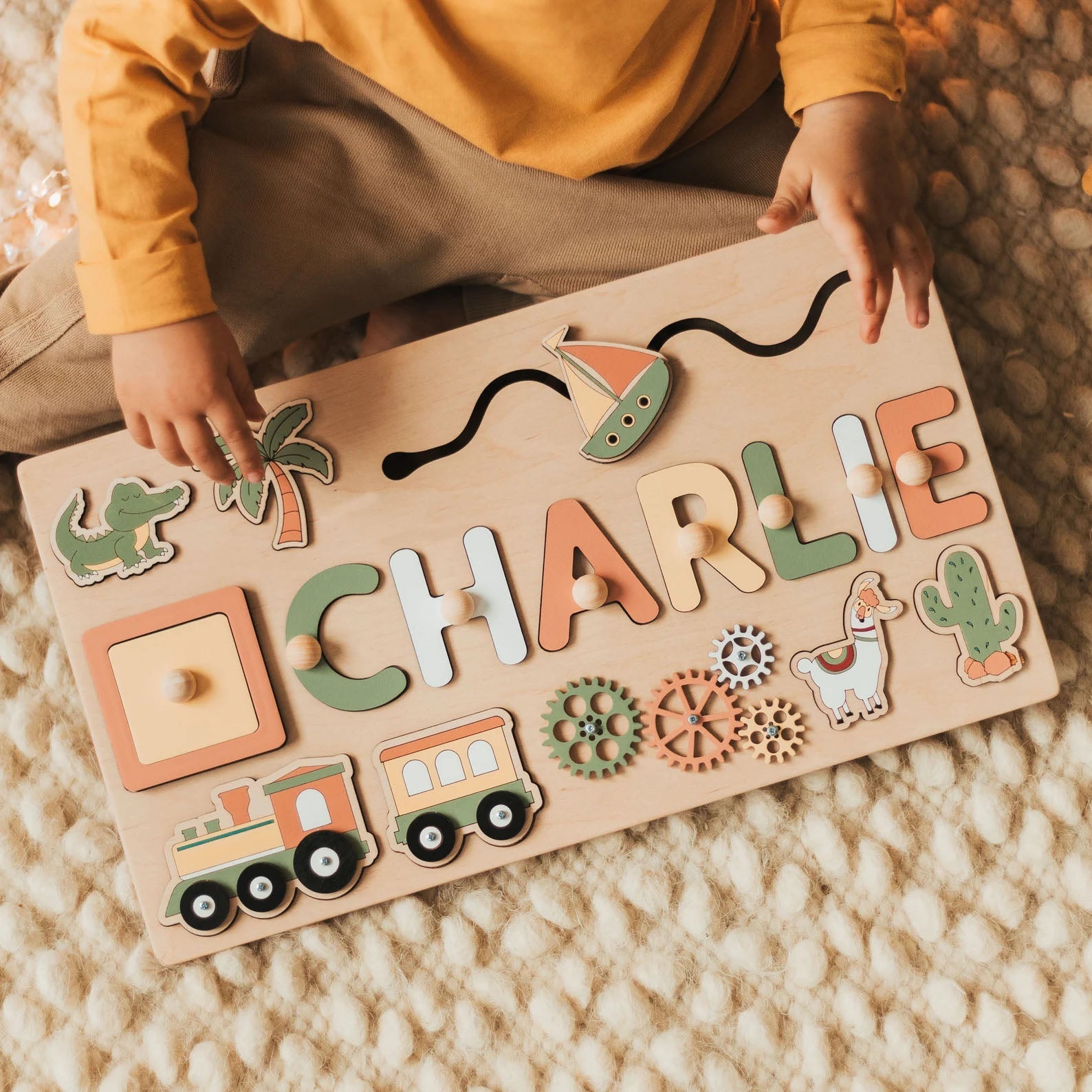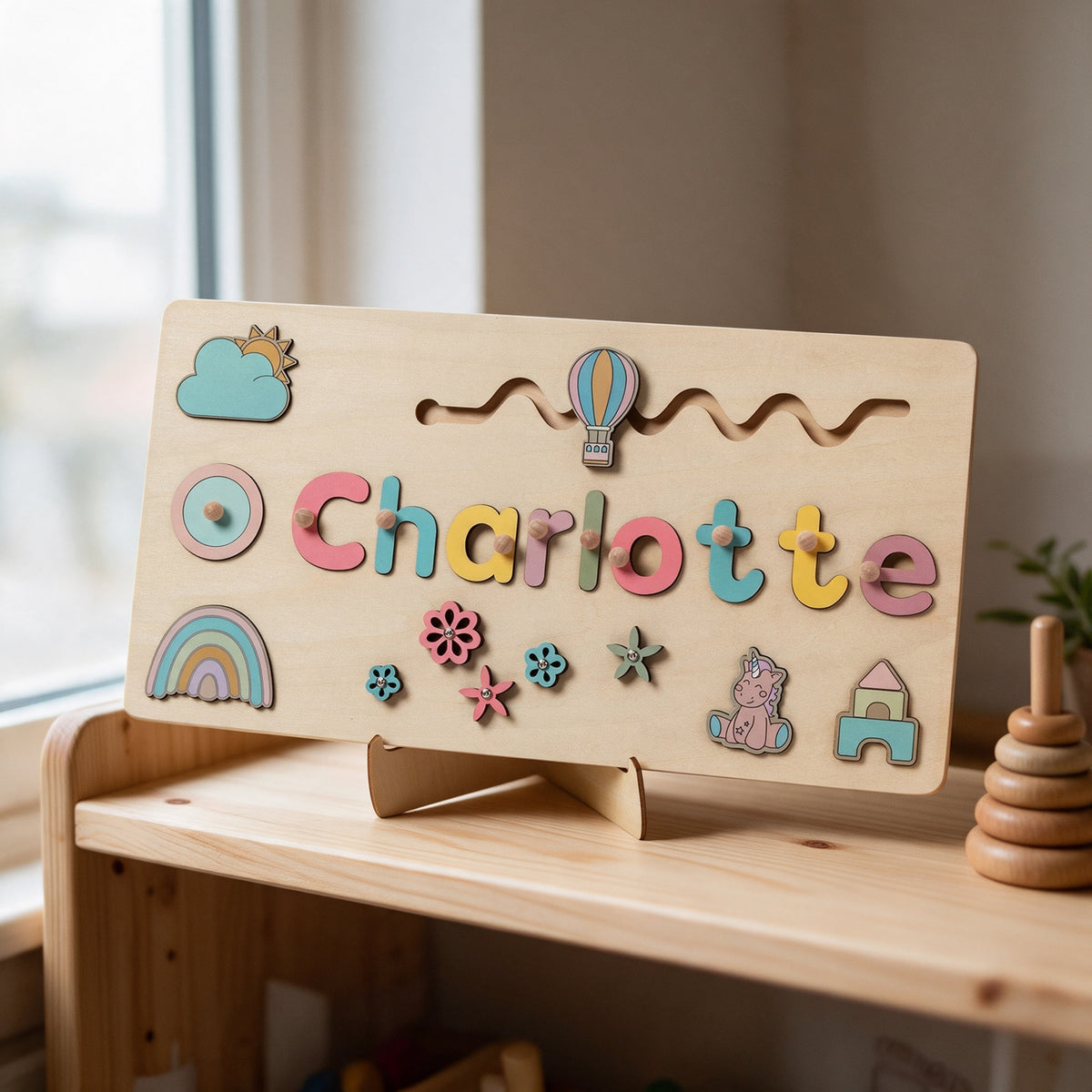
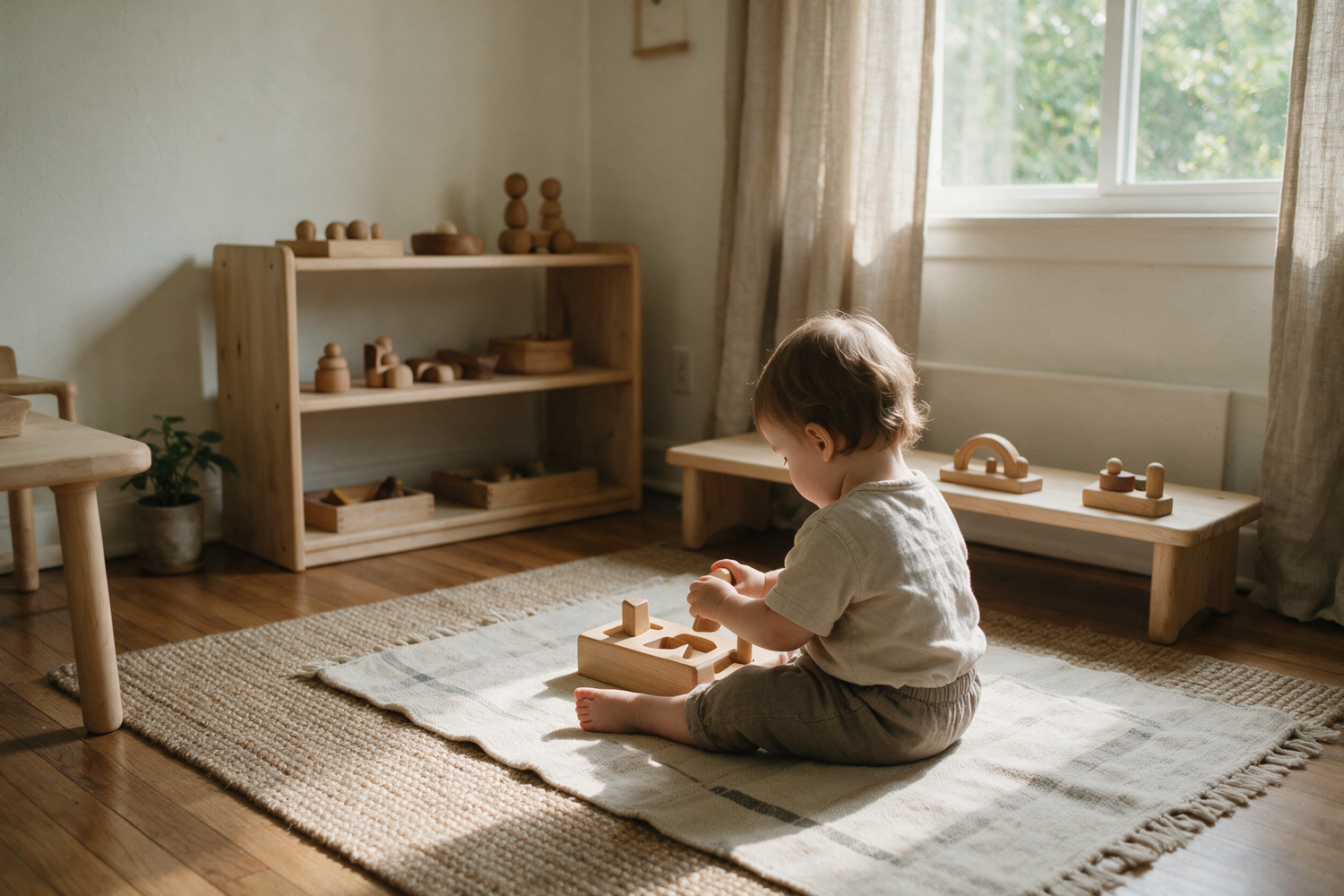
Most parents have had the same moment: you sit down for two minutes, and your toddler is suddenly at your elbow again, toy abandoned, asking to be entertained. It is not a discipline problem and it is not your child being "too clattery" for solo play. Most of the time, it is the toy.
What actually holds a toddler's attention without an adult entertaining them?
A toy that holds independent attention has one clear, self-correcting task built in: drop it, stack it, sort it, turn it, and the toy itself shows the child whether they got it right. Toys that need a grown-up to operate, narrate or referee rarely survive more than a minute alone, because the child is waiting for the next cue from you, not from the toy.
This is the same principle behind Montessori materials generally: the feedback lives in the object, not in an adult's applause. A ball that only fits one hole in an object permanence box, or a ring that only nests in size order, tells the child immediately whether they have solved it. That immediate, built-in feedback is what lets a toddler keep going without checking in.
Which toys actually build independent play, by age?
| Toy | Suitable age | Develops | Best for |
|---|---|---|---|
| Toddlers Object Permanence Box | 6 months+ | Object permanence, fine motor control, cause and effect | A child's very first stretches of solo play |
| Toddlers Wooden Bear Puzzle | 18 months+ | Shape matching, fine motor skills, visual discrimination | Short, focused sessions before nap or after breakfast |
| Toddlers Stacking & Nesting Rings | 12 months+ | Size sequencing, hand-eye coordination, problem solving | Toddlers who like ordering, sorting and repeating |
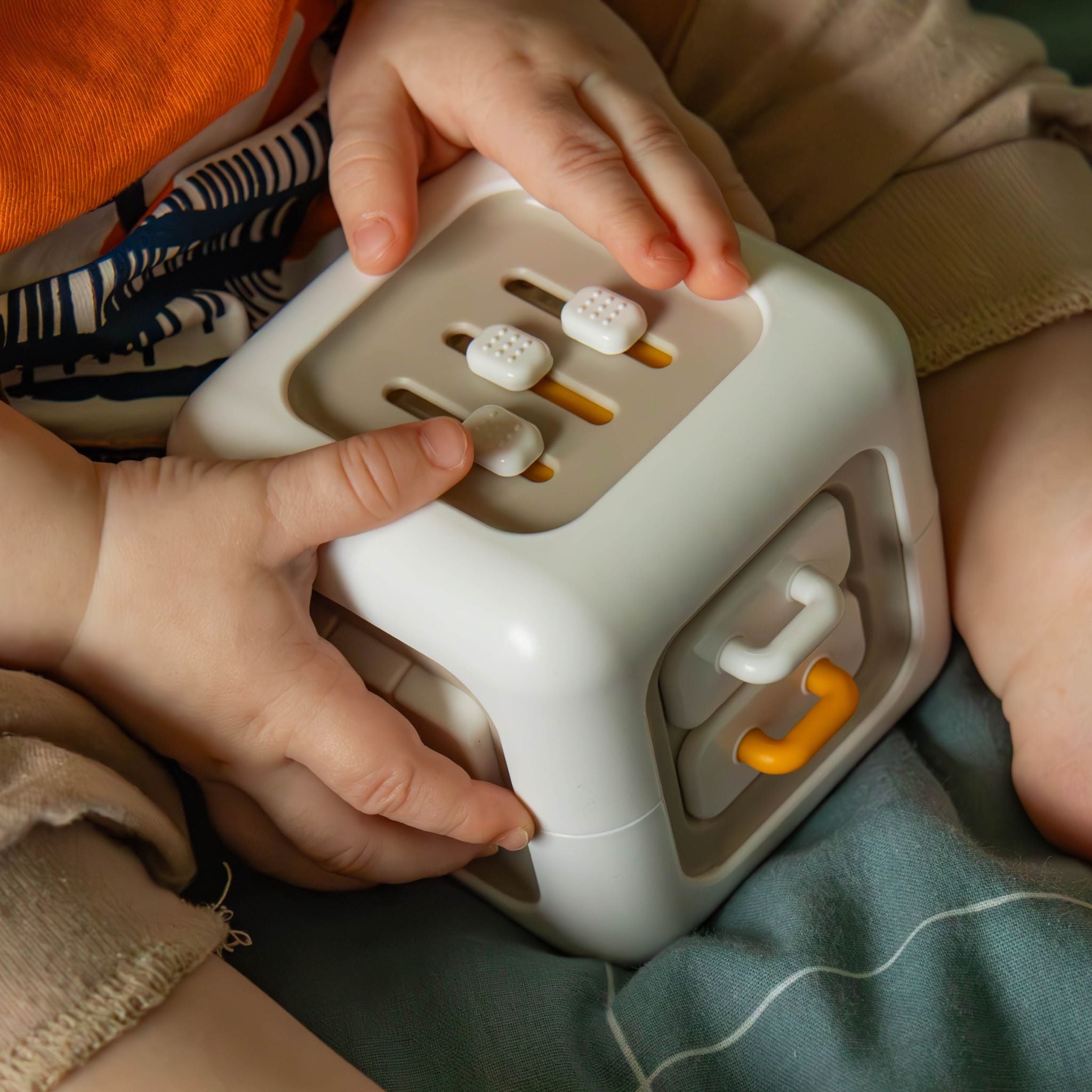
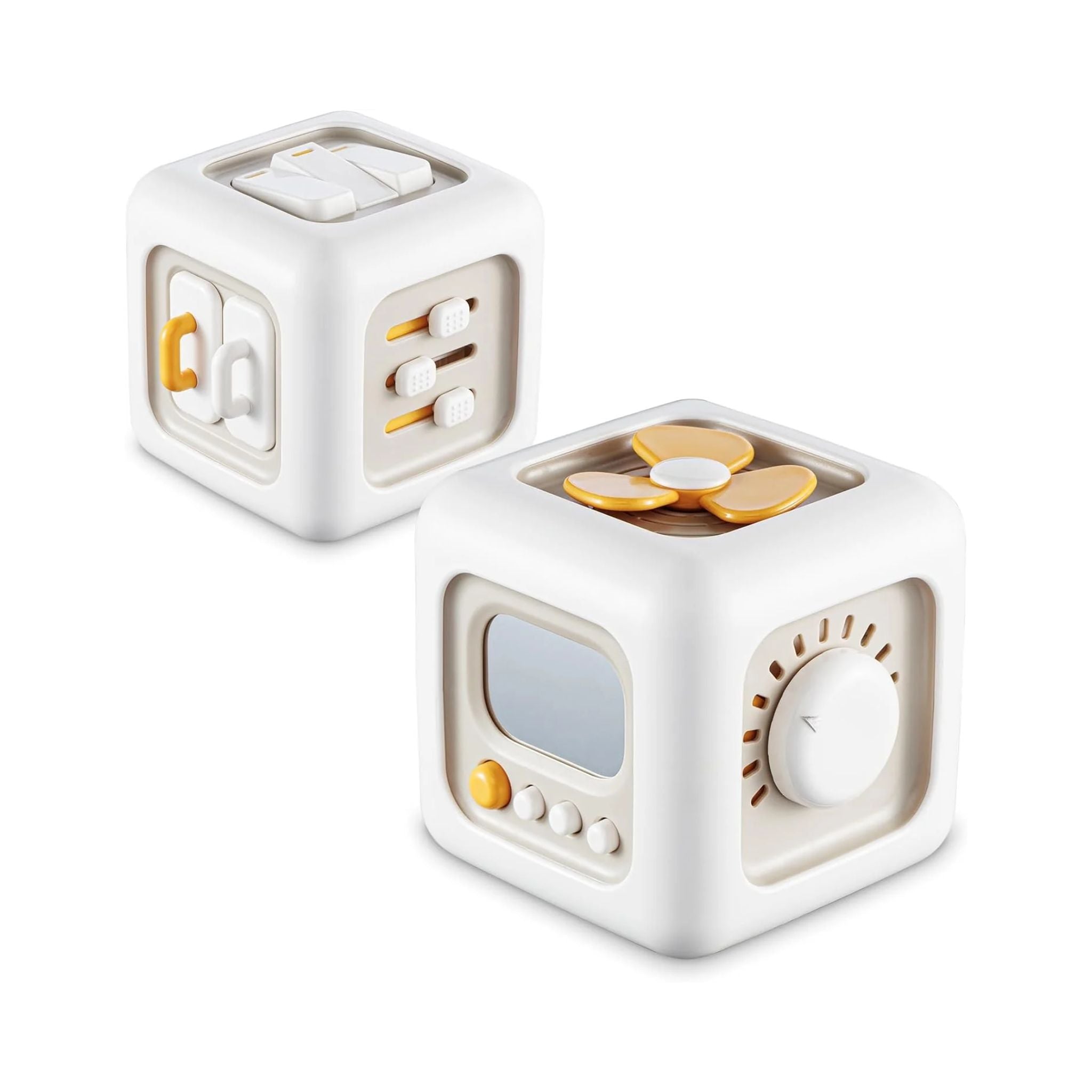
| Toddlers Busy Cube | 12 months+ | Cause and effect, fine motor skills, persistence through trial and error | Curious toddlers who want several small challenges on one toy |
Object permanence and drop-and-retrieve play
The drop-and-retrieve motion is one of the earliest ways a baby or young toddler plays completely on their own. They post a ball, hear it land, open the door, and do it again, sometimes twenty times in a row, because each repetition confirms something they are still working out: the ball still exists even when they cannot see it.
The Toddlers Object Permanence Box is built around exactly this. It comes in a 3-ball version and a 3-in-1 version with extra shapes for when they are ready for more variety, and both give a child a task with an obvious, self-checked outcome: the ball goes in, the ball comes out, no adult required.

Stacking and sorting: focus that builds itself
Once a toddler can sit and manipulate small objects with intent, stacking and sorting toys take over as the independent-play workhorse. The reason they hold attention so well is that the "correct" outcome is visible: rings only nest in size order, pieces only sit flush when matched correctly, so the toy itself tells the child when they have finished.
The Toddlers Wooden Bear Puzzle asks a toddler to match each piece to its outline, a small, repeatable challenge that suits short bursts of solo concentration.

The Toddlers Stacking & Nesting Rings works the same way at a slightly earlier age: get the order wrong and the stack visibly wobbles or won't sit flat, so the toddler adjusts and tries again without needing anyone to point it out.

Cause-and-effect exploration for the toddler who wants more to do
Some toddlers get bored of a single repeated task quickly and do better with one toy that offers several small challenges in a row, so their attention has somewhere new to go without leaving the activity, and without you stepping in to redirect them.
The Toddlers Busy Cube is built for exactly this kind of toddler: a different small mechanism on each face, so there is always a next thing to try, each one giving its own clear, immediate feedback when it is done correctly.

Independent play is a skill, not a personality trait
It is worth saying plainly: a toddler who won't play alone yet is not a toddler who "just isn't the type." Independent play is built gradually, usually starting with a few minutes next to you rather than away from you, using a toy with a task simple enough to finish without help. The toy carries some of the weight so you don't have to.
If you are also looking at how everyday tasks, not just toys, build this same independence, our guide to practical life activities and the toys that build real independence covers the chores-and-real-tasks side of the same goal. And if you are choosing what to introduce next by age rather than by activity type, see our no-nonsense guide to choosing Montessori toys by age.
Frequently asked questions
What age can toddlers play independently?
Short stretches of independent play, often just a few minutes, are realistic from around 6 to 9 months with the right toy nearby. By 18 to 24 months, many toddlers can sustain 15 to 20 minutes of solo play with a task-based toy, and this stretches further through the third year.
Why won't my toddler play alone?
Usually one of two things: the toy needs an adult to operate, narrate or referee it, or your toddler hasn't yet built the habit of starting alone. Both are fixable by switching to a self-correcting, single-task toy and starting sessions sitting nearby rather than stepping away immediately.
How long should independent play last at each age?
As a rough guide: a few minutes at 6 to 12 months, 5 to 10 minutes at 12 to 18 months, 10 to 20 minutes at 18 to 24 months, and 20 minutes or more by age 2 to 3. These are guides, not targets, and vary a lot child to child.
Do open-ended toys work as well as self-correcting ones for independent play?
Both have a place. Open-ended toys are wonderful for imaginative play but often need an adult's ideas to get going. Self-correcting toys with one clear task tend to sustain solo play sooner and more reliably, because the toy itself supplies the "am I doing this right" feedback.
How do I start building independent play if my toddler is used to being entertained?
Start small: sit nearby (not across the room) with one simple, self-correcting toy, narrate less than you think you should, and let pauses sit rather than filling them. Gradually increase the physical distance and the length of the session as your toddler gets used to finishing a task on their own.
With love from the Montessori Toddlers team 💛