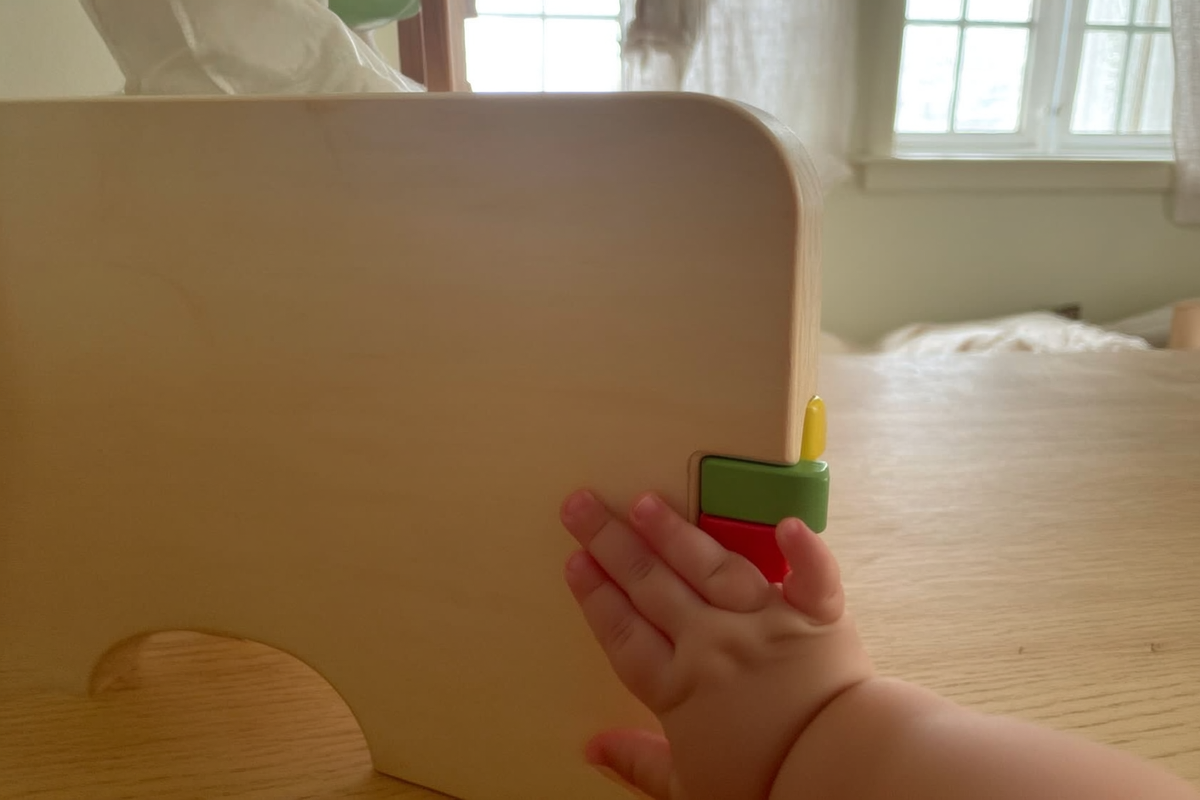
"Wooden" and "safe" get used almost as if they mean the same thing, and they don't. Wood itself is about as safe a material as exists for a toy, but a wooden toy can still fail on the two things that actually cause harm: what is on the surface, and how it is made. Here is what genuinely matters, and what to check before you buy.
Are wooden Montessori toys safe for toddlers?
Yes, when they are made and finished properly: sanded smooth with no splinters, joined so nothing detaches into a choking hazard, and finished with a paint or coating that is tested and certified rather than just labelled "non-toxic". The wood itself is rarely the risk. The finish, the construction, and whether anyone actually tested the thing are where safety is won or lost.
What actually causes a wooden toy to be unsafe?
It is almost always the paint or finish, not the wood. Untreated, unfinished solid wood is inherently low-risk; the U.S. Consumer Product Safety Commission has even exempted certain unfinished, untreated wood from some third-party lead testing requirements for exactly this reason. Paint and surface coatings are a different story: under the U.S. Consumer Product Safety Improvement Act (CPSIA), paint and other surface coatings on children's products may not contain more than 90 parts per million of lead, and no accessible part of a children's product may contain more than 100 parts per million of lead overall. A toy fails on safety because of what was painted or glued onto the wood, or because a joint or small part was not built to withstand a toddler's grip and mouth, not because it happened to be made of wood.
What should you check before buying a wooden toy?
- Smooth, sanded edges. Run a finger along every edge and joint in your mind, or in the shop, if you can: there should be no rough grain, no splinter risk, no sharp corners.
- A named, tested finish. "Non-toxic" on its own means nothing. Look for a stated finish, food-grade mineral oil, beeswax, or a water-based paint tested to a real standard, rather than an unexplained claim.
- A real standard, named. ASTM F963 (the mandatory US toy safety standard), CPSIA compliance (US lead and phthalate limits), or EN71 with a CE mark (the EU standard) are the three that actually matter. If a seller can't say which one applies, that is worth asking about directly.
- Size versus age. A toy rated for a specific minimum age, generally by choking-hazard testing on small parts, should be treated as a real limit, not a suggestion, for a child who still mouths objects.
- A seller who will actually answer. A brand that can tell you plainly which standards a product meets, and stands behind that answer, is a better sign than any single word on the packaging.
What do ASTM F963, CPSIA and EN71 actually cover?
ASTM F963 is the toy safety standard the CPSC has made mandatory for toys sold in the United States: it covers lead and other elements in paint and materials, choking-hazard testing for small parts, and structural requirements like joints and edges. CPSIA is the broader US law that sets the lead limits themselves, 100 ppm for accessible parts overall and 90 ppm for paint and surface coatings, plus phthalate restrictions, and it requires third-party testing and certification before a compliant product can be sold. EN71 is the equivalent standard across the EU, with EN71-3 specifically testing for heavy metals migrating out of paints and finishes, which is exactly where a wooden toy's real risk usually sits. None of these standards is a marketing word. Each is a specific, checkable requirement, which is exactly why "which standard does this meet" is a fair question to ask any toy seller.
Are vintage or hand-me-down wooden toys safe?
Not automatically, and this is the one place well-meaning families most often get caught out. An older toy, especially anything painted before the 1970s in the US or before EU lead-paint rules tightened, may have been finished with lead-based paint that would never pass today's limits. Wood itself doesn't expire, but a coat of paint applied decades ago was never tested against a standard that didn't exist yet. If a hand-me-down or vintage wooden toy still has its original paint and you don't know its age with real confidence, treat the paint as the unknown, not the wood.
Is unfinished wood safer than painted wood?
Often, yes, simply because there is one fewer material to get wrong. Plain, sanded, untreated wood has almost nothing that can go chemically wrong with it. That said, unfinished wood still needs to be properly sanded and free of splinters, and a well-made, properly tested painted or oiled toy is not automatically less safe than an unfinished one, it just has one more thing worth checking.
For more on how wood compares with plastic more broadly, see our piece on whether wooden toys are really better than plastic for toddlers. And if you're wondering what makes a toy genuinely Montessori-aligned in the first place, beyond the material it's made from, our guide on what actually makes a toy Montessori covers that separately.
Frequently asked questions
Are wooden Montessori toys safe for babies and toddlers?
Yes, when properly made: smooth and splinter-free, with joints that won't release small parts, and finished with a tested, certified paint or coating rather than an unverified "non-toxic" claim.
Can wooden toys contain lead?
Yes, but almost always in the paint or finish, not the wood itself. This is exactly why standards like CPSIA set separate, stricter lead limits for paint and surface coatings than for the underlying material.
What toy safety standards should I look for?
ASTM F963 in the US (the mandatory toy safety standard), CPSIA compliance (US lead and phthalate limits with required third-party testing), and EN71 with a CE mark in the EU. A seller should be able to name which applies to a given product.
Are vintage or hand-me-down wooden toys safe to reuse?
Not automatically. Older toys, particularly anything with original paint from before modern lead-paint rules, may never have been tested against today's limits. Treat unverified old paint as the risk, not the wood underneath it.
Is unfinished wood safer than painted wood?
Often simpler, since there's one fewer material to get wrong, but a well-made toy with a properly tested finish is not automatically less safe. Both still need smooth, splinter-free construction.
With love from the Montessori Toddlers team 💛