Some of the earliest joy a child experiences is the sound they make themselves. The first clap. The first word repeated back. The first deliberate bang on a wooden table. Music begins long before formal lessons, and the right early experience of sound shapes everything that follows — from rhythm and language to emotional regulation and confidence.
Here is why the Toddlers Music Set has become one of our most-loved early-years toys, and how to use it well at home.
Why music matters more than you might think
Children begin responding to rhythm in the womb, and once they are born, music remains one of the most powerful ways their developing brains take in the world. Research links early musical play to:
- Language development — songs and rhythm reinforce the patterns of speech, helping children learn to hear and produce sounds
- Memory and pattern recognition — the foundation of every later subject, from maths to reading
- Gross and fine motor skills — striking a drum, shaking maracas, holding a small mallet all build coordination
- Emotional connection — making music together is one of the simplest ways parents and children attune to each other
None of this requires a screen, an app, or a battery. The Music Set is built around that idea.
What is in the set

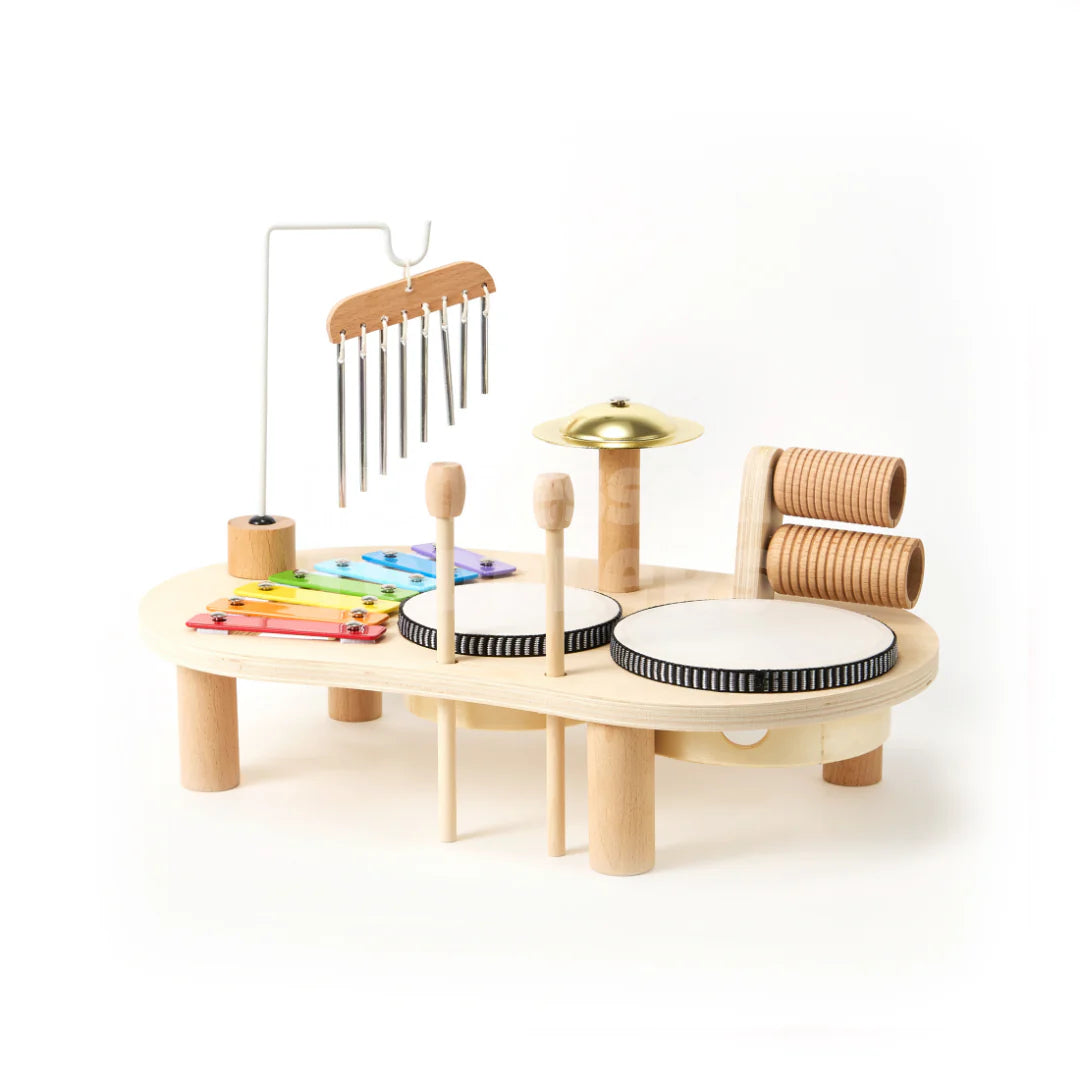
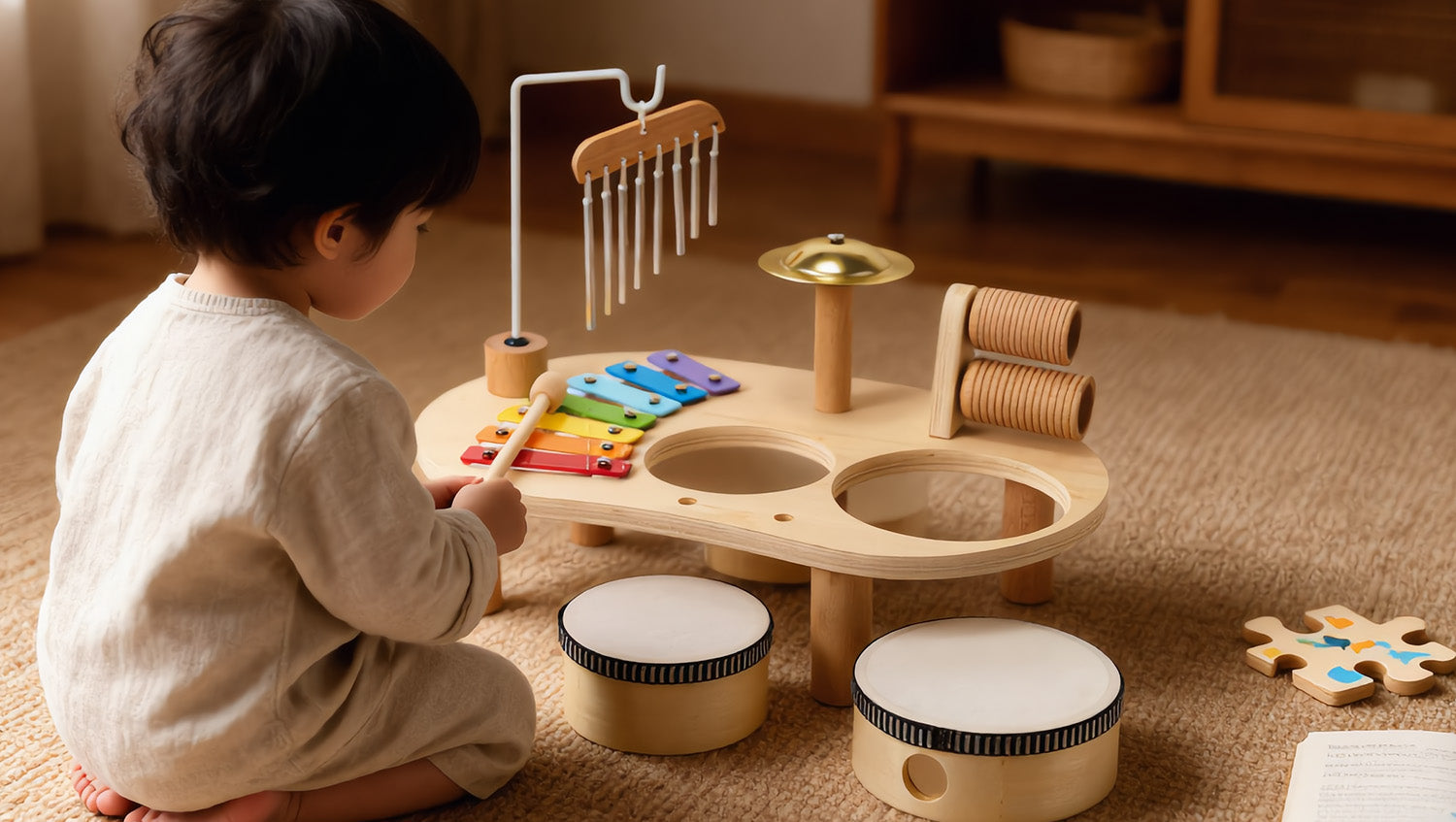
Eight real wooden instruments designed for small hands and serious sound. The kit includes:
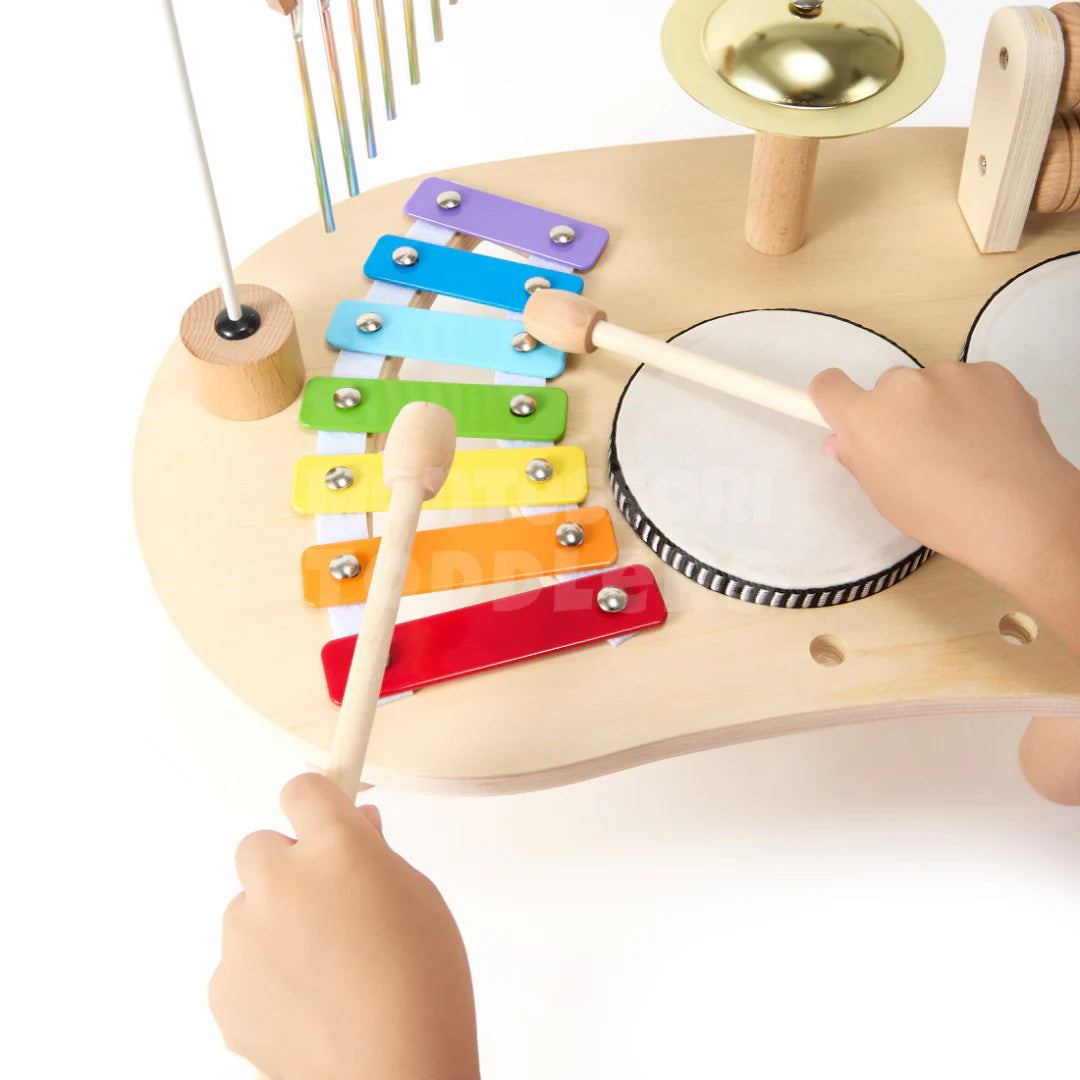
- A wooden xylophone with brass-tone keys
- Dual drums with included drumsticks
- Rhythm rollers
- A small cymbal
- Soft wooden chimes
- Maracas and a tambourine
The materials are solid wood and metal — no plastic, no electronics, no batteries. Recommended from 18 months upwards, with adult company at the youngest end.
How to use it well at home
Start with rhythm, not melody
Children grasp rhythm before they grasp tune. A parent tapping a slow, steady beat on the drum, a child copying it after a few attempts — that is the moment when something genuinely musical begins. Tunes come later. Rhythm is the foundation.
Sing along, even if you cannot sing
You do not need to sound good. The point is the back-and-forth. Sing a familiar nursery rhyme while your child plays the xylophone. Sing softly while they shake the maracas. The pairing of voice and instrument is what builds the early sense that music is something you do together.
Let them lead
The temptation, especially with a structured set like this, is to "teach" them how to play it. Resist that for as long as you can. A two-year-old banging the cymbal in a way that makes no musical sense is still doing the most important work — discovering what each instrument sounds like, and which sounds they like best.
Make it a daily ritual
Five minutes of music together, every day, is worth more than an hour once a week. Many of our customers play right after breakfast or just before bath time — moments where a small ritual already exists.
What the Music Set is not
It is not a substitute for music lessons. It is not designed to teach a child to play a specific instrument. It is not the kind of toy that "produces" music — it produces sound, and what your child does with that sound is the play.
The point of a wooden music set at this age is not output. It is exposure, exploration, and the deep, often-unspoken connection that comes from making sound together with someone who loves you.
Who it is for
One to four is the sweet spot, with the heaviest use typically between 18 months and three years. Older children continue to enjoy it as a family activity — most of our customers report siblings playing together for years, and the set holds up to it because the materials last.
If you are buying for a younger child (under one), consider the Play Kit 7–12 months instead — it includes simpler musical elements appropriate to that age.
Frequently asked questions
Is the Music Set noisy?
It is real wood and metal, so it produces real sound — but a more pleasant, lower-volume sound than electronic toys. Many parents say it replaced battery-powered noise-making toys at home and was a relief by comparison.
What ages can use it together?
Eighteen months through to school age, comfortably. Younger toddlers play with the maracas and the drum; older siblings take on the xylophone and rhythm rollers. It works as a shared family toy in a way few sets do.
Is it safe for under-twos?
Yes, with adult supervision. Some pieces (the small mallet, drumsticks) are best handed to and taken back from a one-year-old rather than left out. By two, most children handle the whole set independently.
How do I clean it?
Wipe each piece down with a soft damp cloth. The finish is non-toxic and water-based, designed to handle being mouthed by toddlers and the inevitable spills.
Can I buy individual pieces?
The set is sold as a complete kit, but the components are robust enough that we rarely see customers needing replacements. If something does break, get in touch and we will sort it out.
The wider picture
Music is one of the gentlest entry points into a more screen-free, hands-on childhood. A wooden xylophone at home, a song before bedtime, five minutes of rhythm after breakfast — these small rituals add up, and they cost nothing beyond presence.
If you would like to see what else we offer in this space, our Top Sellers collection covers the wider range, and the Montessori toys by age guide walks through what works at each developmental stage.
With love from the Montessori Toddlers team 💛