Two children reach for the same toy at the same moment, every single day, because they are at exactly the same stage. That is the part of buying for twins nobody warns you about. It is not like buying for siblings three years apart, where an older child's old favourite can simply hand down. Twins want the same thing, right now, and there is only one of it.
So the real question when you are choosing a gift for twins is not "what's a good Montessori toy for this age". You already know that. It is: does this need to be two, or does one genuinely work for both? Here is what we have found actually holds up.
Do twins need two of everything?
No, and buying two of every single toy gets expensive and crowds a shelf fast. Some toys are genuinely better shared, built with enough pieces or enough roles that two children can use the same one at once without it becoming a tug of war. Others are personal almost by design, and trying to make twins share them just invites the daily stand-off. The skill is telling which is which before you buy, not after.
The "buy two" toys: things each twin needs their own of
Some toys are built around one-to-one, repeatable practice, a baby or toddler doing the same small action over and over until it clicks. That kind of play does not divide well. Our Toddlers Soft Books are a good example: each one is a single crinkly, textured story a baby returns to on their own terms, and two babies reaching for one book at nap time is a fight nobody needs. The books come in several designs, so it is easy to give each twin one that is unmistakably theirs, say Ocean for one and Dinosaurs for the other, rather than two of the same.

Our Toddlers Baby Beehive is the same story a little further along. Pulling a soft bee out of the hive and posting it back through the little door is exactly the kind of repeatable, absorbed, one-child-at-a-time play that pincer-grip practice needs. Two babies wanting to post a bee at the same moment is a near-certainty with twins, so a hive each means neither one is waiting their turn to practise a skill that is this new and this exciting.

The "enough for both" toys: one set, genuinely built for two
Other toys come with enough pieces that two children can each build something of their own from the same box, no duplicate needed. Our Toddlers Rainbow Toy is the clearest case: it has enough arches and stacking pieces that two toddlers can sit either side of the same set and each sort, stack or build their own small construction without running out of pieces or elbowing in on the other's tower. One set does the job two separate ones would otherwise be bought to solve.

A quick mention for the first-birthday stretch too: our Toddlers Stacking & Nesting Rings has eight pieces across six different textures, enough that twins approaching their first birthday can each have a ring or two on the go rather than both grabbing for the single top piece.
The "built for two" toys: games twins can actually play together
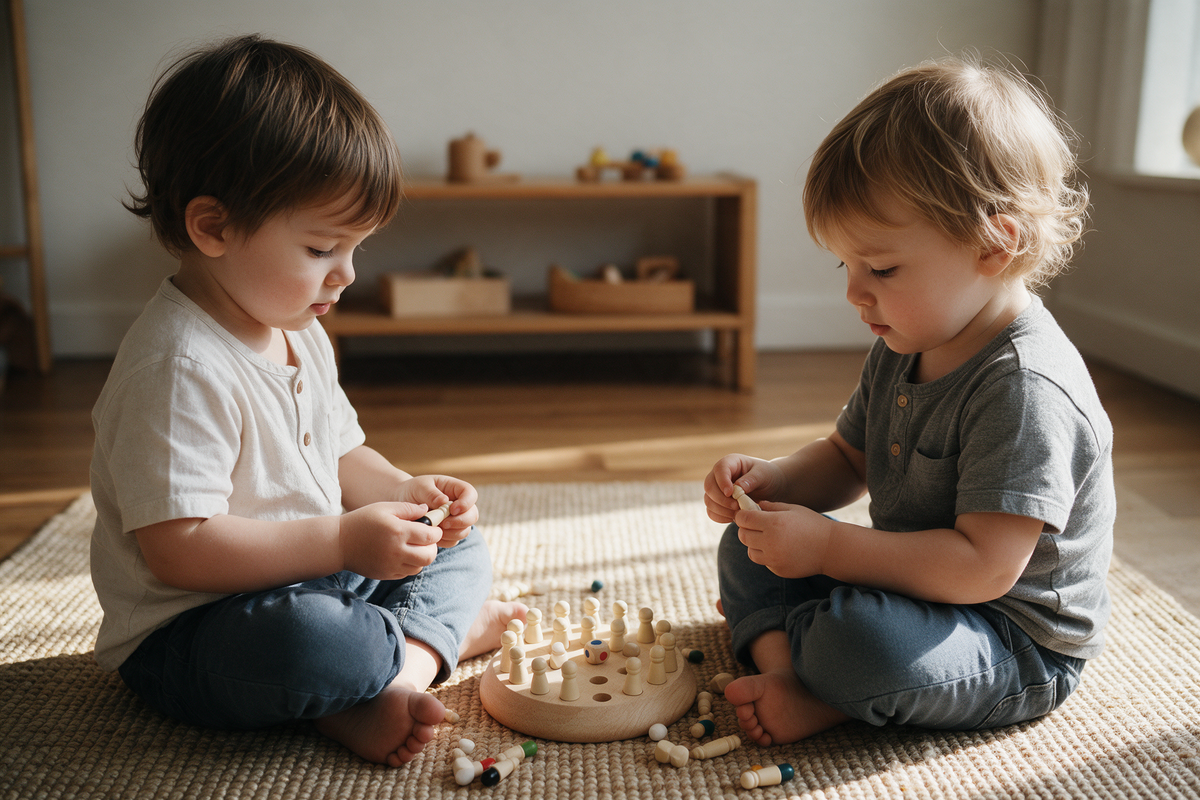
This is where being the same age actually works in twins' favour. Unlike siblings years apart, who need an adult to referee a game built for a single level, same-age twins can usually play by the exact same rules from the start. Our Toddlers Memory Game is designed around turn-taking between more than one player, so two three-year-olds at the same developmental stage can genuinely play it together, not one playing while the other waits for their birthday to catch up.

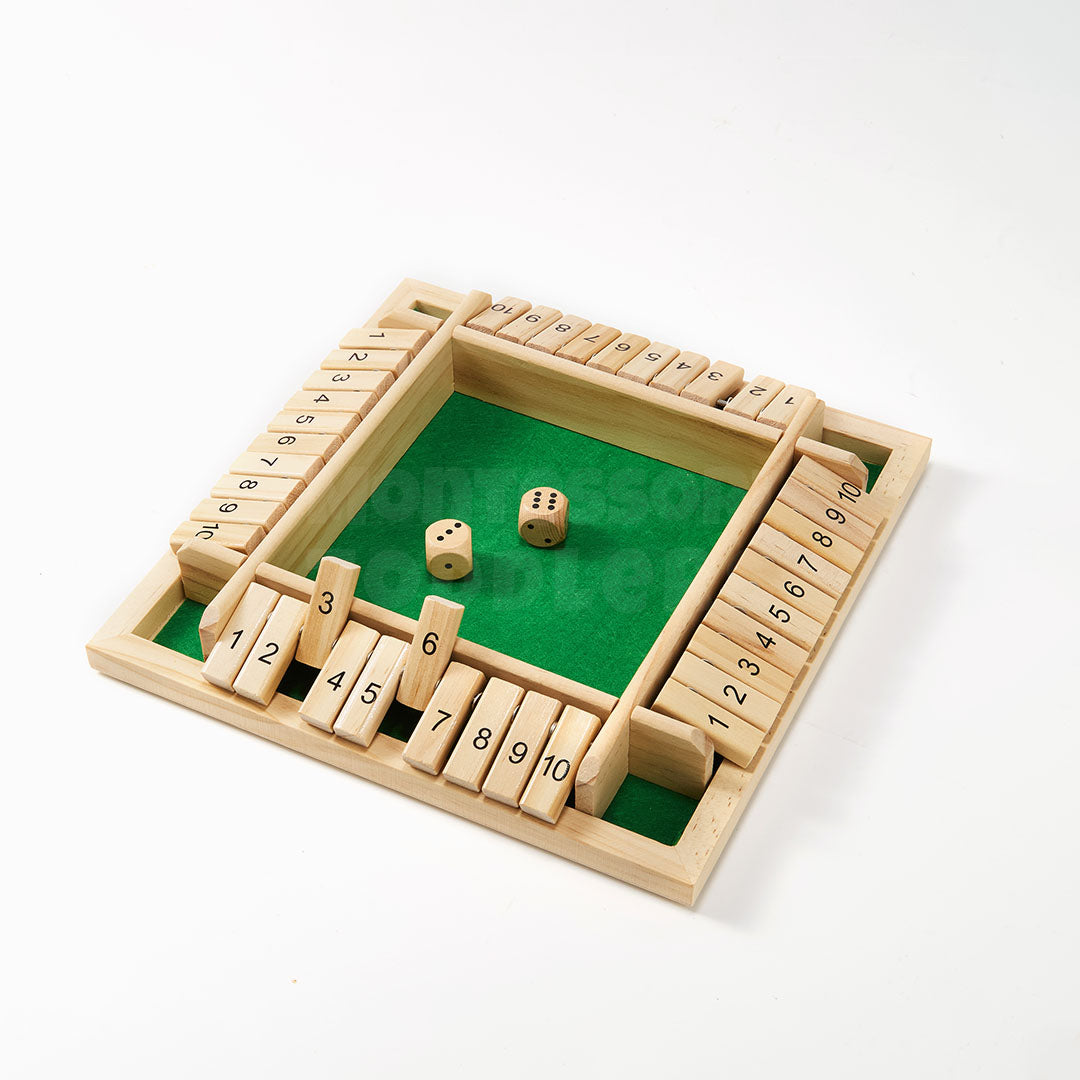
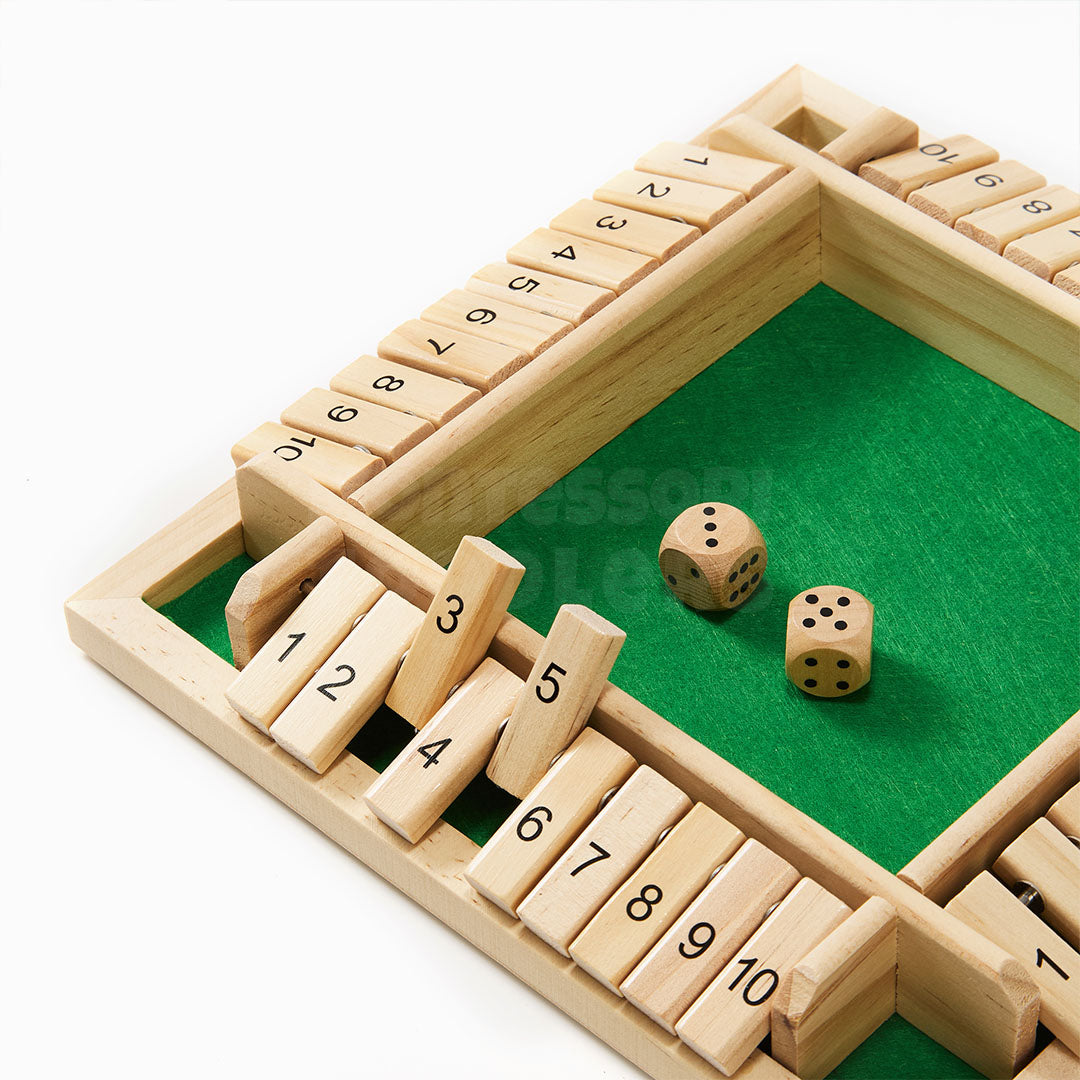
A little further on, our Shut the Box Dice Game is built for more than one player from the very first round, rolling dice and shutting down numbers in turn. It is a lovely one to bring out once twins are old enough for early number recognition and genuine back-and-forth play, rather than parallel play side by side.

Our twins gift guide at a glance
| Toy | Suitable age | Develops | Best for twins |
|---|---|---|---|
| Toddlers Soft Books | 0–6 months+ | Sensory exploration | Pick two different designs so each twin has one that's unmistakably theirs |
| Toddlers Baby Beehive | 6 months+ | Pincer grip | Duplicate for true side-by-side play, not a single shared copy |
| Toddlers Rainbow Toy | 1–6 years | Fine motor, sorting | One set has enough pieces for genuine parallel play, no duplicate needed |
| Toddlers Memory Game | 3+ years | Memory, turn-taking | Same-age twins can play by the exact same rules, unlike siblings years apart |
| Shut the Box Dice Game | 4+ years | Early maths, turn-taking | Built for more than one player from the very first round |
Should twins get identical gifts at Christmas?
Not necessarily, and it is worth letting go of the idea that identical is automatically fairer. What actually keeps the peace is each twin feeling that something is genuinely theirs, whether that is two of the same toy in different colours, two different designs from the same range, or one toy that is clearly built to be shared rather than claimed. A little variation, even something as small as a different soft book design each, often causes far less friction than two of the exact same thing, which can quietly turn into "that one is better" before the wrapping paper is even in the bin.
Frequently asked questions
Do twins need their own toys, or can they share?
Some do, some don't. Toys built around one child's repeatable, absorbed practice (a soft book, a posting toy) tend to work better with one each. Toys with enough pieces or roles for two, or games genuinely built for more than one player, can be properly shared from a single set.
What Montessori toys work best for twin babies?
Simple, repeatable sensory and cause-and-effect toys work well, but because twin babies reach for the same thing at once, it is usually worth having one each of the toys built around solo, repeated practice, like a soft book or a posting toy, rather than expecting them to take turns at this age.
How do we stop twin toddlers fighting over the same toy?
Choose toys with enough pieces for genuine parallel play (so neither child runs out), keep one or two personal favourites duplicated, and lean on games that are actually designed for more than one player once they are old enough, so turn-taking is built into the toy rather than something you have to referee.
Should twins get identical gifts at Christmas?
It is not required, and a little variation (different designs, different colours) often causes less friction than two of the exact same item. What matters more is that each child feels something is clearly theirs.
At what age do twins start playing together rather than side by side?
It varies, but somewhere around three years old is a common turning point, when games with simple, shared rules (like a memory matching game) start to genuinely work between same-age twins, rather than each child playing alone nearby.
With love from the Montessori Toddlers team 💛