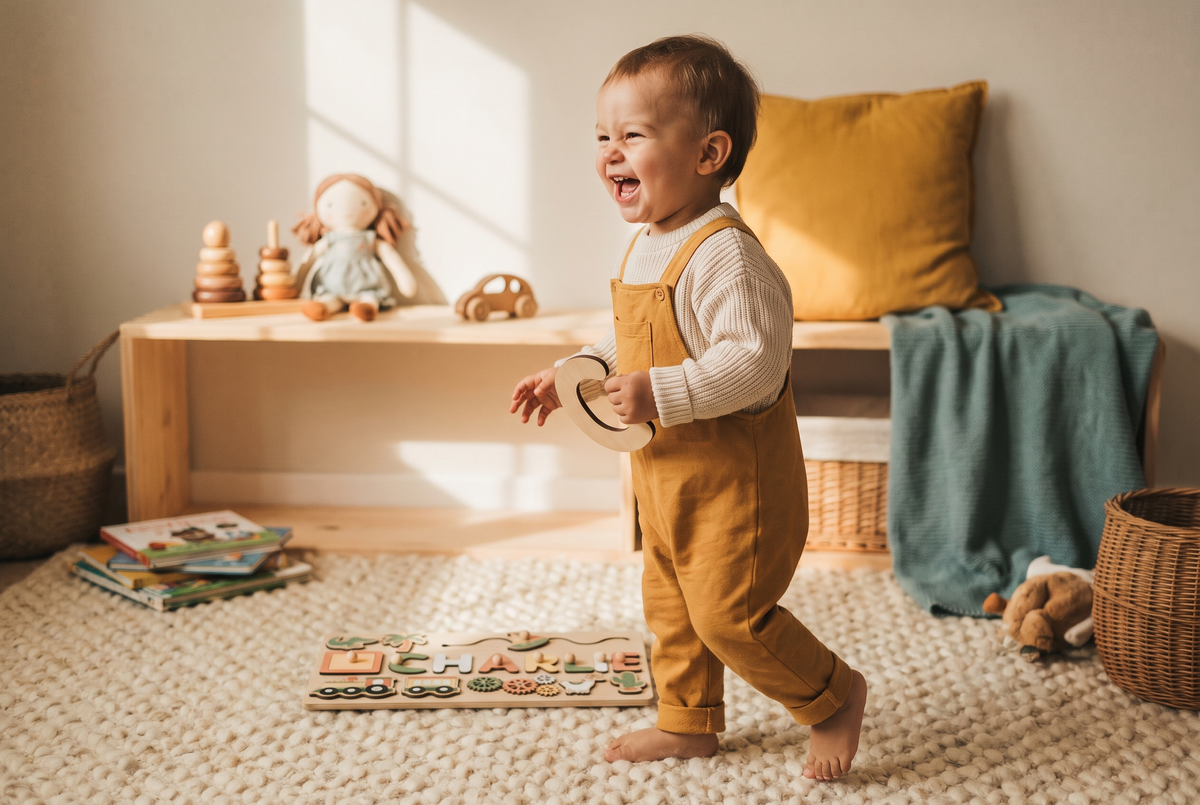
Eighteen months old is an odd stage to shop for. Most gift guides jump straight from "one-year-old" to "two-year-old", as if nothing much happens in between. In our house, and in most of the houses we hear from, quite a lot happens in between. The child who was mostly sitting and reaching six months ago is now walking fast, carrying things for the sheer pleasure of carrying them, and starting to say the names of the people and things they love most.
Below is what an 18-month-old is actually working on, the toys that genuinely fit that work, and how this stage is different from both the one before it and the one after.
What are 18-month-olds actually working on?
At 18 months, most toddlers are working on carrying, dumping, posting and early cause-and-effect, alongside a sudden burst of new words. They walk confidently now, which frees their hands for a new kind of play: moving things from place to place just because they can. Watch an 18-month-old for ten minutes and you will usually see some version of filling a container and emptying it again, carrying an object across the room for no obvious reason, or pointing at something and saying its name with real satisfaction. None of this is aimless. Carrying builds balance and gross motor control, posting and dumping build hand-eye coordination, and the naming burst is early language finding its feet.
It is also a stage of enormous variation. Some 18-month-olds are stringing two words together; others have four or five clear words and are saving the rest. Some will sit with a puzzle for five minutes; others want to be on the move. Treat the milestones below as a gentle map, not a test.
What are the best Montessori toys for an 18-month-old?
The best toys for an 18-month-old reward carrying, posting and early naming without asking for more patience or fine motor control than the stage actually has. Here are five we would choose.
| Toy | Best for | Why now |
|---|---|---|
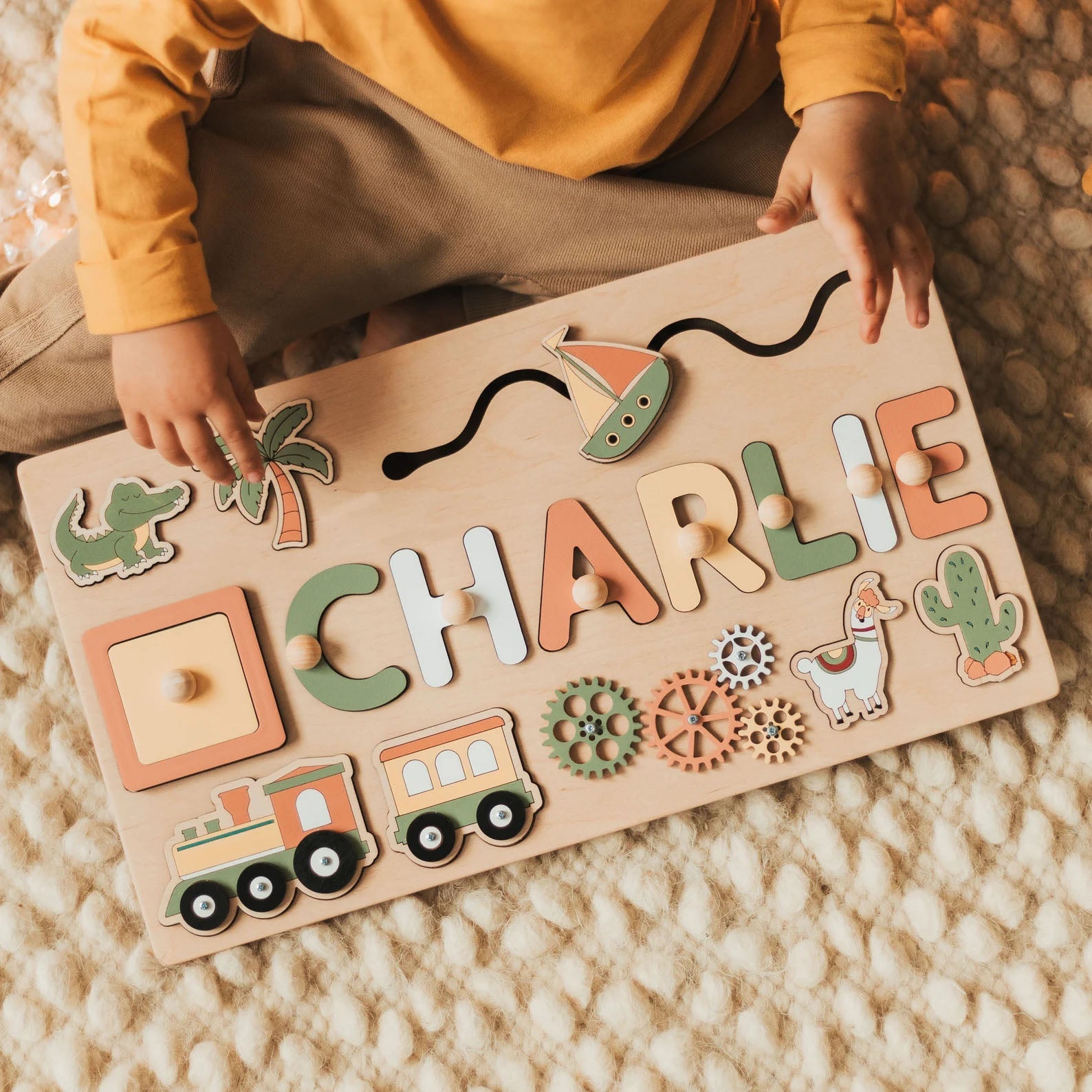
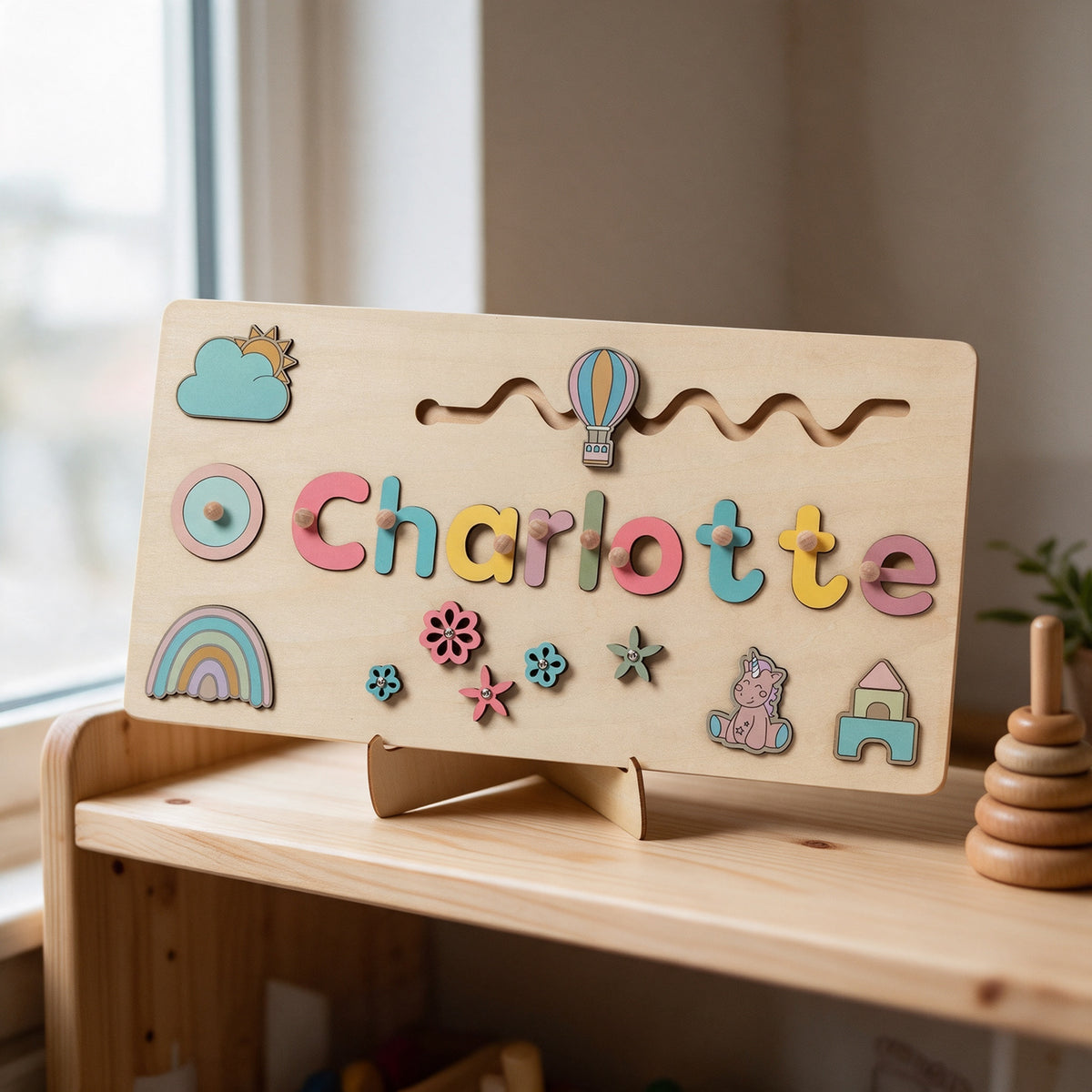
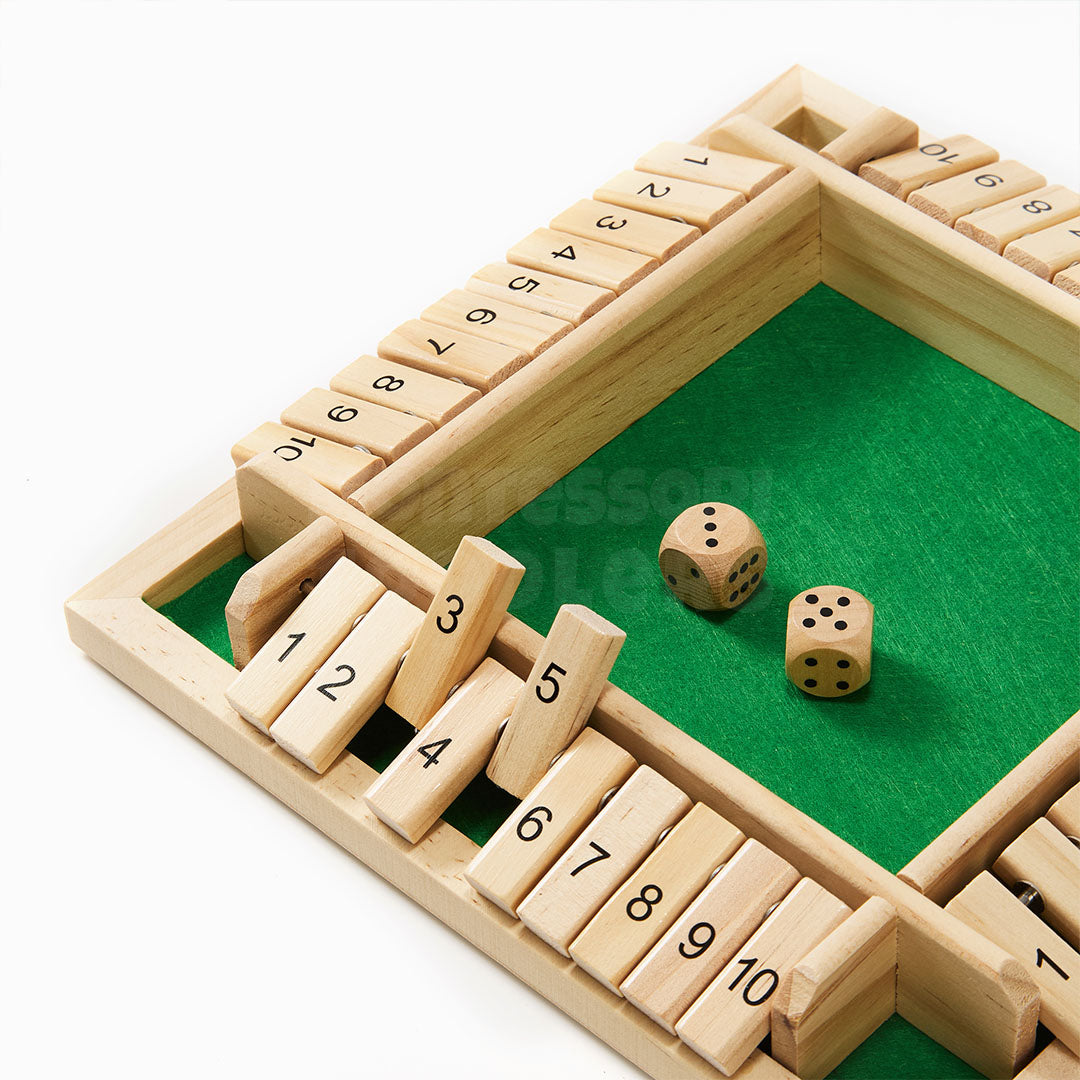
| Personalized Wooden Puzzle | Shape recognition, early name awareness | By 18 months, most children start recognising the shape of their own name |
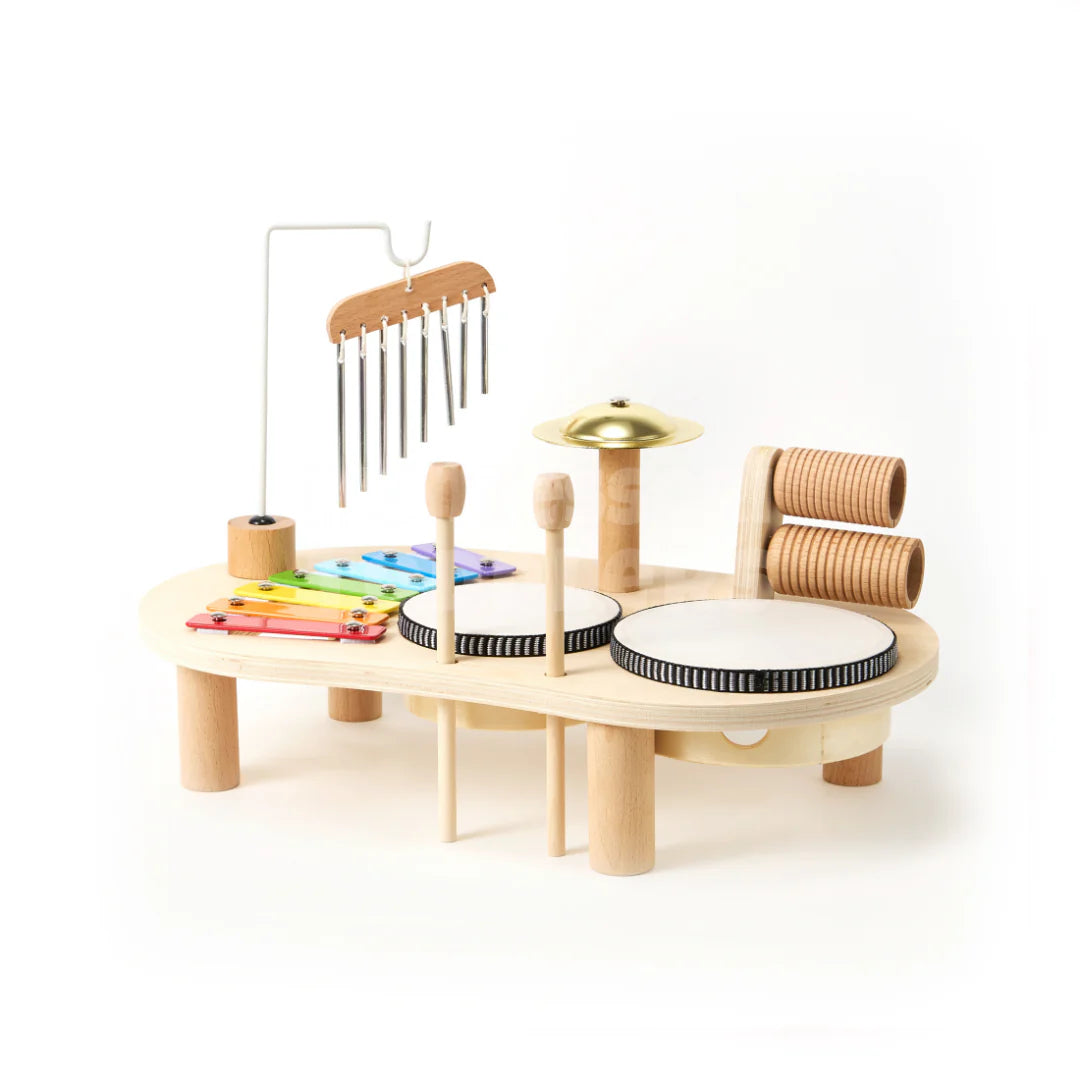
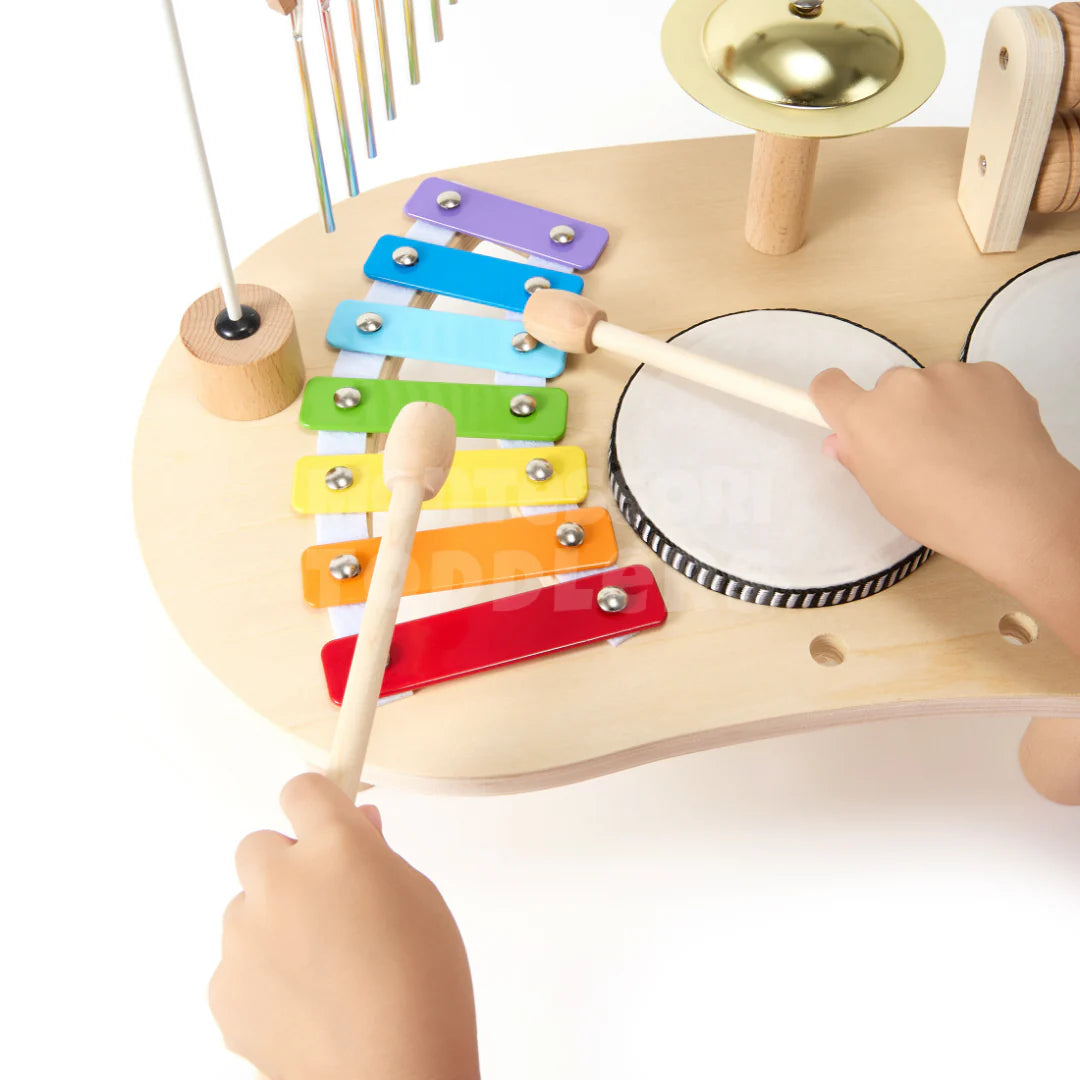
| Music Set | Rhythm, cause-and-effect, shared play | Real wooden sounds answer the "what happens if I do this" stage instantly |
| Toddlers Frame | Early mark-making, grip | Scribbling starts here, and a visible place to display it makes the mark feel like it mattered |
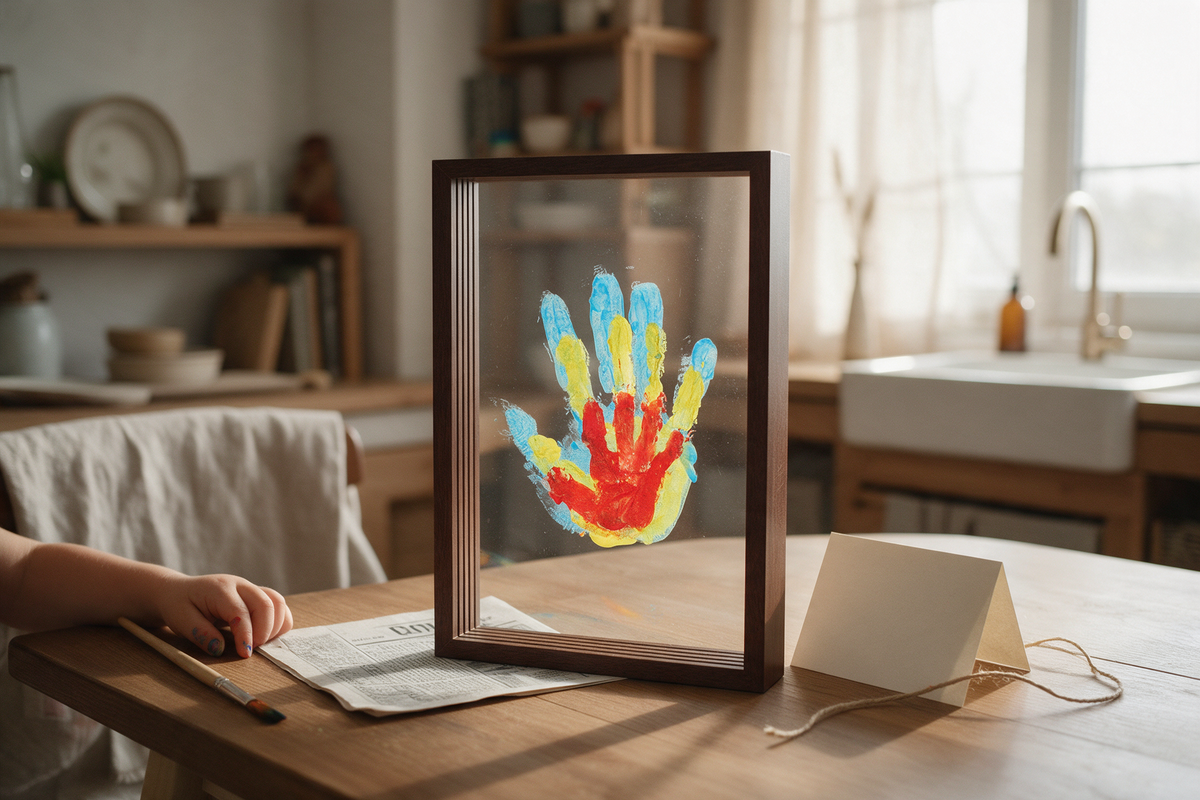
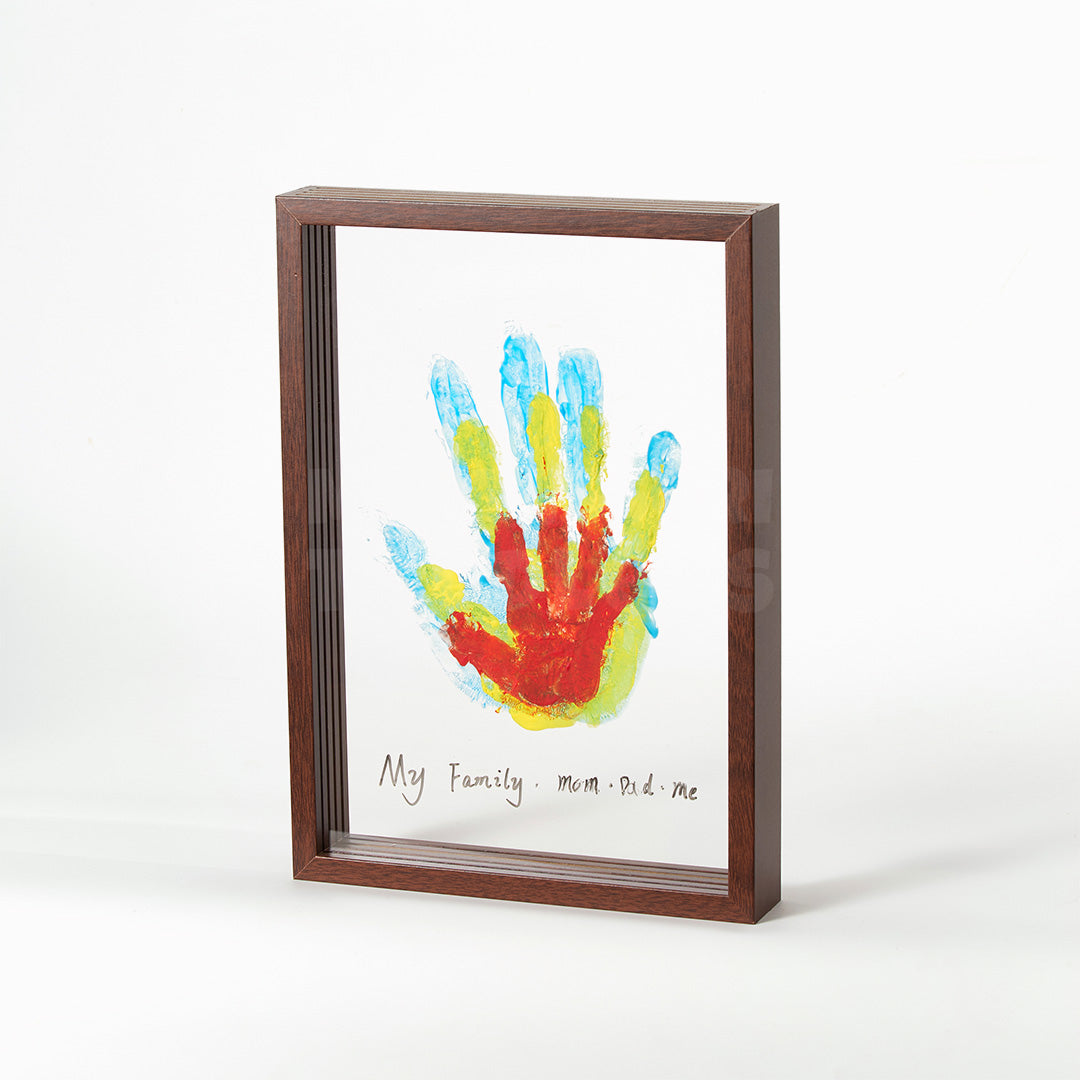
| Handprint Frame | Keepsake, fine motor through a shared activity | A hand that is mostly done being a baby's hand is worth catching on purpose |
| Play Kit 19–24 months | A ready-made curated set for this stage and the one just after it | Takes the guesswork out if you would rather not pick toys one at a time |
Personalized Wooden Puzzle

At twelve months, a child slots the pieces of their name puzzle in mostly by trial and error. By eighteen months, something shifts: they start to recognise the shape of their own name, picking out "their" letters before they can say a single one aloud. It is one of the only gifts that genuinely grows alongside a child rather than being outgrown by them, and no two children share a name puzzle, which solves the "they already have one" problem outright. See the Personalized Wooden Puzzle →
Toddlers Music Set

Eight real wooden instruments, from xylophone to maracas to castanets. An 18-month-old is deep in the "what happens if I do this" stage, and a music set answers that question instantly and satisfyingly, every single time. It works best with an adult joining in: tap a slow rhythm, wait, and watch them try to copy it back. The moment they succeed is one of those small, real connections that make this age worth savouring. See the Toddlers Music Set →
Toddlers Frame

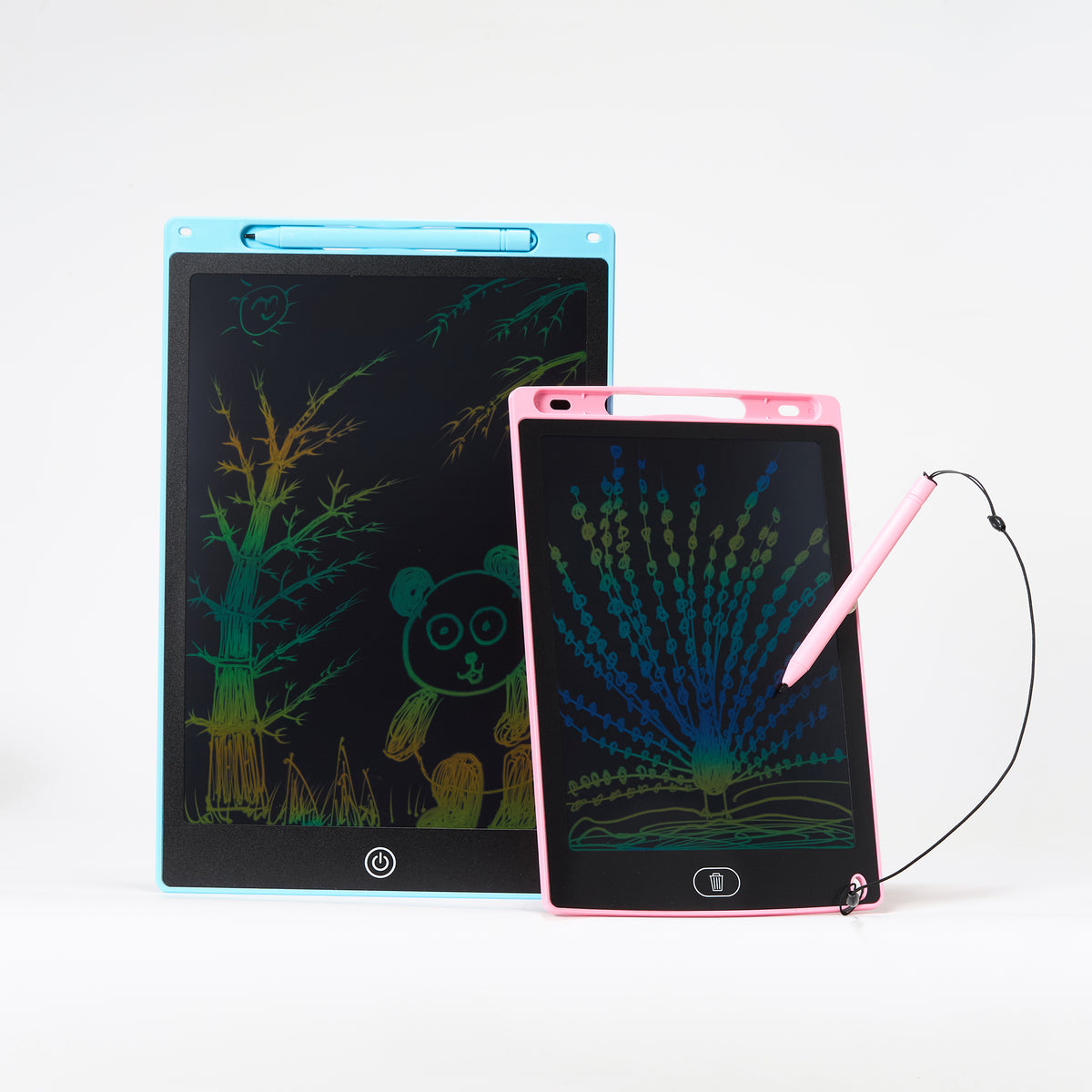
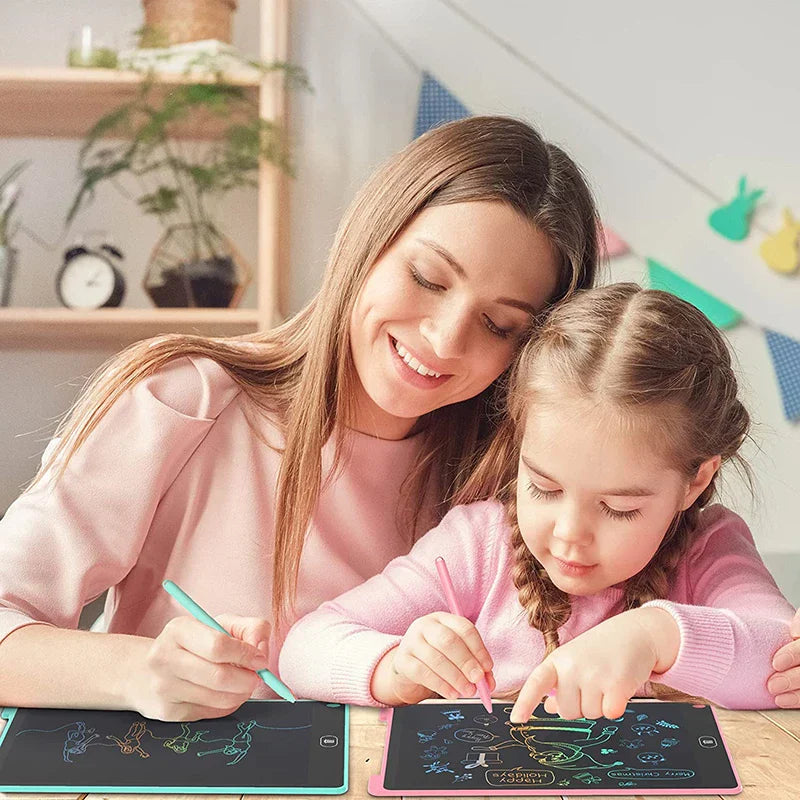
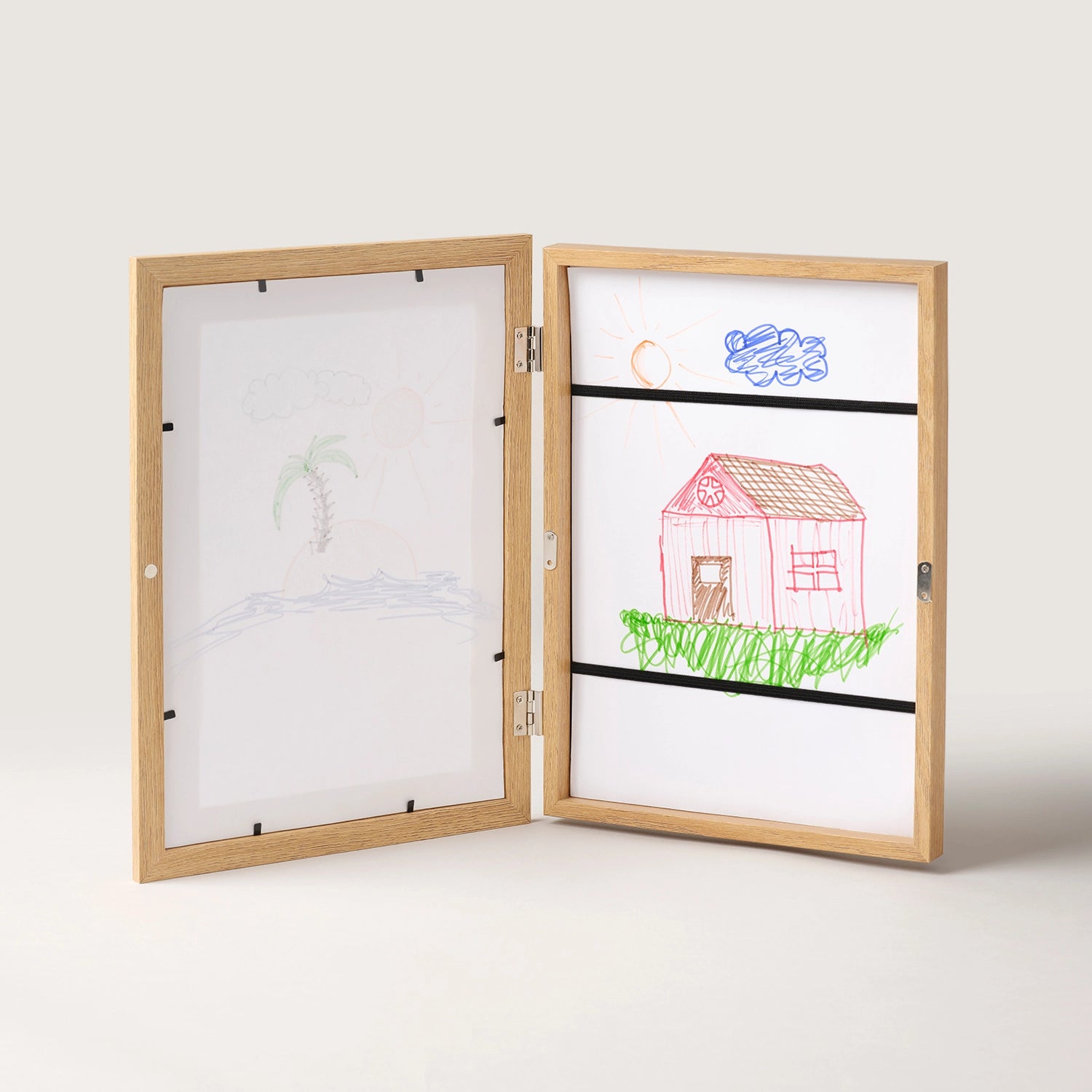
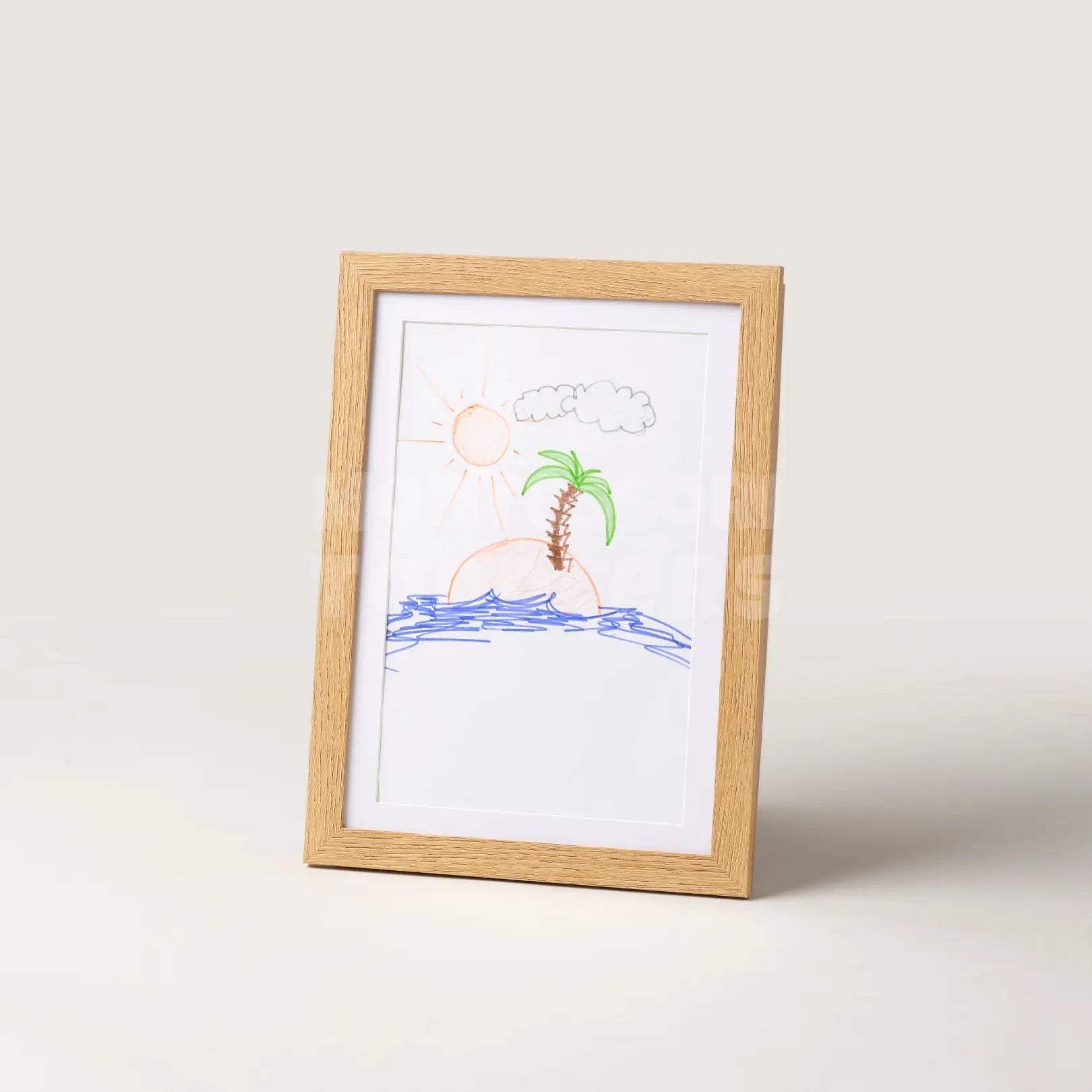
"Drawing" at 18 months mostly means scribbling, gripping a crayon in a whole fist and dragging it across the page with real concentration. That scribble is early evidence of intent and grip, the first proof that what a child does leaves a mark on the world. The Frame gives it a place to live, holding and rotating up to 150 drawings, so the scribbles that would otherwise go in the recycling get a small moment of being seen. See the Toddlers Frame →
Toddlers Handprint Frame

Hands change fast at this age, from the soft, round shape of a baby's hand to something leaner and more capable almost overnight. The Handprint Frame is the small ritual that catches one of those prints before it is gone for good, framed in solid wood with room to add more as the years pass. It is more shared afternoon than craft project, and the kind of gift that quietly undoes grandparents. See the Toddlers Handprint Frame →
Play Kit 19–24 months

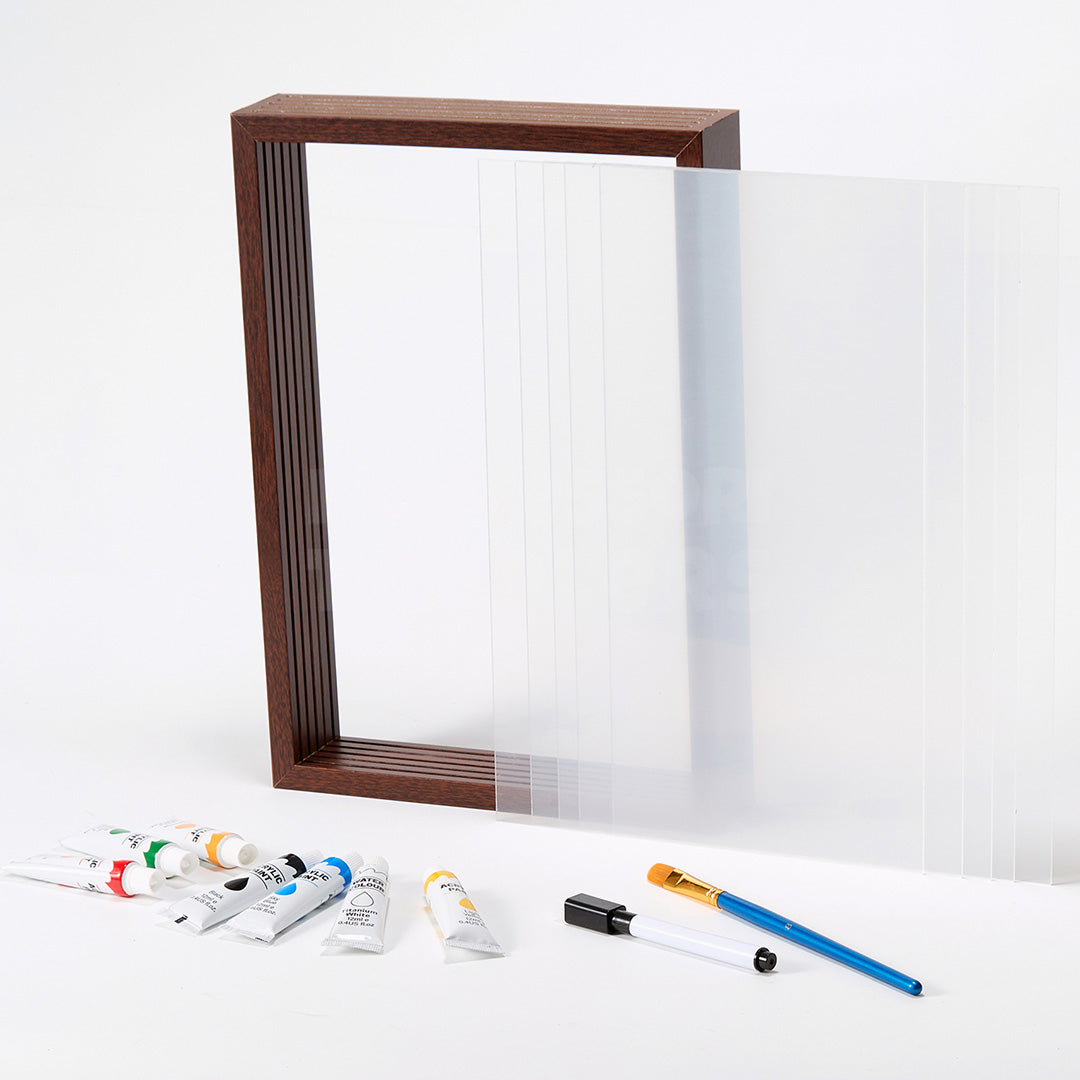
If you would rather not choose toys one at a time, this kit is a sensible shortcut. It is built for the few months just after 18, around language growth, matching and sorting, and early creative thinking, which makes it a natural next step for a child who is already working on everything above. Our 13–18 months kit, built for this exact moment, is currently out of stock, so we would rather point you honestly to the next one up than pretend it is available. See the Play Kit 19–24 months →
Is this the same as toys for a 1-year-old or a 2-year-old?
No, 18 months sits genuinely between the two, closer to a bridge than to either bank. Our 1-year-old guide is built around first steps, first words and object permanence, the milestones of a child who is mostly just arriving at mobility. Our 2-year-old guide is built around the language explosion and pretend play of a child who argues, negotiates and tells you the block is a sandwich. An 18-month-old is doing neither of those things fully yet. They walk well but do not yet pretend in any sustained way; they are gaining words quickly but are still mostly naming, not stringing sentences. The toys that fit this exact window, carrying, posting, early naming, first scribbles, are genuinely their own category, not a rerun of either neighbour.
What should you skip at this age?
- Anything with small, detachable parts. Eighteen-month-olds still mouth things from time to time, so save fiddly small pieces for a little later.
- Toys that need sustained pretend play. A full tea set or dress-up kit usually lands better closer to two, once pretend play properly takes hold.
- Battery-powered toys that do the work. A toy that lights up and talks when pressed teaches a child to watch rather than to do. Quiet, hands-on toys teach the opposite, and this is exactly the age when that difference starts to matter.
- Screens of any kind. At 18 months, physical objects and real people are still doing all of the developmental work. A screen cannot stand in for either.
How many toys does an 18-month-old actually need out at once?
A handful, not a shelf-full. Three to five toys on a low, open shelf is plenty at this age, rotated every week or two as interest fades. Too many choices at once tends to produce a child who flits from one thing to the next without really settling into any of them, which is the opposite of what this stage is working towards. If you would like a fuller framework for this, our guide to Montessori toy rotation walks through how often to swap and what to swap in.
Frequently asked questions
What toys are best for an 18-month-old?
Toys that reward carrying, posting and early naming without asking for more patience than the stage has yet: a personalised name puzzle, real wooden instruments, a simple drawing surface, and a keepsake like a handprint frame.
Is 18 months too early for puzzles?
Not for the right puzzle. A simple shape or name puzzle with a handful of large, chunky pieces suits an 18-month-old well; a 20-piece jigsaw does not. Look for pieces a toddler can grip and place with one hand.
Should I buy toys for a 1-year-old or a 2-year-old if my child is 18 months?
Neither, ideally. An 18-month-old is past the first-year milestones but not yet at the pretend-play stage of two, so toys built for either end tend to miss. Look for toys built around carrying, posting and early words specifically.
How many toys should an 18-month-old have out at once?
Three to five on a low, accessible shelf is enough. Rotate the selection every week or two rather than leaving everything out all the time.
What should I avoid buying at this age?
Small detachable parts, toys that assume sustained pretend play, battery-powered toys that light up and talk on their own, and screens of any kind.
With love from the Montessori Toddlers team 💛